CRUSADERS FOR CHRIST
  • Blog
    • Staff only
  • About Us
  • Downloads
    • Catholic Homeschool - Study Guides
    • Handwriting
    • Student Planners
    • Coloring Pictures
    • St. Catherine's Academy Gazette
    • Printable Children's books
  • Catholic Reading
    • Books We Have Enjoyed
    • Saint of the Day
    • Just Stories
    • Chapter Books >
      • Jesus of Nazareth - The Story of His Life Simply Told
      • Little Therese
      • Lisbeth - The Story of a First Communion
    • Sermons for Children
    • This and That
    • The Blessed Mother for the Child in all of us!
  • For Moms
    • Popular Instructions on the Bringing Up of Children

The Intercession for the Poor Souls

11/1/2025

0 Comments

 
Picture
"Have mercy on me, have mercy on me, at least you my friends."— JOB 19, 21.

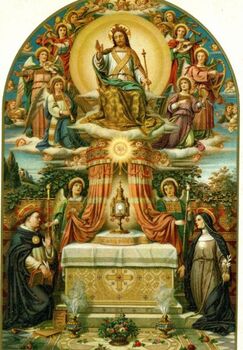
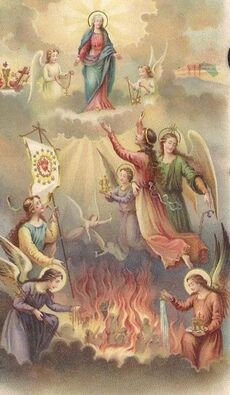
In indulgences the eternal mercy of God is mani- fested as a most consoling truth. God gave to His Church the power not only to forgive grievous sins with their eternal punishment in the Sacrament of Penance, but also outside of this Sacrament the power to remit in part or in whole temporal punishment due to sin. But besides this power of the Church, the doctrine of indulgences shows in a special manner the faith in the Communion of Saints in its most touching beauty. This is especially so in regard to the communion of the faithful on earth with the poor souls in purgatory. According to the expression of the Apostle St. Paul the Church is the body of Christ, but He is the head (Eph. 5,). As in the human body all the members are not only united with the head in the most intimate union, but also among themselves, so that the whole body feels what each member feels or suffers, so is it also in the Church of Christ. She is united with her divine Head in a most intimate manner, and so are all the faithful as members of the Church united with Jesus Christ and among them- selves most closely. Therefore, the graces and merits of our Saviour penetrate the whole Church, the triumphant Church in heaven, the militant on earth and the suffering in purgatory, and flow over all the faithful who are united with the Church, just as the blood in the human body flows through all its mem- bers. In like manner the prayers and sacrifices, the merits and good works of the just and the saints flow out in all directions and benefit the faithful on earth by indulgences, and the dead in purgatory by inter cession. Holy Scripture says : " It is a holy and wholesome thought to pray for the dead." (2 Macch. 12,46.) If we consequently pray for them and if the Church by her priests can offer the holy sacrifice to God for the poor souls, why should she not also have the power to apply through the intercession of the faithful indulgences to the poor souls? Whoever would deny this truth, would also be obliged to deny that we could not in general pray for the dead and consequently could not offer the holy sacrifice for them. Such a denial contradicts the experience and the practice of the centuries and offends Christian sentiment. Precisely by the doctrine of indulgences the Catholic Church shows herself in her true light, in her true greatness as the one kingdom of God in heaven, on earth and in purgatory. By indulgences the militant Church on earth grasps with one hand the triumphant Church in heaven, with the other the suffering Church in purgatory. From heaven she takes the abundance of the merits of the sufferings of Jesus Christ and the Saints, and applies them by indulgences to the faithful on earth and applies them by intercession through the faithful to the poor souls.

Now if this truth is so firmly established that we, by intercession can apply indulgences to the poor souls on account of our communion with them, how great is our duty, my beloved, to do so as often as possible. Just as the Saints in heaven joyfully apply to us the abundance of their penitential works, in like manner we should compassionately come to the assistance of the poor souls, in order that God may lessen their sufferings, shorten or entirely remit them. Therefore I will speak to-day of the intercession for the poor souls and of our duty to assist them by indulgences in order that you may see indulgences in a new and touching light.

O Jesus, assist me with Thy grace.

1. The real object of the holy Catholic Church is the intimate union of the faithful with God. Therefore all the faithful have a communion among themselves. They enter into this communion by baptism and as its indelible mark lasts for eternity, so this communion continues in eternity for all who obtain eternal life. We live, it is true, still in this visible world, which is the battlefield of the Church, but we are nevertheless inseparably united with the blessed in heaven and with the poor souls in purgatory. Year after year the trium- phant Church in heaven receives new armies of holy Christians from earth and from purgatory. And the number of its blessed adherents exceeds by far the number of the faithful on earth. And who knows how many of our friends, acquaintances, brothers and sisters, parents and ancestors are in the number of the Blessed with Jesus in His triumphant Church ?

And in the same manner, my beloved, year after year the suffering Church in purgatory receives a great number of Christians who died in the state of grace, but still have much to atone for before they will be worthy to join the triumphant Church in heaven. And in fact the suffering Church also exceeds in extent and in the number of the poor souls by far the militant Church on earth with its millions of faithful. The suffering Church in purgatory is that holy kingdom of grief but also of sinlessness where the poor souls suffer, indeed, suffer severely, but in heavenly patience and with that marvelous silence which adores the Justice of God. They are holy souls in the state of grace who can sin no more ; they are the chosen of the Lord, the suffering sacrifice, who have submitted to the will of God, but will be tormented no more by the fear of sin nor doubt of their early coming bliss. Even the most bitter suffering of the poor souls is accompanied with the great est peace, which this world cannot conceive. No com plaints, no murmurings, no impatience overshadows this holy place, for they all persevere faithfully until their painful time of penance is past and the angel of God takes them and leads them into the land of their most ardent longing, into the kingdom of the blessed.

Yes, my beloved in Christ, if the quiet meek suffer ing even on earth is something most estimable and touching what a sight must the suffering Church in purgatory offer, this marvelous likeness to the suffering Saviour on the cross and of the sorrowful Mother of God? Therefore you will clearly understand that the poor souls remain in the most intimate union with Jesus Christ, with the saints in heaven and with us Catholic faithful on earth. Jesus Christ is the Head of all in the militant, suffering and triumphant Church, which is only one holy Church in heaven, on earth and in purgatory.

But yet let us not deceive ourselves ! The pains of the poor souls are great and terrible, and last long, according to the number of their sins and the great or little penance which they have performed on earth for them. No tongue can adequately describe this suffering, and no intellect can grasp it, for we know that they are almost equal to the pains in hell, but yet with this two fold difference that these pains are not eternal and that the poor souls are not tormented by despair. There fore their greatest pain is their separation from God and His bliss. The poor souls feel themselves power fully drawn to God and this power becomes the stronger the longer the separation lasts.

But what makes the suffering souls, truly poor souls, is their boundless helplessness. Neither the angels nor the saints in heaven can help them or make intercession for them, much less can the poor souls help themselves or one another. They can acquire no merits, make no satisfaction, receive no sacraments, gain no indulgences; no consoler stands by them and no charitable Samaritan relieves their pains. They can only suffer and do penance. They are a thousand times more helpless than a helpless sick person, than a paralytic or the little child, and present in their helplessness a wonderful picture of our Divine Saviour in His Passion on the cross. Their helplessness becomes the more awful, the more these poor souls are ungratefully abandoned and forgotten by their own relatives, friends or children.

2. Yes, my beloved in Christ, I repeat again, the helplessness of the poor souls in their unspeakable pains becomes the more terrible the more they are abandoned and forgotten by their relatives. If the angels and saints cannot help them, God in His adorable mercy has nevertheless imposed upon us Catholic faithful on earth the duty to help the poor souls. Therefore God has given us such a glorious power over the dead that their lot almost seems to depend more on us than upon heaven. We can sweeten the sufferings of the poor souls; we can lessen and shorten them, if we pray for them, have the holy sacrifice offered up for them, and especially if we gain indulgences for them. We can consequently apply to them the abundance of the means of grace which are at our command on earth and we can offer for them the merits of Jesus and the Saints, for they are in communion with us.

Just as the holy martyrs and confessors formerly interceded for penitent Christians who had been excluded from the communion of the Church and obtained for them the remission of their penance, so should we Catholic faithful intercede for the poor souls who are still excluded from the triumphant Church in heaven and shorten their time of penance. And this we can do in addition to praying for them and offering up the holy sacrifice and communion for them, especially by gaining indulgences for them.

Hear how a mysterious whispering rises from grave to grave, and numberless voices cry out from purgatory: "Have mercy on me, have mercy on me, at least you my friends, for the hand of the Lord hath touched me." These are the voices of the poor souls who cry to us for mercy, and our mercy is their one hope of help and a quick redemption from their pains. Redeem souls, my beloved in Christ, redeem souls from purgatory, which are precious in the eyes of God. Even if they are now victims to His Justice, nevertheless His love and His pleasure rests upon them.

3. Oh, what a thought, to be able to save souls, holy, precious souls, to redeem them from pain and before the end of the time allotted to their painful penance to lead them before the throne of God and into the circle of the Blessed! What a consoling thought for zealous Christians, thereby to glorify God and to rejoice the heart of our Divine Saviour by leading souls sooner to His Beatific Vision! Therefore the Catholic Church daily prays in holy Mass for the poor souls and grants to her faithful indulgences which can be applied to the Holy Souls. The Catholic Christian has nothing else to do than to faithfully fulfill the conditions of an indulgence, therefore to worthily receive the Sacraments and to perform the indulgenced prayers. If he has worthily done this he can offer to God the plenary or the partial indulgence for the poor souls.

Why, are there not many, who once loved us on earth, nourished, instructed and suffered for or by us as we may hope now they are on the way to bliss, therefore in purgatory? Parents, brothers, sisters, relatives, friends, teachers, benefactors, priests? Oh, behold, how they in the midst of their sufferings raise their hands to you and beseechingly say: "Have mercy on me, have mercy on me, at least you my friends." Lay your hand on your heart, my beloved, and let each one ask of himself : Is there a single soul in purgatory on my account? Is there no father, no mother, no brother, no sister, no friend, is there no soul there who must suffer grievously for my sake? who sinned on my account, whom I enticed, scandalized or induced to sin ? Who can, who will have the courage to answer: Not a single soul suffers on my ac count? Therefore, Christian justice demands that we help them as much as possible, confidently gain indulgences for them. Oh, how beseechingly do many parents look to their children on earth, how many brothers, sisters, relatives or friends look to those who belong to them and cry out: "have mercy on us at least you our friends." And if they do not receive help from those who owe it most to them, oh, how bitter is this cold indifference and heartless injustice !

4. In order that we may help the poor souls, God in His adorable mercy has given to us a power which even the angels and saints in heaven do not possess. We, and we alone can intercede for the poor souls, we can have the holy sacrifice offered for them, yes, we can gain indulgences for them. Therefore there are few devotions, which are so pleasing to God, as the devotion for the poor souls. There are few good works by which we can show such service and such honor to God as to redeem the poor souls from their pains and to help them on their way to eternal bliss. Behold here the grateful Christian who, as it were, repays the mercy which God grants to him day by day. Like our Divine Saviour, who applies to us daily in the holy sacrifice of the Mass His merits, His Passion and Blood, and like the saints who interceded for us and allowed us to share in their penitential works on earth, so also good Catholic faithful remember in love and mercy the poor souls and apply to them by indulgences the Church's treasure of grace.

How such love pleases God our heavenly Father! He has, as it were, committed to us the care of the poor souls, in order that we may make satisfaction to His justice for them by gaining indulgences. We should make it possible for His mercy to admit them before their time to the Beatific Vision. Oh, how very much our Divine Saviour will be pleased, if we lead these souls to Him in His glory ! What a service of love we render the Holy Ghost as soon as we re deem the poor souls from their suffering and lead them, the brides of His grace, to the ardent embrace of His love! How happy does Mary the Mother of Mercy feel when we strive to requite her love and intercession for us by leading the poor souls to her motherly heart, in freeing them from suffering in purgatory! It brings joy to the Angels of God, and the saints in heaven rejoice as often as a poor soul is freed from purgatory and enters into the heavenly Jerusalem before the throne of the Most Holy Trinity and into the blessed number of the heavenly hosts.

5. Oh, how great is the Catholic Christian in this power over the poor souls and how like to our Divine Saviour he becomes in its exercise! Can you show, my friends, your love, your gratitude and your faith better than when you remember the poor souls and return the grace and the mercy of Jesus to you with mercy? Can you become more like the Angels and Saints in heaven who lovingly look down and share in your joys and sufferings than when you, like an angel full of compassion, look down into the silent, sinless kingdom of the poor souls and pour out upon them the merits of Jesus and His Saints! Our Divine Saviour says: "Make unto you friends that they may receive you into everlasting dwellings." (Luke 1 6, 9.) The poor souls whom we free from their suffering are these friends, who richly requite us before the throne of God by their intercession for what we have done to them.

How glorious, therefore, is the Catholic doctrine of indulgences, how touching the love which it announces! It is love that animates the blessed souls towards us, and it is love that urges the Christians to help the poor souls. We should therefore never miss an opportunity when we can gain indulgences for our selves and for the dead, in order that we may as soon as possible after our Christian life on earth enter into the eternal Vision of God and into the blessed communion of the Saints. Amen.

Source: The Beauty and Truth of the Catholic Church, Vol. III  Imprimatur 1913


0 Comments

The Stability of the Papacy

6/29/2025

0 Comments

 
Source
"First I give thanks to my God through Jesus Christ for you all; because your faith is spoken of in the whole world."— Romans I, 8.

The great Apostle of the Gentiles thus praised the people of Rome before he had visited the imperial city of the Caesars. The foundations of the Church there had been laid by other hands than his. Who built up that flourishing church, so famous from its very infancy? Whence its importance in all subsequent ages of Christian history? And why do we now, after the lapse of nineteen centuries, still look up to it, and speak of it with the reverence, and in the terms of praise with which it was looked up to and spoken of by the whole world in the days of St. Paul? I will tell you. One day in far off Palestine a Man was walking attended by twelve other men in that mountain region in the neighborhood of Caesarea-Philippi. The men were the disciples of One who called himself by the mysterious title, "Son of Man"; and He asked them, "Whom do men say that the Son of Man is?" They answered: "Some say that He is John the Baptist, others that He is Elias, others that He is Jeremias or one of the prophets." Then the Man said to His disciples: "But whom do you say that I am?" And one of His disciples thereupon answering said: "Thou art Christ the Son of the living God." Then the Man, turning to him who had answered His question, said to him: "Blessed art thou, Simon Bar-Jona, because flesh and flood have not revealed it to thee, but my Father who is in Heaven. And I say to thee that thou art Peter, and upon this rock I will build my Church, and the gates of hell shall not prevail against it. And I will give to thee the keys of the kingdom of heaven, and whatsoever thou shalt bind upon earth shall be bound also in heaven, and whatsoever thou shalt loose upon earth shall be loosed also in heaven."

A year had passed away, and the same Man was sitting at table with these same twelve men. The time of His Passion was at hand, and in view of it, He had instituted the rite in which He had created the chiefs of His kingdom, and He spoke to them of the kingdom He was disposing to them, described the nature of its government, and indicated the character of the person who was to exercise it. And then, singling out from among the twelve that same disciple, whom He had distinguished in the instance just mentioned, He said to him: "Simon, Simon, behold Satan hath desired to have you, that he might sift you as wheat. But I have prayed for thee that thy faith fail not, and thou being converted confirm thy brethren." On the same night, the Man who had thus twice conferred a special charge on the same disciple was taken by the chief priests of His nation, delivered to the secular power, and put to death by the procurator of the Roman Emperor, as one who claimed to be king of the Jews. After dying on the cross, He was buried, but His disciples said that He arose again and appeared to them. And in one of the appearances, as seven of them were fishing in the Lake of Galilee, they saw Him standing on the shore. And He called to them, and invited them to dine with Him. And after the dinner, He said to the same disciples whom he had twice before distinguished in the company of twelve by giving him a singular charge: "Simon, son of John, lovest thou me more than these ?" He said to Him: "Yea, Lord, Thou knowest that I love Thee." He said to him : "Feed my lambs." He said to him again: "Simon, son of John, lovest thou me ?" He said to Him : "Yea Lord, Thou knowest that I love Thee." He said to him : "Be shepherd over my sheep." He said to him the third time: "Simon, son of John, lovest thou me?" Peter was grieved because He said unto him the third time, "lovest thou me?" And he said to Him : "Lord, Thou knowest all things, Thou knowest that I love Thee." Jesus said to him: "Feed my sheep." Some years later a stranger from the East entered Rome by the Appian Way and said to himself : "Here will I remain ; from here will I feed my Master's lambs, and my Master's sheep." The stranger in Rome was Peter, to whom Christ had spoken in Palestine. Peter brought to Rome her greatest glory. He made her the seat of a universal and never-ending empire—the empire of the Church of the living God. It was because Rome was the great city of the Caesars, towards whose forum converged the highways of the world, that Peter chose her to be the chief city of Christ's empire. Here he fixed his See, and now for nearly nineteen hundred years his successors, the bishops of Rome, have ruled the Church of Christ.

In history there is nothing like the Papacy. The record of its life is the proof of its divine origin. It has lived nearly nineteen hundred years. It carries us back to the time of the early Caesars. Its hands were uplifted to bless the martyrs given over to the wild beasts of the Coliseum. It worshiped in the sacred recesses of the Catacombs. The Papacy welcomed
Constantine to Rome after his great victory over the tyrant Maxentius at the Milvian Bridge before the gates of the city, and listened to his proclamation of freedom for Christ and His followers. It crowned Charlemagne, when a new world had risen upon the ruins of the old Roman empire. But the Papacy did not pass down the centuries without struggles against fierce and powerful enemies. Strength of arm and power of mind, such as would have dealt destruction to the most mighty kingdoms, assailed it in every age. "And the rain fell and the floods came, and the winds blew, and they beat upon the house, and it fell not; for it was founded on a rock." "And Jesus said to them: why are ye fearful, O ye of little faith? Then rising up, He commanded the winds- and the sea, and there came a great calm." These two quotations from the Gospel of St. Matthew present under two different figures, a forcible illustration of what has often happened to the Papacy at various epochs in its long and eventful history. A house strongly and securely built upon a firm foundation by an all-wise and all-powerful Architect, it has been at all times the object of the fiercest and most obstinate attacks. The armies of the world and the hosts of Satan have been successively marshalled against it in formidable array; dark and threatening storms have often broken over it; erring men, and the powers of darkness have over and over again conspired to destroy it ; but "it fell not, for it was founded upon a rock."

Launched like a bark on the boisterous sea of this world, the Papacy has been at all times assailed by the most terrible tempests; the winds have howled fiercely around it; the waves, lashed into fury, have threatened to swallow it up; everything pointed to a speedy and fatal shipwreck, and its stoutest-hearted mariners quailed and trembled with fear. But, the good old ship has braved all storms and out-lived all dangers. It could not suffer shipwreck, for it was freighted with the riches of redemption and the hopes of mankind, and Jesus was constantly on board, watching over its destiny and shielding it from impending danger. Sometimes, indeed, He seemed to slumber; but even then His Divine Heart was wakeful; and in the hour of the greatest gloom and of the most imminent peril to His trembling disciples, He listened favorably to their earnest supplication, "Lord, save us, we perish." He rebuked their want of faith, "Why are ye fearful, O ye of little faith?" "And rising up He commanded the winds and the sea, and there came a great calm."

It has ever been so in the history of the Holy See. It has come victorious out of every struggle, sometimes,, indeed, bearing on its body the mark of cruel wounds, and with its garments dripping with blood, but always with the principle of life as strong in it as ever. The Papacy has survived revolutions which have swept away the most mighty states and empires; it has weathered storms in which the stoutest barks have suffered shipwreck; it has come unscathed out of fiery ordeals which have consumed all other institutions, creations of merely human wisdom and power. Empires have fallen around it, dynasties have disappeared, thrones have tottered and sunk to the dust, scepters have been broken in pieces, laurels which have decked the brows of conquerors have faded, and regal crowns have dropped to the earth; yet the Papacy has survived every change and revolution and has stood forth a pillar of strength, solitary and alone in its wonderful stability amidst the ruins everywhere strewn in around it. And now, after all its conflicts, the Papacy is still as vigorous, as full of health and1 life, as buoyant with hope, as when it first entered the great battle-field of this world, almost nineteen hundred years ago.
 
The greatest trial that the Papacy had to sustain in modern times was when Pius VII was dragged into exile by the imperial despot who rode the storm of the French revolution and controlled its destinies. Napoleon I was determined to chain the Papacy to his chariot. He sent General Radet to Rome, who forced his way into the private apartments of the Pope in the Quirinal Palace, on the 9th day of June, 1809, and seizing the aged Pontiff, carried him off a prisoner to France. We all know how shamefully the Holy Pontiff was treated, and to what indignities and humiliations he was subjected by his imperial jailer, in the royal palace of Fontainebleau, near Paris. But did the aged Pontiff quail? Did his purpose falter? Did he lose faith or hope? Did he fear the result? And was his hope groundless? Calm, mild, dignified, strong in faith and hope, Pius VII was not appalled by the dreadful storm that raged around the vessel of which he held the helm. He knew and felt that the tempest would soon subside, and that the bark of Peter would once again pursue its prosperous course over the placid waters. And he was not left long in suspense. Soon the scene shifts. The long persecuted Pontiff is borne back in triumph to Rome. His victory and that of the Church is glorious and complete. But what of Napoleon, the great all-conquering Emperor, who had put forth his hands against the Lord's anointed; had sarcastically boasted, when the Pope excommunicated him, that this should not cause the arms to fall from the hands of his brave soldiers, and had flattered himself with the vision of an universal empire over Europe, of which Rome and Paris would be the two great centers? What was the fate of this towering genius and proudly boasting conqueror of Europe? Everyone knows what it was. In the very room at Fontainebleau where he maltreated Pius VII, by a strange irony of fate, he was forced to sign his abdication. And, confined upon a barren rock in the ocean, he languished out the last years of his feverish existence, with full leisure to reflect on the evils he had done to the people of God and on the blind ambition and sacrilegious invasion of the Church which had marred his destiny; and with time enough, too, to repent of his misdeeds, to lament his false steps, and to return to a more sober and more Christian frame of mind. Forgetful of all past injuries, the noble Pontiff exerted his influence with the European powers and in particular with the British Government, and succeeded in obtaining permission to send him the spiritual guide for whom he had earnestly asked. One of the most remarkable incidents in this drama, is the circumstance that Napoleon was overthrown, the Pontiff restored to his See and the Church to its rights, chiefly by the agency of three great powers, England, Russia and Prussia, all distinguished for their firm, constant and relentless opposition to the Church, and to the Papacy. Who does not see the finger of God in all this? Who will not conclude that both the Church and the Papacy bear a charmed life; that God Himself stands pledged for their defense and protection, and that man, therefore, cannot destroy them?
 
The Papacy has always exercised a civilizing influence on the world. From the Rome of Peter, Christianity and civilization went abroad over the earth. Blot out from history the influence of the Papacy—what remains to the world of Christian truth, spiritual life, and moral culture? The Apostle of Christianity was ever the apostle of civilization; the missionary was the explorer of new countries, while preaching the Gospel to the inhabitants of unknown and untraveled regions, and it was at Rome's bidding and under Rome's guidance that Christianity was preached in every nation of the known world. As early as the second century Irenaeus of Gaul wrote: "To Rome because of its supremacy must believers from everywhere turn." From Rome Augustine went to England and Patrick was sent to Ireland. Rome sent Boniface to Germany, and Ansgar to the tribes living near the North Sea. And what Rome sowed in the souls of men she protected and nurtured. The Papacy was at all times the great promoter of education, the valiant defender of the weak, the vigilant guardian of liberty. When feudal lords and kings sacrificed womanly virtue, and the sacredness of the marriage bond, a Pope quickly excommunicated the guilty ones, and the haughtiest and mightiest men of earth were compelled to do homage to justice and good morals. When tyrants smote liberty and trampled on the sacred rights of the people, a Pope called them to Canossa and curbed their pride and ambitions. The famed universities of the so-called Dark Ages, were blessed and encouraged by the Popes, and often founded directly by them. The ceaseless efforts of
the Papacy rid Europe of slavery and diminished the number and repressed the savagery of feudal wars.

It has been well said that he knows but little of history— but little of the battles waged for truth, virtue, liberty and civilization, who does not reverence the Papacy. Who, visiting Rome, does not pass from one basilica to another in love and gratitude, to kneel before the tombs of some of the giants amongst the Popes, and thank heaven that the Papacy was given to humanity to defend the poor and the weak, to protect woman, to preserve on earth purity of morals, and liberty of soul, when pride and passion conspired to hurl the world back into paganism. The Papacy stands out in history the most sublime and constant evidence that God's ways are not as our ways, nor His thoughts as our thoughts. To the minds of many the crucial period in the life of the Papacy had come when the pontificate of Pius IX was drawing to its close. The Papal States had fallen, and the spoliation of the temporal power of the Holy See was complete. Prophets of evil were not wanting who foretold the speedy extinction of the Papacy. But God never abandons His Church. Providential Popes have always been seated in the chair of Peter at every crucial period of her history. And so, twenty-six years ago, when the hour seemed the darkest for the Papacy, Leo XIII was proclaimed Supreme Pontiff. For over a quarter of a century Leo did his work thoroughly and well, and when death claimed him in July, 1903, he left the Papacy recognized by all intelligent men as the first and greatest moral power in the world. Leo has passed to his reward, but the Papacy lives on in his successor Pius X.

A few weeks ago, through the kindness of Cardinal Satolli, I had the happiness of being received in private audience by the Holy Father. A few days after my ordination, I had the honor of representing the old imperial university of Innsbruck at the Vatican, and enjoyed the distinction of a private audience with Leo XIII, then happily reigning. Leo was all intellect; Pius is all heart. Leo was the scholar, the philosopher, the statesman, the diplomat, the nobleman. Pius is the mild, the gentle, the humble, the benevolent commoner. He is a man of charming personality, and graceful, dignified bearing. He is a fine, large, handsome, manly man, with snow-white hair, a healthy, ruddy complexion, and a kind, sympathetic face. He meets you with a kindly smile and a gracious cordiality that puts you at once at ease. He has dispensed with a good deal of the etiquette of the Papal court, for he is a very democratic Pope. I at once felt at home in his presence. I have visited Rome, the city of the Popes, the metropolis of religion; I have seen Peter, in his successor Pius X, the living link in the Apostolic chain, the first ring of which is riveted to the shrine of the Apostle St. Peter. I am grateful for the encouragement and inspiration I received from the hands of the successor of Peter. I now realize better and appreciate more the power and majesty of the Holy See, and I understand more clearly the vastness of its influence.

The Papacy, like the sturdy oak shaken by the storm, has taken deeper root, and become more firmly established in the soil of the earth by each successive tempest that has swept by it in the long lapse of ages. Persecution has not only not impaired, but it has rather served to extend its empire, even as the wind scatters the seed of the plant, and sows it broadcast upon the earth. The Papacy cannot be destroyed, it cannot perish, because God is its light and its strength, Jesus Christ is its head, and the Holy Ghost is its Teacher and Comforter. The Papacy cannot fall, unless the Saviour God fail in His word; and He said: "Heaven and earth may pass away, but my words shall not pass away." "Strong as the rock of the ocean that stems A thousand wild waves on the shore," it has survived every tempest, and withstood every storm and assault. Its triumphs are strewn over the history of the past; other triumphs await it in the future. Who does not admire, if he will not love, this glorious Spouse of Christ, "pure as a virgin, and as a virgin meek," this heroine of a thousand triumphs., this imperishable mother of Christians! Who is not proud to rise up among her millions of children and to call her blessed!

Source: The Beauty and Truth of the Catholic Church, Imprimatur 1911


0 Comments

The Desecration of the Sunday is the Ruin of Religion

5/11/2025

0 Comments

 
"See that you keep my sabbath: because it is a sign between me and you in your generation." EXODUS 31, 13.
We spoke the last time about the Sunday and its sanctification. And in sooth no commandment is more ancient than this one. It has been with us since the days of Paradise and will endure unto the threshold of eternity, yea into the very realm of Heaven.
No religious law is so universal, since it embraces all the peoples: the pagans, the Turks, the Jews and the Christians. It has withstood every vicissitude of time, every catastrophe of the world, for it is the pillar and the ground of the human race. All creatures praise their Creator, the heavens proclaim His glory and His omnipotence, and the hosts of Heaven give homage to God and sing the praises of the thrice holy God. In like manner the human race on earth is bound to praise and adore God its Lord and Creator, and to offer Him the sacrifice of its homage. For this reason God has reserved one day of the week for Himself and designated it as a day of rest and adoration for men. No commandment is so replete with promise as this one: "Remember that thou keep holy the sabbath day."

And again no commandment brings with it such dire threats of punishment for time and eternity, for temporal and eternal perdition as this one. Hence Jews and Christians place it in the front rank of the commandments of God. And for the same reason it is of the first importance in all Christian codes of law. The captivity of the Jews, every calamity that befell them, the destruction of the Temple of Jerusalem and its profanation by the heathens all these had been threatened by God to avenge the desecration of the Lord's Day.

And now, my dearly beloved, has God changed in the New Law ? Or has the Sabbath, the Lord s Day, become less holy because the Apostles transferred it to Sunday in memory of Christ s Resurrection, of the Descent of the Holy Ghost, and to differentiate them from the Jews? Or are the Christians, upon whom God has lavished more graces and benefits than upon the Jews, less obliged to gratitude, fidelity and adoration ? Is the son of the Cross, the Christian, for whom Jesus bled upon the Cross, less obliged to live for the salvation of his soul and for the adoration and the love of God, than the bondsman of the Ancient Law, the Jew? or than the poor pagan who is deprived of the knowledge of the one true God? No, this commandment of God, "Remember that thou keep holy the sabbath day," has a greater and holier importance for us, but its non-observance is also attended with more dreadful consequences for us.

The first of these consequences is the ruin of religion not only for the individual, but also for whole nations. I shall therefore speak today of his first consequence.
O Jesus, assist us with Thy grace!

1. What do we mean by religion? Religion is the bond and union of man with God. Religion is the tie that unites us with God. Now religion is not only for the individual but for all, and manifests itself in the public adoration of God, in the public profession of faith, in public worship; hence the desecration of the Sunday is the destruction of religion. God Himself has established the Sunday as the public sign of His Covenant with men. And in fact, what has ever been the war cry of those who rebelled against God? Was it open atheism, or professed sensuality, or the robbery of the Church s patrimony? Such crudity would be revolting to the majority of men, and would give too patent an evidence of their ultimate aim. No, they have inscribed on their banners what the Royal Prophet read upon them more than three thousand years ago: "Let us abolish all the festival days of God from the land" (Ps. 73, 8).

Verily, the trend of evil is unmistakable; it does not always strike hard, but it strikes surely. As soon as a nation begins generally to desecrate the Sunday, it readily loses all knowledge and practice of religion, it offers up no prayers, it receives no sacraments, it renders no public act of worship. Experience teaches this, and it is a fact which is patent to everybody. Now, what happens to the individual Christian who is guilty of a constant disregard of the Lord's Day?
 
Let us begin with the children. They have learned a little catechism while they attended instructions, but if they fail to keep holy the Sunday they will forget the little they knew in a few short years. It is a matter of sad experience that many people of advanced years no longer know the Apostles Creed. What right have we then to expect such as these to know anything about the commandments of God, about the laws of the Church, or about the sacraments? Yea, it is not infrequent that we meet with people who know nothing about Jesus Christ. The desecration of the Sunday is the destruction of religion in the individual.

But let us assume that the adult has not forgotten the instruction which he received, but on the contrary knows all the truths of his holy religion. Even this knowledge will not suffice. If these truths are to be conducive to the salvation of the soul they must exercise a great influence on the heart and the will. We must therefore often meditate upon them, and have them frequently explained to us. The desecration of the Sunday renders this impossible, and all the influence that religion may possess, is entirely lost upon the mind and the will, but especially on the conduct of life. When will the servant, the laborer, the trades man find time to meditate on the truths of Heaven if those who are in a position to give the example fail to do their duty? Their failure can only be ascribed to a lack of good will. For all these the desecration of the Sunday is the destruction of religion and with it of every grace and of redemption.
 
The fact becomes all the more serious, for the sanctification of Sunday is the absolutely necessary condition of our union with God. "The Sabbath," says God to Moses in Exodus 31, 16, "is an everlasting covenant between me and the children of Israel, and a perpetual sign." Now what the Sabbath was in the Old Law, that and more is the Sunday in the New Law. Hence I shall put to each of you the same question that the persecutors put to the first Christians : "I do not ask you if you are a Christian, but I wish to know if you observe the Sunday?" From this we can see that in the sound judgment of the pagans the sanctification of the Sunday was the mark of the true Christian. The desecration of the Sunday is therefore a practical denial of the faith. There are many in our day who vaunt their Christianity and ever pretend that they are very pious Christians, but in reality they are nothing more than rebels against God.

2. I say: rebels against God. The desecration of the Sunday is an open revolt against God. And this with its dreadful consequences is a more terrible misfortune than all the lost battles of the world. Every seventh day a countless number of men of every condition in life place themselves in open rebellion against God; in their awful presumption they revolt against the most sacred commandment of God. The church bells call to service; they invite us all to come and adore and praise the Lord; they plead with us to assist at the Unbloody Sacrifice, to be united with Jesus the Saviour and the Judge of men. But deaf to every appeal are the ears of many, and everywhere and in every way we see a shameful disregard of the holiness of the day. The call of pleasure and of self interest is stronger than the call of duty. Can there be a greater crime than this? The desecration of the Sunday is the ruin of all religion.

3. But the desecration of the Sunday is more than an open revolt against God it is a frank profession of atheism and of disbelief in God. And this is the truest and most hateful characteristic of the Sunday profanation. There is no religion, not even a pagan one, that is without its public act of worship. Religion is intended not for one, but for all men without exception, and unites us all with God. Hence the whole nation must take part in a public act of worship, because thereby it makes an open profession of its faith and declares that it is a religious people. All the nations of the earth have known and acknowledged this: Christian, Jews, Turks and heathens; we do not find a single exception among the nations.

Public worship must, however, have its appointed time, its definite day, when all may unite in the same belief and in the same adoration a spectacle worthy of Heaven. God has established this day for the Christian peoples ; it is the Sunday. A nation, therefore, that does not sanctify the Sunday has become more degraded than the very pagans, for it openly professes its atheism, its disbelief in God. Or do you think that a few sentimental considerations, a few pious thoughts, a few banal phrases constitute true faith and a real worship of God? If you believe in God, honor Him, adore Him, and observe His commandments! Remember that the following is the most sacred of His mandates :
"See that you keep my sabbath: because it is a sign between me and you in your generation." The profanation of the Sunday is the destruction of religion in the individual as well as among the nations.

But what do we understand by the destruction of religion? It means the dissolution of our bond with God, with Christ the Redeemer, with the Holy Ghost the Sanctifier; it means the annihilation of redemption, of grace, of Christian virtue, of faith, hope and charity; it means the blotting out of piety, morality, honesty, faith and loyalty, of obedience and of every respect for authority. The desecration of the Sunday implies rebellion against God, selfishness, brute sensuality and the slipping of the leash to all the passions.

But the destruction of religion brings further evils in its train : might without right and justice, consideration without respect, constitutions without stability, laws without obedience, sacrifice without recompense, sorrows without consolation, despair, suicide, ferment and dissolution of every legitimate tie. Whence all conspirators against the established order of things inscribe on their banners : "Let us abolish all the festival days of God from the land." For the profanation of the Sunday is the ruin of religion. Look upon
the condition of our public affairs, consider the menaces that the future holds for us: my language is not too severe.

If I have called the child by its name, if I have endeavored to show you the true characteristics of the desecration of the Sunday with its evil consequences, I have done so with the laudable purpose of strengthening and confirming you in the faithful fulfillment of your most sacred obligation as men and as Christians. Keep ye holy the Sunday. I thank God that you are animated with the desire of doing so. Your conduct is a proof of this. One thing, however, I ask of you: do not restrict the sanctification of the Sunday to your own selves. Give your children and all those who are dependent on you an opportunity of adoring and praising God on the Lord's Day. Never render yourselves guilty of preventing them from fulfilling their sacred obligations. You know now that faith and grace and salvation depend on this. May God grant that the magnificent promises which He has attached to the faithful observance of His Day may find their accomplishment in us both in time and in eternity.

May our Sunday on earth be changed to the unending Sunday in Heaven, whither we are called to adore and praise God with His angels and His saints through a blessed eternity. Amen.

Source: The Beauty and Truth of the Catholic Faith, Imprimatur 1916

0 Comments

What the Sanctification of Sunday Means to the Christian

5/4/2025

0 Comments

 
Picture
"I rejoice at the things that were said to me: We shall go into the house of the Lord."  Ps. 121,

1.
How beautiful is the Christian ecclesiastical year, adorned with a bright garland of splendid feasts feasts of our Lord, of our Blessed Lady and of the great saints ! The feast of Christmas, when we celebrate the anniversary of Our Divine Saviour s birth, is replete with emotion, and causes us the deepest joy. On this day the world of Christian children joyfully greets the Divine Infant, and in Him is glad of its own redemption and grace. The world of the poor raises eyes and hands to the Divine Child and feels itself strengthened and consoled in its poverty. The sick and the suffering find consolation and strength in the Divine Child, the rich receive from Him the impulse to be merciful, and all Christians rejoice because through Him they have all become the children of God. The days of Holy Week are solemn and striking. They are the days when we are vividly reminded of the Passion of Our Divine Lord and Saviour. The days of Easter are days of glory for Our Divine Saviour and days of joy for us, for the Resurrection of Christ is a pledge of our own resurrection to a better life. Equally glorious for the Saviour and consoling for us is the feast of His Ascension into Heaven, for we know that Jesus, the Just One, is now our Intercessor before the throne of His heavenly Father. The feast of Pentecost reminds us of the fact that the Holy Ghost guides and rules the Church in all truth, and sanctifies and comforts and assists us during our whole life. How beautifully the feasts of Our Blessed Lady fit in between all these; how they gladden mind and heart ! The Annunciation, the Assumption, the Nativity and the Immaculate Conception of our Blessed Lady. And again we have the days of the glorious Apostles SS. Peter and Paul, of St. Stephen, St. John the Baptist and of all the others who, as faithful servants of the Lord, followed Him on earth in joy and in sorrow, and now possess with Him the eternal glories of Heaven, whence they point out to us the way to attain the same happiness.

Yes, truly, the Church is the place where, more than elsewhere, we obtain the grace and the mercy of God. It is the place of our regeneration, of our sanctification and of our redemption. It is the house of God, where God abides among men and where men may converse with Him. It is the abiding-place of the holiest mysteries, the house of rest and of peace, where all Christians, great and small, high and low, rich and poor, are the family of God, one heart and one soul. Hence it represents to us the paradise of Heaven and the gate of Heaven.

Today as yesterday, and during all the ages, the Christian in church is the disciple of the Lord. There he hears the words and the teachings of God, as once did the Apostles and the Jewish people. We find there the poor, the sick, the sinner, who have come to the Saviour to implore His mercy and to hear the sweet words: "Be of good heart, thy faith hath saved thee!" In the church the faithful come to the Saviour, as once did the Jews in the desert, or rather as the Apostles did at the Last Supper, to be nourished by Him unto life eternal. It is there that they are blessed by Him; it is there that they are the witnesses of His life, His teachings, His miracles, His Passion, His Resurrection and His Ascension. Hence the church is truly the house of God and of His faithful, and the commandment to sanctify the Sunday is a great and a decisive one for time and for eternity.

It is my purpose to speak once more on this topic, and to point out to you today what the sanctification of the Sunday means for the Christian. Would that all those within the hearing of my voice might take these words to heart, since everything depends on the sanctification of the Sunday faith, grace, religion, the welfare of the family, the salvation of the soul, a Christian death and eternal happiness.

O Jesus, assist us with Thy grace!

1. Sunday is the Lord s Day, hence a day when man should rest from his ordinary work and devote his time entirely to the service of God, to adoring and glorifying Him. Men set aside a definite time for all important transactions, the week, the day, yea, the very hour is predetermined. The courts of law set a definite day for the cases that are to come before them, the employer decides when work is to begin and when it is to end, the mother sets the time for the meals, the teacher for the school, the farmer for his plowing, the huntsman for the chase. Is God alone to be denied the right of deciding on a definite time, a definite day for the holiest and most important action that man can and must accomplish on earth? Yea, my dearly beloved, since all men are bound to give to God this public and outward adoration, God Himself was obliged to establish this day for the benefit of man, so that all could assemble at the same time to take part in Divine Service. If God had left to man the designation of this day, nothing but the greatest disorder and conflict and discord would have resulted. Fathers, teachers, mothers, employers cannot leave the choice of the time that is to be devoted to work, to the school and to household affairs to the servants or the children with out having to fear the greatest disorder; they themselves must fix the time.

God has ordered the sanctification of the Sunday for the welfare of man, for the preservation of faith and of religion. It is on Sunday that the entire Christian world is assembled to praise, thank and adore God, and it is on this day that it is united with the angels and the saints in jubilation and adoration. On Sunday the Christian world becomes a grand, splendid congregation. It must be a spectacle worthy of God when on the same day in all parts of the inhabited globe, from the rising of the sun unto the setting thereof, the Christian world with one voice honors and praises God the Father for the work of His creation; when with one voice it honors and thanks God the Son for the Redemption, when with one voice it adores God the Holy Ghost and honors His grace. It must be a grand spectacle, worthy of God, when on the same day in all the churches of the earth the Christian world with one hand offers the Immaculate Sacrifice to the Triune God; when as with one heart it believes and hopes and loves; when it gathers as the great family of God for the same act of worship, and when they all feel that they are the children of God, the heirs of Heaven, Christian and brethren.

This is marvelously well expressed in the Preface or the hymn of praise of the Mass, where the priest summons the faithful to give praise to God in the following words:  "Lift up your hearts!" After having received the answer : "We have raised them to God," he continues the hymn to God the Almighty and Eternal : "Through Jesus Christ, through whom the Angels and the Archangels praise His Majesty, the Dominations adore Him, the Powers tremble, the heavens and the Virtues of Heaven and the blessed Seraphim are united in joyous exultation. Permit us, we beseech Thee, to join our voices with theirs to proclaim in suppliant confession: Holy, Holy, Holy is the Lord God of Sabbath." Yea, even the whole of inanimate creation joins in this hymn of praise: "The heavens show forth the glory of God, and the firmament declareth the work of his hands" (Ps. 18, 2). "O Lord our Lord, how-admirable is thy name in the whole earth! "(Ps. 8, 2).

The whole world with its countless creatures is an immense organ, that sounds the praises of the Creator throughout the entire universe. But Jesus Christ is like the master that plays this organ. He is the High Priest Who accompanies it with His voice and thus only gives it the true expression of the praise of God. It is also through Jesus Christ, the Mediator between God and man, that all our adoration, all our praise, all our good works, every act of gratitude, every tear, every Christian suffering arises to God. He, as our High Priest, unites all our prayers and sacrifices to His prayers and Sacrifice, and so offers them to God His heavenly Father. It is not without reason that the Sunday is so great a day, and it is with truth that it is called the Lord's Day, for through Jesus Christ it unites the whole Christian world, yea even the universe, for the praise and adoration of God. It is not without reason that the commandment of keeping holy the Sunday is of such importance, and that on its proper fulfillment depend time and eternity, the preservation of religion, the welfare of families, the blessing of God and the consciousness of our heavenly vocation
as Christians and heirs of Heaven.

3. For this reason the desecration of the Sunday is also so great a crime against God and against ourselves. But what must not have happened in such Christians before they reached the point of desecrating the Sunday? Before they sank so low as to deny God the adoration that is His due, and to exclude themselves from the circle of the faithful? If such men, I no longer call them Christians, if such men, moreover, consider it a disadvantage and a waste of time to join their brethren in thanking, praising and adoring God the Father and the Son and the Holy Ghost, what can or shall we think of them? What crust of ice must not have formed around their hearts, and what dread mysteries of apostasy from God, of blindness and passion does not this condition of affairs reveal?

Thou, O man, art a sacrilegious wretch ! By thy profanation of the Sunday thou robbest God of His Day, of the Lord's Day! By thine own act thou cuttest thyself away from God the Father, God the Son, and God the Holy Ghost. By thine own act thou executest the sentence of exclusion from Holy Church, from the communion of the saints and from the company of the saved! The leaf that falls from the tree does not fall of its own volition, but through thine own fault thou hast fallen away from the tree of life, of redemption. The worm that thou tramplest under foot does not die by its own act, but thou diest because of thine own fault, voluntarily thou tramplest under foot the salvation of thy soul! The leaf and the worm glorified God by their existence, but man dishonors Him, and by the desecration of the Sunday he becomes a criminal against God and against himself.

4. Yea verily, my dearly beloved, the Sunday and its sanctification has an extraordinary significance for each and every Christian. By keeping holy the Sunday every human being fulfills the most sacred obligation of its existence on earth, namely, to serve God, to honor and adore Him, in order to become eternally happy. For this reason so many of God's favors are attached to the celebration of Sunday, and the house of God, where we gather to perform our duties, offers the soul so much consolation and so much grace and joy.
Most beautiful are the words of the Epistle read at the Mass proper to the feast of the dedication of a church: "And God shall wipe away all tears from their eyes: and death shall be no more, nor mourning, nor crying, nor sorrow shall be any more" (Apoc. 21, 4). And though this promise will find its full accomplishment in Heaven, it still is partially fulfilled in our churches, which are an image of Heaven and the vestibule to eternal happiness. God is indeed ever ready to dry our tears, to assuage sorrow and pain, if we come with confidence to His house and there beg Him for mercy. How many of you, my dearly beloved, have already made this happy experience! How many Christian fathers and how many Christian mothers have prayed and wept in church for their children, and God has heard their prayer and dried their tears. How many an anxious troubled soul has come to church and there pleaded for help with streaming eyes, and God has allayed its fears and swept away its sorrows. How many a child's prayer has risen there for the safety of its parents, and God has listened to its prayer. And who will count the sin-laden multitudes, who finding peace nowhere, have come with contrite heart like the Prodigal Son to beg the Father of all mercies to press them once again to His paternal bosom and grant them peace and grace and joy of soul? In the church stand the baptismal font, the confessionals, the altars, the tabernacle, the communion railing, bearing eloquent witness to the mercy and the bounty of God. All these have served us from the earliest days of our childhood, and not only us but also our parents and our ancestors.

For them also the waters were taken from the baptismal font, to cleanse them from sin and to make of them Christians and children of God. For them, too, the doors of the tabernacle opened to nourish them for life eternal. The confessionals have also heard their
acknowledgment of sin, their contrition and purpose of amendment, and if their confession was a worthy one, they were dismissed therefrom consoled and re-established in the grace of God. And from the pulpit our parents and forefathers have received many a
salutary lesson and well-meant warning, and if they received them cheerfully and remained true to them they have good reason to be glad of it in a happy eternity.

They have gone before us across the threshold of time into the realms of eternity. For them and for all those who have lived in the long ago, the church has been the place where they experienced in fullest measure the goodness and the mercy of God. It is there that they laid the ground-work of a life that was Christian and pleasing to God, yea, it is from those hallowed precincts that they drew all that finally brought them to eternal glory. And so for us too there is and can not be another place than the church. When they died they were brought once more to the church, and so we too in our turn, when we are dead, shall be brought to the church for the last time. The church is for every Christian the gate of Heaven, the place where he shall find either eternal happiness or eternal damnation, according to the words of the old proverb, "He who hastens to church, hastens toward Heaven ; he who goes slowly to church, goes slowly to Heaven ; he who does not go to church, will not go to Heaven." We can readily comprehend the reason for this. It is in the church that Our Divine Saviour wishes to be surrounded by His own on earth, just as He is surrounded by the angels and the saints in Heaven. It is especially in church that He wishes to be loved, praised and adored; it is here that He extends His arms in blessing over us, that He makes us sharers in His merits and His graces, so that we may finally surround Him forever in Heaven, see Him, not merely under the appearance of bread, but face to face, so that we may celebrate an unending Sunday with Him, and continue with unalloyed joy with the angels and the saints to sing the eternal hymn of praise to the Triune God.

Thrice-blessed, therefore, the Christian to whom the church was a real home, who paid it frequent and devout visits, who let himself be blessed by his Divine Saviour, who often received the sacraments, who gladly listened to the word of God and who kept holy the Sunday. And when after death he is brought to the church for the last time for the purpose of receiving Christian burial, his soul will take a fond fare well from the church where he felt himself so much at home and contented : Fare thee, well, O church, thou gate of Heaven, thou image of the heavenly paradise, fare thee well! I shall pass over a better threshold, I shall enter the paradise of Heaven, the eternal house of God. Farewell, ye friendly altars where I have been so happy when assisting at the Holy Sacrifice, and whence I received such heavenly fruits! Farewell, thou communion table, where so often in childlike yearning I received the Body of my Saviour! Fare well, ye confessionals, where I have shed many bitter tears over my sins; O blessed tears, blessed contrition and confession, that obtained for me the mercy and the grace of God, fare ye well ! Farewell, thou pulpit, from which I have received so many saving lessons and encouragement! Farewell, ye servants of the Lord, who meant it so well with me, may God reward you for your trouble! Fare ye well, my Christian brothers and sisters, who so often edified me by your devotion! Farewell, all ye beautiful feasts that I loved to celebrate in church. I am now going to celebrate an everlasting feast, forever will I rejoice with the angels and the saints, eternally will I abide with God my Saviour, for he who hastens to church, hastens toward Heaven.

5. But he who does not go to church will not go to Heaven. It is a sad thing to note that there is a large number of men and of women who no longer even know where their church is, of what the church reminds them, who never keep holy the Sunday and who seldom or never receive the sacraments. They too will be brought to the church at the end of their days. How will their poor soul feel when even the church will rise in accusation against them? They will then cry out in pain and sorrow: Farewell thou hallowed abode of God's love and mercy that I contemned! Farewell, ye altars, tabernacle, and confessionals : O had I but a half hour's time to receive the sacraments, my eternal salvation would be secure! Farewell, ye good and faithful Christians, how happy I should be if I had followed your example, and had not looked upon you as fools and on myself as wise ! Farewell paradise, thou heavenly elysium, thou everlasting house of God, thou realm of happiness, farewell, for I shall never see thee ; another lot is mine, an abode of unending misery, for he who does not go to church will not go to Heaven.

May God grant, my dearly beloved, that you may always love to go to church, love to sanctify the Sundays and the holy-days. "I rejoiced at the things that were said to me : We shall go into the house of the Lord" (Ps. 121, i). Moreover the house of God reminds us of the dignity of our own soul. St. Paul tells us that we are the temples and the abiding-place of the Holy Ghost. Our soul was solemnly consecrated by holy Baptism. The foundation of this temple is the virtue of faith which was infused into us in holy Baptism. The spire is hope, which raises us to God, the high altar is charity, and the sacrifice, pure, holy, and pleasing to God, that we are to offer up to Him, is our very self with body and soul, and we do so when we give ourselves to the service of God in joy and in pain. The pillars upon which this spiritual temple of God rests, are the Christian virtues; the arch which extends over the temple of the soul, is the gracious Providence of God. And as long as we observe the commandments of God and of His Holy Church, as long as we remain in the state of grace and retain the innocence of our soul or have regained them by contrition and penance so long are we the temples of the Holy Ghost and God will willingly abide in us. Then the celebration of the Sunday will also be a feast of the soul and the prototype of the everlasting Sunday, which we are called to celebrate in Heaven. Hence let us ever rejoice when we are told : "We shall go into the house of the Lord," now on earth and one day in Heaven. Amen.
 
Source: The Beauty and Truth of the Catholic Church, Imprimatur 1916


0 Comments

Mother of Sorrows - Friday in Passion Week

4/10/2025

0 Comments

 
Picture
                                        SERMON XX
                        THE MOTHER OF SORROWS
"There stood by the cross of Jesus His Mother." JOHN 19, 26.

The beauty of Jesus is inexhaustible. He is beautiful always, beautiful everywhere, in the disfigurement of the Passion as well as in the splendor of the Resurrection. But above all things Our Divine Saviour is beautiful in His Mother. If we love Him, we must love her. We must know her in order to know Him. As there is no true devotion to His Sacred Humanity, which is not mindful of His Divinity, so there is no adequate love of the Son, which disjoins Him from His Mother, and lays her aside as a mere instrument.

Mary was not an unconscious instrument of the designs which God accomplished through her. Before she consented to become the Mother of Jesus, Mary understood the ransom that must be paid for sinners, she foresaw the sorrows with which the sufferings of her Son would desolate her soul, and in consenting to cooperate with God in the work of salvation, she willingly accepted the lifelong martyrdom which the crucifixion caused her to endure.

The Catholic view of this question must be clearly brought out before Christians can properly understand the relation in which she stands to the redeemed. It is what Mary consented to suffer, and actually did suffer that gives her a right to the gratitude and devotion of Christians, that makes her intercession all powerful with Christ, and shows that the confidence which Catholics repose in the patronage of the Blessed Virgin is well founded.

What did Mary suffer? St. Liguori applies to her the words of Isaias : "He will crown thee with the crown of tribulation" will crown her Queen of Martyrs. That we may know how hard it is to form any adequate idea of Mary s sorrows, the Church applies to her the words of the Prophet Jeremias : "To what shall I compare thee, to what shall I liken thee, O daughter of Jerusalem ? To what shall I equal thee, O Virgin daughter of Sion? For great as the sea is thy broken-heartedness."

Who can measure the sea ? While sailing across its wide expanse, the largest vessel seems but an atom on its bosom. In sight is a great waste of water, which is but a fraction of that other mighty waste of water which the horizon conceals from view. At certain points, the length, breadth and depth of the sea may be measured, while at other points it stretches out and sinks down so far and so irregularly as to baffle all human efforts to accurately estimate its volume. Thus the sea, while not infinite in extent, is, humanly speaking, immeasurable. This is why the sea is truly a picture of Mary's broken-heartedness. Now and again, definite views are obtained of certain features of Mary's sorrows, which for the moment seem to offer some basis for an accurate estimate of all her sufferings. When, however, an attempt is made to measure them, other aspects of the depth, the intensity, and the duration of her dolors are revealed in such bewildering proportions as to render futile all efforts to measure the sea of her broken-heartedness. Meditation thus shows us, that Mary's sorrow, although falling short of the infinite, is measureless.

The factors that help us to form a faint, an imperfect idea of Mary s sufferings are:
(1) Mary's sanctity;
(2) Jesus lovableness;
(3) Mary s foreknowledge of Christ s sufferings, and her willingness to participate in them.

As disease dulls and deadens the nerves, the sensitiveness of the body to pain, until in certain forms of sickness the power to suffer is diminished, destroyed, so that the body of the afflicted one may be cut and burned without feeling any pain; so sin destroys the feelings of the heart, dries up the fountains of compassion in the soul until the very power to sympathize with another is diminished or altogether lost. As the greatest capacity for physical sufferings exists in the perfect body, so the greatest capacity for mental anguish exists in the soul.

Mary was sinless, preserved by a singular privilege from all stain of sin. Her soul remained unclouded by even a shadow of an imbruting passion. She not only retained all the natural feelings of her pure heart unimpaired, but she cultivated them to the highest degree that it was possible for a creature to attain. The more refined, delicate the soul, the more excru- ciating the agony. Mary s sinless body with its exquisite perfections was delicately formed beyond all others but that of her Son. It is therefore evident that Mary, both by nature and grace, had the greatest capacity of love, to sympathize, and to suffer; and as she had consecrated herself entirely to God there were neither worldly interest, nor human ties to distract or divide her love. It was centered wholly in Jesus.

The maternal instinct impels mothers, sometimes, to love, to cling to their children despite the latters utter unworthiness and depravity. Mary, however, loved Jesus because He was infinitely worthy of her affection. No mother ever had such a Son. Mary's Son was both human and divine "the splendor of the Father's glory and the figure of His substance" at once the Son of Mary and the Son of God. In Mary there was concentrated, as in one consuming flame, the strongest affection which a mother ever cherished for a child, and the intensest love that a Creature ever bore the Creator. And since it was impossible for greater love to exist between two beings than that which existed between Mary and Jesus, there could be no greater sympathy than that of Mary and Jesus.

Every suffering inflicted on the Sacred Humanity of Jesus was a sword of sorrow that pierced Mary's soul. But in order to see how immeasurable Mary's sufferings were, we must acquire some idea of her foreknowledge of Christ's Passion, of her willingness to participate in it, of the heroic, holy purpose that animated Mary when she consented to cooperate, to suffer, in the cause of man's salvation. Mary's sanctity entitled her to the fullest confidence of the Deity, as to the means by which the world's redemption was to be accomplished. While God conceals His counsels from the proud and wicked, He confides them to the humble and innocent. Mary was selected because of her humility. She was full of grace; she had found favor with God. Upon no creature has such an eulogy been passed as that which God the Father, by the mouth of the Archangel Gabriel, pronounced upon Mary. No creature was ever admitted to that close and marvelous union that existed between Mary and the Eternal Father. Living only for God, and in God, it may well be believed that secrets were committed to her of which priests and prophets were kept in ignorance; just as Jesus communicated to John, by reason of his virginal sanctity, secrets concerning which the other Apostles dared not even question their Master. It may well be believed that Mary knew more than the prophets of old, upon whose vivid portrayals of the sufferings of the Messias she had often meditated; that she knew more than Joseph, who learned from the Angel that Jesus would "save His people from their sins" that she knew more than Simeon, whose vision of the Passion enabled him in those forcible, expressive words, to liken Mary's sympathy with Jesus in His suffering to a sword of sorrow that would pierce her soul.

While the Apostles were often, during the lifetime of their Master, rebuked for their slowness to believe, their failure to understand, never once was Mary's faith or understanding rebuked. On the contrary she is represented as keeping the divine counsels, pondering them in her heart. Mary showed in the Magnificat and at Cana the fullest appreciation of His divine character and of His coming.

The extent of Mary's knowledge is not a mere matter of speculation. It is a matter of fact that, before the Incarnation, she was the only daughter of Israel that entertained a correct notion of the character of Messias. The other women of Judea regarded the coming Messias as a great temporal prince. Hence as the time of His coming approached, a consuming desire to be the mother of the Messias burned in the breast of every Jewish woman. With this object in view, the maid sought marriage, the wife prayed for fruitfulness, and implored the Lord to save her from sterility as from a curse.

No such ambition, as Cardinal Newman says, was cherished by Mary. On the contrary, by a vow ofvirginity, she had made her mothership of the Messias, humanly speaking, impossible. She had such a true conception of that exalted Divinity that she deemed perpetual continence and a life of sanctification in the temple necessary to prepare herself, not for the mothership of the Messias, but to become the handmaid, the servant of the woman whom God would deem worthy of so high an honor. In this, what testimony does not Mary bear to that incomparable dignity to which God, regarding her humility, exalted her. No less an authority than Cardinal Newman interprets Mary's reply to the Angel; "Behold the handmaid of the Lord," as signifying that Mary simply aspired to become the servant of the Mother of the Messias. Mary entertained such correct ideas of the Messias before the Angel's visit, what fullness of knowledge must she not have received through Gabriel's message and his answers to her questions. Her dialogue with the Archangel shows plainly that she was not selected as a mere instrument, but as a free, intelligent agent; that she was free to refuse to become the Mother of the Messias, and that she consented only after having attained to a clear understanding of what would be required of her. "She was troubled;" says the Gospel, at the Angel's words, and asked, in her own mind, the meaning of his salutation. The angel having allayed her fears, Mary asked plainly: "How shall this be done, for I know not man?" Mary did not blindly consent, like the Apostles, to participate in the work of the Messias, and afterwards, like them, fail in her part when it came to drink of the cup of Christ's bitterness. She consented only after she had known what sacrifice that consent would demand of her; and therefore she never afterwards shrank from what was laid upon her: "Be it done unto me according to Thy word. "It is clear that Mary could have absolutely refused to become the Mother of the Messias, nevertheless, her acceptance was so deliberate, was given with such full knowledge of the sufferings which it involved, and with such willing obedience to the Counsel of God; and consequently, was so meritorious, that the Holy Ghost, by the mouth of Elizabeth, declared Mary blessed for having consented: "Blessed art thou that hast believed, because those things shall be accomplished in thee which were spoken to thee by the Lord."

Let those, then, that would form an idea of her sorrows, look at Mary, from the moment of the Incarnation, standing in spirit as truly under the Cross as when she stood by the Cross of Jesus on Mt. Calvary. During those thirty-four years of martyrdom, her knowledge of Jesus sufferings did not increase, but her realization of them became more and more vivid and painful in proportion as she beheld Jesus increase in wisdom, and age, and grace before God and man.

Her power to love and her power to suffer increased day by day, until she saw Jesus offer Himself a bleeding, dying victim on the Cross. What more touching, entrancing, than the scene enacted in the stable of Bethlehem. The winter winds were joyful with the music of the multitude of the heavenly host, praising God and singing : "Glory be to God in the highest, and on earth peace to men of good will." The dismal cave was lighted up with the glory of Heaven; angels and wondering, adoring shepherds came to worship the new-born Saviour ; and Mary and Joseph lovingly, adoringly contemplated the Heavenly Babe. Had that scene, which has filled the earth for centuries with light and gladness, no joy for Mary? Did not its splendor for the time being dispel the shadow of the Cross? Did not Mary, in the words of Holy Scripture, rejoice, "because a man was born into the world," and for the moment, turn the eye of her soul from the vision of Calvary?

Alas! no, the joyous light of Bethlehem only projected the shadow of the Cross more distinctly. The scene in the stable, it is true, touched Mary's soul, joy welled up in her heart, but only that the thought of Calvary might instantly change it into an ocean of bitterness. As Mary laid the Divine Infant in the manger, as she saw His little arms stretched out as if to embrace her, she thought of the time when that same Jesus would be laid upon the Cross, when His hands would be stretched out in crudest torture, in infinite love, to embrace the whole human race ; as she listened to the song of the Angels, she thought of the blasphemies with which men would demand His death ; as she looked on the reverent shepherds she thought of the wild beasts that put Him to death; as she looked
on the glory of Heaven lighting the first opening of His eyes, she thought of the gloom that would fall upon their closing; as she saw earth and Heaven rejoicing over His birth, she thought of how both man and God would forsake Him in death; as she clasped Him to her bosom, she thought of the time when He would be laid at last, all bleeding and bruised, and wounded and lifeless, on her breast. Thus even at Bethlehem, Mary stood in the shadow of the Cross.

There are pictures, some of which are regarded as inspired in their conception and miraculous in their salutary influence, that afford clearer views of Mary's ever present sorrows than any illustration that human tongue can offer. The painting of Our Lady of Perpetual Help, for example, represents the Blessed Virgin as revolving in her mind the prophecies concerning the Messias. With a face full of sweetness and sadness, she gazes upon the Child Jesus Whom she holds upon her arm, only to see Him startle at the vision of His future sufferings, the instruments of His Passion the reed, the crown of thorns, the nails, the spear, the Cross, as they loom up in the dim distance.

Then again, there is the painting that may be called the Shadow of the Cross. It represents a scene in the workshop at Nazareth. Joseph is employed at the carpenter's bench, Mary sits plying the distaff. A bright summer day pours a flood of light into the room. Jesus, a beautiful youth, with filial piety informing every feature, advances with out-stretched arms towards His Mother to embrace her, and to imprint a kiss upon her cheek. Oh ! what happiness would this scene have been to Mary, with what joy would it have dilated her soul, if only the future had been concealed from her! But, alas! looking at Jesus, the Mother's joy is turned into grief, because she sees the body and out-stretched arms of her Son cast the Shadow of the Cross on the opposite wall ! But if this was Mary's cruel portion during the joyful mysteries, who can imagine what must have been the bitterness of her grief during those cruel scenes that followed, when every torture of Jesus, like a sword, actually pierced her soul.

The Passion of our Lord may be said to begin on the Thursday in Holy Week in the house of Lazarus at Bethany. On that Thursday morning Jesus went to Bethany to bid His Mother farewell and to obtain her consent to His Passion, as He had before done to His Incarnation. Not that it was necessary, but it was fitting and convenient to the perfection of His filial obedience. He then went to Jerusalem with His disciples. The Last Supper, the First Mass, took place that night. Having celebrated the Passover He passed out of the city again with His disciples to Mount Olivet where Judas betrayed Him. He was seized by the mob and conducted to the court of the High Priest. St. John, as soon as Jesus had been condemned to death, returned to the house with the news of the sentence.

Mary, the broken-hearted Mother, prepares to leave the house with Magdalen and the Apostle. John, by his knowledge of the city, will lead her to the end of the street where she can meet Jesus on His road to Calvary. Everywhere the streets are thronged with multitudes setting in one tide to Calvary. Heralds at the corner of the streets blow their harsh trumpets, and proclaim the sentence to the people. What a journey for a mother. The procession comes in sight; the tall horse of the centurion shows first, and leads the way. The trumpet sounds with a wailing clangor. The women look from the lattice above. She sees the thieves, the crosses, everything and yet only one thing Himself. As He draws nigh the peace of her heart grows deeper. It could not help it ; God was approaching, and peace went before Him. Now, Jesus has come up to her. He halts for a moment. He lifts the one hand that is free, and clears the blood from His eyes. Is it to see her ? Rather that she may see Him, His look of sadness, His look of love. She approaches to embrace Him. The soldiers thrust her rudely back. And she is His mother. For a moment she reeled with the push, and then again was still, her eyes fixed on His, His eyes fixed on hers, such a look, such an embrace, such an outpouring of love, such an overflow of sorrow. Has He less strength than she? Yes. He staggers, is overweighed by the burden of the ponderous Cross, and falls with a dull dead sound upon the street, like the clang of falling wood. She sees it. The God of Heaven and earth is down. Men surround Him like butchers round a fallen beast ; they kick Him, beat Him, drag Him up again with cruel ferocity. It is His third fall. She sees it. He is her Babe of Bethlehem. She is helpless. She cannot get near. The terror of this scene to Mary beggars description. We must not forget that her heart was eminently feminine. Fancy the sea of wild faces into which she looked in those crowded streets. Every passion was glaring out of those ferocious eyes, rendered more horrible by their human intelligence mingled with the inhuman fiery stare of diabolical possession. A multitude, with the women, possibly the children, all athirst for blood, raving after it, yelling for it as only a maddened populace can yell. It was a very vent of Hell, that voice of theirs, a concourse of the most appalling sounds of rage and hate and murder, and blasphemy and imprecation, and of that torturing fire and their own hearts which those passions had fiercely lighted up. The sights and sounds thrilled through her with agonies of fear. Visible by her blue mantle, she floats about on the billows of that tossing crowd, like a piece of wreck on the dark weltering waters of a storm. And she is apart from Jesus. He is perishing in the waves of that turbulent people. He is engulfed, and she can stretch out no hand to save Him. She cannot yet hear Him, and thus she followed slowly on to Calvary, Magdalen and John beside themselves with grief, but feeling as if grace went out from her blue mantle, enabling them also to live with broken hearts.

The way of the Cross was ended, and Christ was raised on the Tree of Shame. Mary turned to the foot of the Cross, passing the soldiers who were casting lots for the seamless garment of her Son. She raised her eyes to Heaven for strength, and they met the eyes of her Crucified Son. Upon beholding Jesus fastened to the Cross, she stood speechless, riveted to the spot by this cruel spectacle. Everything disappeared before the Cross; the sun veiled its gaze in very shame, the heavens became dark, the earth quaked, the rocks were rent asunder, the graves gave up their dead. All nature seemed to participate in Mary's grief and to suffer with her. The multitude were terrified and fled down the mountain striking their breasts, saying : "He was truly the Son of God." Yet amidst the wild confusion caused by nature sympathizing with the dying Saviour, caused by the earthquakes which shook Golgatha's mount to its very foundation -Mary remained unmoved, with hands folded in prayer, sunk in meditation on her Crucified Love, and the few pious women of Jerusalem wept, and said with compassion: The poor Mother !

Joseph of Arimathea and Nicodemus, as a pious writer tells us, approached Our Blessed Lady with the profoundest reverence and sympathy and asked her permission to take the Body down from the Cross. They fixed the ladder against the Cross. Joseph mounted first and Nicodemus after him. Mary with John and Magdalen remained immediately beneath them. It seemed as if some supernatural grace issued forth from the adorable Body, softening and subduing all their thoughts, making their hearts burn with divine love, and hushing them in the deepest and most thrilling adoration. With gentle, trembling hand Joseph touched the Crown of thorns, and delicately loosened it from the head on which it was fixed, disentangled it from the matted hair, and without daring to kiss it passed it to Nicodemus, who reached it to John, from whom Mary, sinking on her knees, receives it with such devotion as no heart but hers could hold. Every blood stained spike seemed instinct with life, and went into her heart, tipped as it were with the Blood of her Son, inoculating her more and more deeply with the spirit of His Passion. Who can describe with what reverential touch Joseph loosened the nails so as not to crush those blessed hands and feet? Each nail was silently passed down to Mary, and the poor Mother bent over those mute relics crusted, too, as they were with the Precious Blood which she adored in its unbroken union with the Person of the Eternal Word. But now the Body was detached from the Cross. Mary is kneeling on the ground. Her fingers are stained with blood. She stretches the clean linen cloth over her arms and holds them out to receive her Son, her lost Son, come back again, and come back thus !

Now the Body is low enough for John to touch the Sacred Head, and receive It in his arms, that It might not drop in that helpless rigid way; and Magdalen is holding up the feet. It is her old post. It is her post in Heaven now, highest of penitents, most beautiful of pardoned spirits! For one moment Mary prostrates herself in an agony of speechless adoration, and the next instant she has received the Body in her extended arms. The Babe of Bethlehem is back again in His Mother's lap. What a meeting! What a restoration! For a while she remains kneeling, while John and Magdalen, Joseph and Nicodemus and the devout women adore, and whisper: "The poor Mother!" Then she passes from the attitude of the priest to the attitude of the Mother. She rises from her knees still bearing the burden as lightly as when she fled into Egypt, and sits down upon the grass, with Jesus extended upon her lap. There was not a feature of His Blessed Countenance, not a mark upon His Sacred Flesh, which was not at once a sorrow to her, and a very volume of profoundest meditations. In vain for her were the birds thrilling their even-song, the weight of the eclipse being taken off their blithe little hearts. In vain for her were the perfumes of the tender fig-leaves rising up in the cold air, and the buds bursting greenly, and the tender shoots full of vernal beauty. Her grief was past nature's soothing. For her Flower had been cruelly gathered and lay withered there upon her knee. But now He must be swathed in the winding sheet for burial and Mary must take her last look at that dead face. Mothers live lives in their last looks.

Who shall tell what Mary's was like? With heroic effort she has bound the napkin around His head, and has folded the winding sheet over the sweet face. And now there is darkness indeed around her. The very Body had been a light and a support. She has put out the light herself. Her own hands have quenched the lamp, and she stands facing the thick night. O, brave woman! O Mary thou didst pierce thy own heart through and through, with the same hand which hid His face ! And the women wept again with compassion and said, "The Poor Mother" Poor! but through whom? Through us my friends ! He was bruised for our sakes, says the prophet, and our sins crucified Him, killed Him; and Mary the Queen of prophets should not have known this? She knew it well and felt the sufferings of her Son, inflicted by our sins all the more keenly. What reason have we not then for sorrow, for the profoundest grief, the bitterest tears over our sins which have robbed this good Mother of her Son?

In the city of Padua in Italy, St. Francis de Sales relates, is a street called the Road of Mercy. It received its name from the following incident. Two university students met one dark night, and without recognizing each other fell into a quarrel, because neither would get out of the way of the other with the result that one stabbed the other one to death. The
murderer pursued by the authorities fled in despair to the house of a widow whose only son was his fellow student and best friend. He threw himself at her feet, told what he had done, and begged her to hide him. The good woman took pity on him and concealed him in her house. It was not long before her only son was brought home to her dead, for it was he whom the student had stabbed. Sobbing aloud she went to the murderer and said, "What did my poor son do that you have so cruelly murdered him?" But when he heard that it was his own dear friend, he broke down with grief, tore his hair, and instead of asking the good mother s forgiveness, he threw himself at her feet and begged her to deliver him over to the hands of the Justice, in order that he might publicly expiate his crime. The grief-stricken mother, who was a most Christian lady, was so touched by the evident sincere grief of the youth that she said: "If you beg God's forgiveness and promise to amend your life, I will allow you to go free." He made the promise and obtained his liberty.

My friends, we have also robbed a poor Mother of her only Son, the Son of Mary, Who loved us as our best friend, more than life, we have by our sins crucified Him. We might have died a thousand times, we might have forfeited eternal life, but the Mother to whom we took refuge, the Mother of Sorrows, rejected us not and promised to allow us to go away for given provided we beg God s forgiveness, and amend our lives.

Let the redeemed learn then what they owe to Mary. Let them think of the sufferings that she endured for thirty-four years, in consequence of her maternal instincts leading her to most earnestly desire that the chalice of suffering might pass from her Divine Son, while her obedience to the divine counsels and her devotion to man's salvation, doing a holy violence to her love, forced her to say: "Let the will of the Father be done; let my Son suffer death to redeem His people from their sins; thus making it her higher love to do the will of God than to enjoy the companionship of Jesus.

Let them look often and thoughtfully upon the scene on Mount Calvary! Let them meditate on Mary's holy heroism. Let them think of her as a woman, weak in her sex, as a mother wounded in her tenderest affections, as sorrowful unto death, yet tearless, unwavering in her purpose to fulfill the promise made to God through Gabriel, willing to drain the chalice of affliction, resolved to witness the end, to see Jesus blot out the handwriting against sinners with the Most Precious Blood, to stand by the Cross until she heard: Consummatum est, It is finished, until she saw her Son become the Saviour of the world, and the children of wrath become the children of God, until the death of Jesus left her amid the shadows of Calvary in a desolation so unutterable that the earth has no name for its anguish.

Let Christians look upon Mary crowned by Jesus on Calvary, in the words of Isaias, "with the crown of tribulation," and then they will understand why Mary takes an interest in their spiritual welfare; why she jealously guards the affairs of their salvation in life; why she bends all her energies at the hour of death to protect souls from the assaults of the Demon. Then they will understand why that unfailing devotion which Mary displayed from Nazareth to Calvary, to the cause of the world s redemption, she now exhibits in behalf of each and every one redeemed, to the end that the Precious Blood of Jesus shall not have been shed for any soul in vain. Amen.

Source: The Beauty and Truth of the Catholic Faith, Imprimatur 1916


0 Comments

Saint Patrick

3/17/2025

0 Comments

 
Picture
"Let us now praise men of renown, and our fathers in their generation ; . . . these men of mercy whose godly deeds have not failed; good deeds continue with their seeds ; their posterity are a holy inheritance ; and their seed hath stood in the covenants ; and their children for their sakes remain forever; their seed and their glory shall not be forgotten. Let the people show forth their wisdom, and the church declare their praise." ECCLUS. 44.

The characteristic qualities of great men are delineated in their works. There are certain leading features which characterize their activity and distinguish them from all other men. Great men impress, as it were, their own individuality upon their works. Thus Shakespeare s dramas are a perfect mirror of his character ; he has impressed upon them so forcibly his own individuality, that they are beyond compare. The author of the world-renowned "Last Supper" Leonardo daVinci, has impressed upon all his paintings the image of his own pure soul in a most singular manner. And so it is with all great men, the leading features in their character are impressed upon their work.

St. Patrick, whose feast the Church commemorates today, is no exception to this rule. He was a man of a strong and noble individuality and he impressed it upon his work the founding of the Church in Ireland. I propose, therefore, to consider briefly the leading features in St. Patrick s character, which may be summed up as follows: A great supernatural attachment to the see of Peter; a missionary apostolic zeal for the conversion of souls ; and a spirit of heroism in suffering for God. These were the three great features in the character of St. Patrick, and these qualities he transmitted to the church which he founded in Ireland.

In the first place then, St. Patrick was truly devoted to the Holy See. He recognized in the Successor of St. Peter, the Representative of Christ, the Head of the Church Catholic, and loved him as such. Coming directly from Rome, and filled with ecclesiastical knowledge, he preached fidelity and unswerving obedience to the Chair of Peter, to the Pope of Rome. But some writers deny his Roman mission. They say that St. Patrick was not sent to Ireland by the Holy See. By whom then was he sent? And from whom did he receive his mission to preach the Gospel in Ireland ? They do not tell us, but history does, and in no uncertain language. St. Probus, one of Ireland s earliest writers, tells us that when St. Patrick proposed to himself to evangelize Ireland he prayed to Christ Our Lord that He might lead him to the feet of the Roman Pontiff, there to receive authority to preach the Gospel to the Irish people. And he continues : "Patrick having come to Rome was most honorably received by the Pope, Celestine, and sent into Ireland by that Pontiff. This testimony of the sainted biographer is corroborated by writers of every age and country.

Thus the Four Masters, under date of 431, tell us that St. Patrick was ordained to the Episcopacy by the Holy Pope, Celestine I, who commissioned him to go to Ireland to preach the Gospel. But why do I argue? Why dispute with men who would have the world believe a most unmitigated falsehood? Nothing is more clearly proved than the sub ordination of the new-born church in Ireland to the Roman See a subordination which was taught, decided, and regulated by Patrick. He came to Ireland by command of the Holy See; he revealed to her the grand design of Almighty God in His Church; he taught her that Peter was the Rock which was to sustain her in every storm ; and he bound her to this rock, "Rock of Ages," to Peter s Chair, by firmest bonds of obedience and love, and infused into her soul his own supernatural devotion to Rome that devotion which has ever marked the Church in Ireland.

It is a curious fact that when the Christian world was confused by the pretentions of the antipopes, Ire land was never led astray ; with an instinct truly supernatural, she never failed to discover, to proclaim and to obey the true Pontiff. She is the only Catholic nation that never was separated for a moment from St. Peter, nor mistaken in her allegiance to him. But it might be urged that Ireland was too far removed from Rome to be easily led astray, as the confusion caused by the antipopes seldom spread farther than the continent. Why then did she not renounce her allegiance to Rome when England apostatized?

When the evil genius of Henry, of Edward, of Elizabeth, of Cromwell stalked through the land and with loud voice demanded of the Irish people separation from Rome or their lives why did they consent to die rather than renounce their faith, their union with Rome? Was it because the false religion was presented to them by the detested hands that had robbed their country of her crown? Was it because the new gospel was preached by such gentle missionaries as the "humane and tender hearted" Oliver Cromwell? This may have told with the people, I grant ; but no natural explanation can explain the supernatural fact that a whole nation preferred for a thousand years, confiscation, exile, death, rather than surrender their faith, their union with Rome. And it is because the spirit of St. Patrick lived on in the Church in Ireland; because he had transmitted to her his own supernatural attachment to the Holy See. He had engrafted her on the Rock of Peter, that Rock upon which is built the impregnable Church of God, against which the crested billows may rise and foam, but they fall harmless at its feet. The bond with which St. Patrick bound Ireland to this Rock has never been severed. Each succeeding Pope, from Celestine I, who sent Patrick to Ireland, to our glorious Benedict, has inherited her prayers, her love, and her obedience.

The second prominent feature in St. Patrick s character, I said, was missionary apostolic zeal for the conversion of souls. He burned with the desire, he tells us himself, to instruct the world, to enlighten those that sat in darkness, and in the shadow of death. This missionary zeal, this burning desire to spread the Gospel was his great ruling feeling. He is the only Apostle who entered a country entirely pagan, and left it at his death entirely Christian. And it was not only Catholic and Christian at his death, but according to the most ancient records, the most holy nation God had gathered into the bosom of His Church. And St. Patrick transmitted this missionary zeal to the Church which he founded.

To prove this, I need but remind you of the days of Ireland s monasticism of those days when the world acknowledged the miracle of Ireland's holiness. Never since Christ proclaimed the truth among men never was seen so extraordinary and miraculous a thing as that a whole people should become almost entirely a nation of monks and nuns as soon as they became Catholic and Christian.

There had been the ruin and desolation of almost all the rest of the world. Hordes of barbarians poured in streams over the world sweeping every vestige of civilization and Christianity before them. The whole world seemed to be now falling back into the darkness and chaos of the earliest times ; but Ireland, sheltered by the encircling waves, converted and sanctified by the labors of St. Patrick, opened her schools and learned institutions, the first universities, as it were, to the children and scholars of the young nations, who had conquered the soil of the Roman empire, to be conquered in their turn by the faith of Rome. But the sons of St. Patrick were not content with instructing the vast numbers that flocked to their shores from every clime, they had inherited Patrick's missionary zeal, they realized the necessity of spreading the Gospel abroad, of carrying their knowledge and faith afar, and of penetrating into the most distant lands to watch and combat paganism. The missionaries launched forth from their Green Isle, they covered the land and the seas of the West, unwearied navigators they landed in the most distant islands; they fertilized the continent by successive immigrations, and these children of St. Patrick not only evangelized the people of these foreign countries, but founded monasteries and great seats of learning. So undeniable were their exertions, that they left Scotland, Britain, Gaul, Burgundy, Switzerland, Belgium, Italy, Iceland, and even Vinland on our own shores under a debt of eternal gratitude. To name Lona, Lendisfane, Bangor, Luxeuil, St. Gaul, Bobbio, is to name centres of civilization and faith of world-wide renown, established by the children of St. Patrick.

There is hardly a land in the whole world wherein do not rest the bones of an Irish missionary. Our own great country, our grand America, which Providence seems to have designed for the great meeting place of all mankind, is dotted with churches, colleges and ecclesiastical institutions of every kind. But who built them? Who covered our vast country with glorious churches and grand Catholic institutions?

All credit and honor to every Catholic race. All credit and honor to the Catholic Frenchman, to the Catholic German. The Germans in this country those brave men ; those sons of Catholics ; those descendants from ages when the great Roman emperors upheld the sceptre for so many centuries in defence of the altar, are worthy of their sires; they have done great things in this country and will do still greater; but it is, after all, the children of St. Patrick who have done the lion's share of the work. Great America vast, grand, free ; to what shall I liken thee, my native land, unless to the mighty ocean, whose surface mirrors the Almighty s form? I glory in thy greatness, in thy immensity, but in thy prosperity forget not the God of nations, Who created thee, and forget hot what thou owest to the sons of St. Patrick and aid them and their last struggle for freedom.

I now come to the third feature in St. Patrick's character; viz.: a spirit of heroism in suffering for God. St. Patrick, as you all know, was a child of adversity. In his early youth he was carried off by pirates, and enslaved in Ireland. He passed six years on the bleak mountains of that country, exposed to all the inclemencies of the seasons, and endured suffering unspeakable without a murmur. It was during these years of adversity and suffering that he prepared himself unconsciously for his future labors the conversion of Ireland.

That the Church which he founded in Ireland was a suffering Church, I need not tell you. It is true, in the first three centuries of her existence she was a glorious Church "without spot or wrinkle,"  she stood forth as a beacon light to all the world, but her bridal robe was soon changed for the purple garment of suffering. Suffering Ireland! How the very name thrills through the soul, and stirs the deepest fountains of its sympathies. How many mournful recollections does it not awaken ? Who has not shared to a greater or less extent in the tender feelings embodied in the following touching lines of Erin s sweetest, greatest
poet :

"The stranger shall hear thy lament o'er his plains;
The sigh of thy harp shall be sent o er the deep;
Till thy tyrants themselves, as they rivet thy chains,
Shall pause o er their captives and weep."

But why has the Church of St. Patrick ever been a suffering Church? What was her crime? The stern refusal to abandon the Catholic faith and subscribe to the new fangled and ever-changing religious notions of England constitutes her greatest crime. No language can adequately portray the refinements of cruelty by which this crime has been visited by England for centuries. The penal code which England adopted for Ireland would have disgraced the statute book of the Grand Turk himself! No government whether Christian, Mohammedan or Pagan, was ever sullied with more crimes or marked with more utter baseness. I recoil from this recital ! I will not harrow up your souls by relating the anguish which Ireland endured in the days when her faith was tried, in the days of the penal laws and of famine, when her children preferred death on the gibbet, starvation in their cabins, rather than abandon the faith brought by St. Patrick from Rome, and left as the richest of legacies to their fathers! Never was a nation's faith and nationality more perfectly united. In other lands individuals suffered for their fidelity to faith, and all credit to them but Ireland suffered as a nation, she exhibited to the world a nation of martyrs, suffering as a nation for their holy faith. Had Ireland betrayed her trust and become protestant with England she might be prosperous to-day but because she spurned the temptation and clung to the faith given to her by St. Patrick, she is not prosperous, but poor, like the Lord for Whom she suffered!

O how truly did St. Patrick impress the qualities of his own great soul upon the Irish Church! And she has ever remained true to him, and true to her God. Today St. Patrick looks down upon her from his high seat of bliss, and his heart rejoices. To-day the thousands of her virgin and martyr saints bespeak her praises in the high courts of Heaven. Today her children scattered over the four quarters of the earth plead in prayer for her liberation. May we not hope that God will comfort His "little one" and speak to her as He did to weeping Israel! May we not hope that He will say to her in His infinite mercy :
"Poor little one, tossed with tempest, and without all comfort; behold I will lay thy stones in order, and thy foundations with sapphires."

O God Who art just and merciful, hear Thy children call on Thee ! In the day of rack and gibbet they were faithful to Thee; bless them in their great and final struggle for the land Thou gavest them, and restore to freedom Thy long-enslaved people ! Erin, Mother Erin, may thy children hope to see thee come out of this struggle more glorious and resplendent! May the shackles of slavery that have long bound thee to feudal lords be stricken from thy limbs, and may the full morn of freedom shine around thee yet, that thou mayest be all that we wish thee:"

Great, glorious and free, First flower of the earth, and first gem of the sea."
                                                                                                                                           Amen.

Source: The Beauty and Truth of the Catholic Church, Imprimatur 1911


0 Comments

Modern Ignorance in Matters of Faith and its Consequences

3/16/2025

0 Comments

 
"He that is of God, heareth the words of God."—St. John viii, 47.

Truly consoling are the words of the Divine Saviour: "He that is of God, heareth the words of God." The Christian who truly believes, hopes and loves, may indeed tremble and be anxious about his soul's salvation when he thinks of death, judgment and eternity. But then the words of Jesus will comfort him: "He that is of God, heareth the words of God." Zeal for, and joy in, the word of God, the mysteries of the Catholic faith, and love of divine worship are all eloquent testimonials that we are of God, that we possess the grace and spirit of God and that we shall return to God. And though a Catholic may fall into grievous sin because of human weakness, he still hears the word of God and the voice of his conscience. His yearning for the word and for the grace of God will not permit him to remain in his unfortunate condition. He throws off the yoke of sin, reconciles himself with God, and fulfills the consoling word of Christ: "He that is of God, heareth the word of God,"—"for blessed are they who hear the word of God, and keep it."

The reason is plain. Whoever, among men, has a vocation, or profession, or fills an office, is bound to acquire all the knowledge, qualities and fitness that are necessary to follow such vocation or profession honorably and conscientiously. Thus an officer, a physician, a lawyer, an artisan, a merchant, a farmer, a cook, a governess, a housewife must all possess the knowledge necessary to the fulfillment of their vocation or profession. They must continue to keep what they already know fresh in their minds and strive to acquire new knowledge. It is absolutely necessary for them to do this if they do not wish to be lacking in conscience, if they do not wish to bring untold misery upon themselves and others, or to appear as useless members of society, deserving the contempt, the poverty, the wretchedness to which their laziness has reduced them.

Now the holiest and most honorable profession and vocation is that of the Catholic. Hence it comes about that the Catholic incurs the responsibility before God and man of acquiring an exact knowledge of the duties and obligations that belong to his first and holiest vocation, for on this vocation depends not merely his temporal welfare, but, what is infinitely more important, the eternal salvation of his soul. He must of necessity therefore, constantly strive to learn more and more completely and exactly all the truths of his holy faith and the commandments of God and of the Church, for, "he that is of God, heareth the words of God."

The reason of this will become more clear to us if we consider that it is a child's most sacred duty to pay attention to the words and teachings of its parents—that it is a sacred duty for the pupil, the servant, the citizen, to give a willing ear to the admonition and commands of the teacher, the master, and the authorities. Peace and order, harmony and prosperity depend on this. But the duty of the Catholic to listen to the word of God is far more sacred and important than the duty of the child, the pupil, the servant and the citizen. As far as the heavens are above the earth so does the word of God, faith, surpass all human knowledge and learning. Time and eternity, peace and joy depend upon it. Faith is the wonderful light that enlightens us; it is our guide on earth, our staff in life, our comfort in misfortune, the remedy of our souls, the well-spring of all virtues and the dispenser of eternal happiness.

And yet, my dearly beloved, sacred as is the duty of the Catholic to be thoroughly instructed in his holy faith, that sublime treasure and marvelous gift of grace that has come to us from an all-merciful God, there are nevertheless many Catholics in our day who are willing and anxious to learn and to know everything else but what concerns the truths and mysteries of the Catholic faith. What is the cause of this sad state of affairs? It originates in the deliberate ignorance of indifferentism concerning matters of faith. It is, therefore, my purpose to speak to you of this ignorance and its consequence.

O Jesus, assist us with Thy grace!

We encounter everywhere the most astounding ignorance concerning holy things, matters of faith, the commandments, the sacraments, the practices, and life of the Catholic Church. Whence does this come? It can originate only in the deliberate determination to remain in ignorance of all these things by staying away from instructions and sermons, by contemptuously throwing aside all Catholic literature and periodicals as unworthy of serious attention. And this ignorance concerning matters of faith, the like of which the world has never seen in all the ages past, is dignified with the boastful name of Enlightenment, Liberalism, and Culture. We encounter it rampant in every state of society, in every phase of human life, in the classroom, the courts, the halls of the legislative bodies, the public places and the public press. Our separated brethren themselves are obliged to acknowledge this impoverishment of the mind.

All the world stands aghast at the recrudescence of crime, the flourishing immorality and practical infidelity and the abject materialism among all classes of men in this boasted Christian nation of ours. And if only this were all! But this ignorance is fraught with direst consequences. Only ignorance leads to ridicule of the faith. The devil himself does not mock for he knows better. The world has never heard such cynical scoffing at all things holy and pure, and especially at all things Catholic, as in our day.

It has come to such a pass that the child tries to outdo the parent, the pupil the teacher, the poor the wealthy. Ignorance leads to unbelief and to hatred of the Catholic Church. Only ignorant people are unbelievers and haters. That is why the Jews hated the Redeemer: "He that is of God, heareth the words of God. Therefore you hear them not, because you are not of God" (St. John viii, 47). Why did the ancient pagans hate Christianity? Why do pagans, Turks and Jews hate Christianity even in our day? Because they know nothing about it, because they do not wish to know anything about it, because they are ignorant of its truths. However, the worst of them all in mockery and hatred are the ignorant and bad Catholics. They are ignorant because they are bad, and they are bad because they are ignorant, and therefore they hate their own faith. No Jew, no Turk, no heathen derides his own religion. Only ignorant Catholics are capable of such a thing. They conduct themselves very much like the young man who led a most immoral life and openly boasted of his infidelity as proof of his enlightenment. A kind friend had pity on him and lent him a book in which the beauties of the Catholic faith were portrayed.

The young infidel read the book with a great deal of interest. His doubts were being solved one by one, the scales fell from his eyes, the truth and beauty of the Catholic faith grew more and more evident to his soul,—when, seized by an uncontrollable whim he dashed the book aside and exclaimed : "The wretch, he almost convinces me with his book." And he ended his life in vice and infidelity. All those ignorant people who wish to be considered cultured and broad-minded, act in the same way. They hate and reject every Catholic instruction, every sermon, book and paper, that would help them to acquire a more thorough knowledge of Catholic belief and life. They do not wish to be disturbed; they are not disposed to hear the word of God, because they are not of God, but have long since fallen away from the Catholic Church.

But ignorance leads to something more; it leads to superstition. And we find the most superstition in the ranks of those who claim that they are guided by the light of reason only. We find them attaching undue importance to occurrences in every-day life. We frequently see them in earnest consultation with spiritualistic mediums and assiduous attendants at their seances; they dread to meet funeral processions; Friday and the number thirteen strike them dumb with horror. They are, however, particularly superstitious, or rather, over-credulous in regard to newspapers. These ignoramuses swear by their papers and accept as undeniably true every lie that is forged against the Catholic Church, no matter how stupid or how devoid of every vestige of probability it may
be. They are convinced to the point of evidence that the Church is the cause of all the trouble in France and in Portugal and, in fact, of all the troubles that have ever existed in the Christian world. They are still prepared to swear to the truth of the statement that nuns have been and are still being walled up alive.

Nothing can persuade them that the infallibility of the Pope does not consist in his inability to commit sin. They know—no matter what proof you may offer to the contrary—that the clergy are immensely wealthy. For them it is a fact beyond all possibility of doubt that the Catholic Church of set purpose keeps her ministers and followers ignorant, that she is an enemy of the people, that she has laid her curse upon the world and condemns it to the abyss of hell. They swear by their gospel, the newspaper. What other proof of anything does he need? And yet, did not the rationalistic Pharisees of old say of Our Divine Saviour: "He hath blasphemed God, what further need of proof have we?"

But ignorance in matters of faith goes one step farther, just as the Jews proceeded against Our Divine Saviour. They were ready to stone Him, and finally nailed Him to the cross. In like manner the whole tribe of so-called liberals, and, by the same token, ignorant, bad Catholics as well as non-Catholics, take up the stone of calumny, of false accusation against the Catholic Church, against their own mother, who regenerated them, and who, in order to preserve to' them grace and faith and salvation whole and intact, has suffered and bled from the first days of her existence. They take up the stones of malediction against their own mother, who in the days of their youth instructed them in matters of faith, administered to them the sacraments and who alone will and can stand by them in the hour of death. Aye, even after death when the world and their families have forgotten them, she will not forget her erring children in the holy sacrifice of the mass. But all this does not deter our liberal Catholics, for in their ignorance they no longer remember the best of mothers, or, if they do, it is only to heap insults and obloquy upon her. But if you question these so-called broad-minded Catholics concerning the simplest truths of holy faith, concerning the nature and number of the sacraments, the commandments of God and of the Church, in fine, anything that a Catholic must know if he would save his soul, they are dumb as the culprit before his judge. They have unlearned, forgotten everything, but because of this very fact they like to pose as liberal-minded men and forthwith proceed to scoff and blaspheme.

Holy Scripture tells us that when the Jews took up stones to kill Our Divine Saviour, He quietly went His way. In like manner the Catholic Church, the religious orders and we Catholics quietly proceed on our way and pay no attention to the missiles that are hurled at us from the rationalistic camp. The Catholic Church has looked upon the world for centuries; she has overcome other and greater enemies by her patience, and she has heard the rejoicings of nations who were converted. She will in turn come forth glorious from the storm of rationalistic and modernistic ideas.

Has, perchance, the Catholic faith, so wonderful as the most splendid gift of God's grace, deteriorated in our day? Or has the heavenly seed, which the divine sower planted in our hearts at holy baptism that it might bring forth fruit for heaven, decayed, that so many bad Catholics should scoff and jeer at it? No, the gift of God's grace remains the same in its heavenly power, in the splendor of its truth and in the fullness of its light and comfort. The heavenly seed has not rotted away, for in this our day, it still grows and flourishes and brings forth magnificent fruit of Christian life and eternal happiness. What therefore has deteriorated and rotted? Only the hearts of many Catholics, who have allowed themselves
to be carried away by the whirlwind of intellectual license.

History relates that when Alexander the Great came to the river Cydmus he bathed in its icy waters and in consequence contracted a mortal disease. His physician Philip prepared for him a healing draught. But at the moment when Alexander was about to take the remedy from his physician's hand a message was brought to him that said : "Do not trust your physician Philip, for, bribed by Persian gold, he is giving you poison to drink." Alexander read the letter and with one hand giving it to the physician with the other he seized the cup that held the remedy and unhesitatingly emptied it to the very dregs. Why does history tell us of this incident in the life of Alexander the Great, and express admiration, for it ? Because trusting the assurance of his physician Alexander apparently braved death by taking the draught. Jesus Christ is the physician; we and all mankind are the sick man, and the health-giving draught which Jesus has prepared for us are the heavenly truths, faith, grace, the sacraments, in a word, redemption. And, indeed, what wonderful results has not this life-giving draught produced in suffering humanity? It has made the Apostles, the martyrs, the saints, it has converted nations, dispelled superstition, vice and madness; it has restored health to souls, consolation and strength in life and in death and has peopled the kingdom of heaven.

The assistant of our Divine Physician, the Catholic Church, still offers the self-same healing draught to sick and languishing humanity. Why is it despised and wasted? The godless, the unbelievers, the infidel press cry out even to Catholics: "Do not trust her, it is poison she is giving you!" Instead of trusting the Divine Physician, His Church, and the experience of centuries, many Catholics believe implicitly what the godless tell them, and dash away the divine draught, simply because they wish to be considered broad-minded at any cost. But see how greedily they devour what the yellow press doles out to them. Every item of filth, of scandal, of untruth, of calumny, is eagerly absorbed and believed. They do not even give themselves time to think. There is no doubt in their minds but that all they have read is absolutely true, in fact they have come to such a pass that for them there is no
longer a doubt possible. And thus they lose their faith, grace and eternal salvation and become the enemies of God and of His Church. These are the fruits of stupid liberalism.

In proportion as the remedy of the Divine Physician, faith and grace are dissipated, the elements of Christianity are destroyed in the hearts of individuals and of the family, the more the Christian spirit is banished from the school, the community and the state, the greater will grow the sickness, the lust for pleasure, vice and confusion. There is a cry for light, and impenetrable darkness seizes upon despairing hearts. Everybody clamors for liberty, and the slavery of vice and of wealth grows greater. On all sides we hear of the prosperity and the well-being of the people, and taxes are multiplied and poverty becomes ever greater. The people are daily sinking deeper into despair, misery and crime. The principles of ruin and disintegration are hourly gaining ground. The soil is become a morass, the good seed is rejected, the life-giving draught is being spilled, and instead our people have become rationalistic. The greatest anguish of soul our Divine Saviour had to bear was the foreknowledge of the ingratitude of Christians. And in fact we can imagine no greater madness, no more revolting audacity than to see man, upon whom such love has been lavished, for whom such tortures, such humiliation and ignominy, such sufferings on the cross were borne, grow bitter against his Saviour and revile His Church and His doctrine. Man is not satisfied with rejecting Jesus, His teachings and His commandments, he must also rage against Him and blaspheme Him. The Saviour bore fatigue and the cross for us, but many Christians are too slothful to take a few steps to Church for the love of Jesus and for the sake of their immortal souls.

God gives us life and health and six days in which to do our work, and many of us have become incapable of giving Him a short half-hour on Sundays by assisting at holy mass. God has done everything for our immortal souls, and most men do everything for the body, but nothing for their souls—the cares and riches and pleasures of life destroy every germ of grace. It is indeed true that the judgments of God are terrible, but the majority of Christians do all that lies in their power to justify this severity. Whosoever hath ears to hear, let him hear. And yet, my dearly beloved, nothing more gladdening, more consoling and uplifting has been given us than the knowledge of Jesus, and love for Him. Nothing enlightens us so much as faith, nothing ennobles us like grace, nothing awakens such hope in life and in death as Catholic faith, the source of all blessing and peace. Let us at least not be numbered among those who throw away the draught of life, who trample under foot the divine seed, the word of God, or strangle it in its young growth. Rather let our splendid faith fall on good soil in our souls and bring forth fruit a thousandfold for time and for eternity, so that the Divine Sower in the day of harvest— of judgment—may gather us into His barn and our living faith may bring us unto eternal happiness before the face of God, for "he that is of God, heareth the word of God." Amen.

Source: The Beauty and Truth of the Catholic Church, Imprimatur 1911

0 Comments

Holy Name of Jesus

1/5/2025

0 Comments

 
Picture
                          THE HOLY NAME OF JESUS
"I will rejoice in the Lord, and I will joy in God my Jesus." HEB. 3, 18.

Jesus Christ is marvelous, glorious and adorable, as our Redeemer, High Priest and King. And just as marvelous, glorious and adorable as Jesus is as our Redeemer, High Priest and King, so also must His Name be marvelous, glorious and adorable. What are all the celebrated names of men in comparison with this one name Jesus! With admiration the world of today pronounces the names of great conquerors and princes, and calls to mind their glorious deeds. With pride distinguished families call themselves after the names of great heroes, statesmen, and scientists, whose renown and honor belong to them. With reverence we Christians pronounce the names of the saints who filled the world with the glory of their virtues and their life, who are the honor of God and the glory of the Church; and thus amongst every nation the names of their heroes continue to live.

The higher and the grander the calling was to which God has chosen individual men for the salvation of nations and the world, the more glorious are their names. God Himself gave to them their names. He gave to Abraham and John the Baptist their names, and Our Divine Saviour Himself changed the name of the Apostle Simon into Peter on account of his living and firm faith, and called him the rock on which He would build His Church.

Still more glorious, sweeter and more marvelous is the name of the Blessed Virgin Mary, which embraces within itself a fullness of mysteries, graces and beauties, and fills the whole world with reverence, love and hope, lives on every tongue and in every heart, and disseminates peace and joy.

And yet, my beloved, what are all the glorious names of men, of the saints and even of the Blessed Virgin Mary in comparison with the one name Jesus which reveals the whole fullness of divine mercy, redemption and grace, and makes known to us the Divine Saviour in all His adorable greatness? Of this great name the Apostle St. Peter says: "Neither is there salvation in any other. For there is no other name under heaven given to men, whereby we must be saved." (Acts 4, 12). This is the Name that is above every name, in which, according to the Apostle St. Paul, every knee must bow, in Heaven, on earth and under the earth, and every tongue must confess that our Lord Jesus Christ is in the glory of God the Father. I will therefore, speak today for our edification on the meaning and power of the name Jesus.
O Jesus, assist us with Thy grace !

1. No man, no prophet, no saint, not even Joseph and Mary could give to the Divine Child a suitable name, which would truly correspond to His future name and glory. God alone could give this glorious Name and hence Joseph was commanded through the angel: "Thou shalt call His name Jesus" (Matt, 1, 21 ). In fact, this Name is the sum, or the epitome, of all the glories and perfections which are found in Jesus Christ. It reveals all perfections which are proper to Jesus as God, and all the graces and virtues which Jesus united in Himself as man. It unveils before us all the works which Jesus as God and as man accomplished for us men. If, therefore, the Redeemer is and means Jesus, He is infinitely wise, good, omnipotent, just, holy and merciful, as God is eternal Goodness, Wisdom, Omnipotence, Justice, Sanctity and Mercy. These divine perfections Jesus shows also towards us. Therefore the Apostle St. Paul says: "But of him are you in Christ Jesus, who of God is made unto us wisdom, and justice, and sanctification and redemptio (1 Cor. 1, 30). But if we consider the Redeemer as man, the name Jesus tells us everything, that He became for us as man, therefore an example of all virtues, marvelously humble, patient, meek, amiable and obedient. As man Jesus is truly become for us an Example and Exemplar, as He Himself says : "For I have given you an example that as I have done to you, so do you also" (John 13, 15). O how touching was His life from the crib to the Cross ! How winning His childlike obedience, His zeal in prayer, His love of His enemies, His meekness and His silence! What was more dignified and admirable than His intercourse with the Apostles, with sinners, with children, with the people, even with His enemies ! In the mirror of His peace and of His love, into His eye, even His enemies gladly looked ; and no matter what sufferings overtook Him, even in suffering and pain, in life and in death, He is a most admirable example for all who suffer, are in sorrow, or struggling in the agony of death. Therefore the Apostle St. John exclaims : "Of His fullness we have all received," from the fullness of His example and His virtues. He has truly become a mirror for all men in which all can behold themselves and the Exemplar Jesus, and recognize themselves as they really are in Him.

If the Redeemer is as God and as man Jesus, then is He truly, according to the meaning of the name, our Master, Teacher, Shepherd, Physician, Father, Judge and Mediator, so that we find everything in Jesus, and can with truth often repeat: "O Jesus, my all." If we are sick, He is our Health; if we are hungry and thirsty, He is our Food and Drink for eternal life; if we are poor, He is our Riches ; if we are weak, He is our Strength; if ignorant, He is our Teacher and our Wisdom; if sinners, He is our Justice, Sanctification and Redemption. Jesus, our All.

2. The name Jesus therefore embraces within itself all the glorious names which the prophets gave to the Messias centuries before His coming. Isaias foretold : "And His name shall be called Wonderful, Counsellor, God the Mighty, the Father of the World to come, the Prince of Peace"  (Is. 9, 6). How truly and gloriously do these designations and qualities correspond to the name Jesus ! If He were not God, He could not have redeemed us; if He were not a mighty Hero, He could not have overcome Satan, nor have born His bitter Passion; and if He were not our Counsellor He could not have given to us His heavenly teaching and His commandments.

Everything in Him is marvelous, His Incarnation, His Life, His Death, His Resurrection and Ascension into Heaven. He is the Father of the past ages, since all men from Adam on hoped in Him; He is the Lord of the present, since He rules everything; He is the Lord of the future and of eternity, since He pronounces judgment; and eternal bliss or eternal pain are decreed to men according as they have loved Him or have hated Him. For this reason the Apostle St. Peter says to the Jews : "Neither is there salvation in any other name, for there is no other name under heaven given to man whereby we may be saved," or as the Apostle St. Paul in his glorification of the Saviour of the world testifies : "God hath given him a name which is above all names ; that in the name of Jesus every knee should bow, of
those that are in heaven, on earth, and under the earth : and that every tongue should confess that the Lord Jesus is in the glory of God the Father (Phil. 2, 9,11).

For this reason, centuries before the events, the prophet Habacuc rejoiced at the coming of the Blessed Saviour, and at all His glory : "I will rejoice in the Lord, and joy in God my Jesus!" He, the prophet, reviews in his mind all the promises of God, all that the former prophets and patriarchs had foretold, all the longing of the just, and the expectation of the nations. Therefore he cannot restrain his feelings, and He rejoices in God his Jesus. And with him rejoices the whole ancient world; with him rejoices Limbo where the souls of the just waited with indescribable longing, until Jesus should have come down to them as their glorious Redeemer.

And yet, what is the joyful cry of the prophet Habacuc, what is the longing of the ancient world, in comparison to the joy of the Blessed Virgin, and with her the whole Christian world over Him whom they should call Jesus? "My soul doth magnify the Lord, and my spirit hath rejoiced in God my Saviour," in my Jesus ! She alone, the Blessed Virgin, was at that time able to grasp the immeasurable greatness, glory and sanctity of Him whom the angel bade her to call Jesus. And in fact, my beloved, the whole Christian world shares in her joy, and joins in her praise of God the Saviour. Millions and millions of Christian souls
feel themselves most fortunate, consoled and strengthened in every position of life, in joy and in sorrow, in life and in death, at the thought of Jesus. This Name is a Name which is above every name, which the Apostle declares that no one can with advantage, grace, salvation and blessing for time and eternity so much as pronounce, except by the Holy Ghost.

3. And, truly, the name Jesus has a remarkable power and efficacy. In it is united all the brilliancy and blessing of Christianity; in it all graces, all merits, all virtues, all prayers, all sacrifices; in it are faith, hope and charity, peace, joy and justice, temporal and eternal weal. Jesus is the admiration of Heaven, the gratitude of earth, the terror of Hell. Jesus is music to the ear, honey to the mouth, joy to the heart. Jesus, Saviour, Redeemer, High Priest and King; Jesus, Teacher and Exemplar, Physician and Shepherd, Food and Drink, Jesus the true Life on earth, true Bliss in Heaven ! Who can count all the souls that have been redeemed through Jesus and made happy? Who can number all the sinners who have found forgiveness for their sins in the name of Jesus? Who could count all the sorrowful and the sick who have been consoled by the Name of Jesus, who all the poor and the miserable who have found help in the Name of Jesus? Who could count the numberless sighs, tears and prayers that have gone from earth up to the throne of God, and found a hearing on account of Jesus? Yes, even the prattle of innocent children, when they fold their hands for the first time and recite the Our Father, becomes precious in the sight of God on account of Jesus. Who can recount all the glorious, magnificent works of Christian mercy, the deep love of God and neighbor, such as the world never witnessed before the Christian era? The Name of Jesus called them into existence. Yes, as the sun in the morning and evening glorifies everything and floods all things with charming beauty, forest and field, hill and dale, pasture and meadow, so, too, the Name of Jesus glorifies, beautifies and ennobles all life, all virtue, all time, Heaven and earth.

May we also, my beloved, give honor to Jesus by our Christian life, by observance of His commandments, by gratitude and joy. May we also join in the song of praise of the prophet, or in the joy of the Blessed Virgin, at the very thought of such a glorious Redeemer. Therefore when you speak the Name of Jesus speak it not in scorn by misuse or contempt, by sin or unchristian life. Just as the Name of Jesus was spoken for the first time on earth by the pure lips of the Archangel Gabriel, and at its first utterance was destined only for the ear of the purest of virgins, Mary, in precisely the same manner should we with pure mouth and pure heart utter this Most Holy Name, that it may become for us salvation and blessing, grace and redemption. "Jesus my Love," was the favorite utterance of the holy bishop Ignatius. And he repeated it in his sufferings, and when the pagans threatened to behead him if he uttered it again, he said : "In that event you would find engraven on my heart the words : Jesus my Love. May Jesus be also our Love. May Jesus rise with us, accompany us to our work, to prayer, to devotions; Jesus in life and in death, Jesus praised and blessed forever. Amen

Source: The Beauty and Truth of the Catholic Church, Volume IV, Imprimatur 1916


0 Comments

Religious Intolerance

5/7/2024

0 Comments

 
"Keep that which is committed to thy trust, avoiding the profane novelties of words and oppositions of knowledge falsely so called. Which some promising, have erred concerning the faith."—I Tim. vi, 20.

Our Divine Saviour frequently compares His Church to a field and Himself to the sower who went out to sow good seed. He has indeed cultivated this field in the bloody sweat of His brow and sown the seed of His divine doctrine and of His grace. His labors were well repaid by the splendid harvest which He reaped in the faith of the first Christians, and in the holiness of the martyrs, confessors and virgins. But "his enemy came and oversowed cockle among the wheat and went his way" (St. Matth. xiii, 25).

The cockle is not only sin, but also error. This cockle will remain in the field of God, the Church, until the end of time. It is, therefore, the height of injustice to doubt the truth and sanctity of the Catholic Church because, forsooth, a few of her children, and even some of her priests and bishops, have been guilty of heresy or of crime. For the very reason that the Catholic Church is God's field, the wheat and the tares must grow side by side, until the time of the harvest, the day of general judgment comes. But in spite of the fact that the cockle and the wheat grow in the same field, the Church retains her truth and holiness. Her doctrines and sacraments sow only wheat; the enemy sows the cockle.

Our Divine Saviour Himself tells us that the cockle is spared until the time of the harvest only because of the wheat. Because of the good Christian, God spares the sinner; because of the true believer, He spares the infidel and the heretic. God waits patiently until they be converted, or until they die, when He will reward them according to their deeds. The wheat is, therefore, the greatest benefactor of the cockle. It is on account of His faithful followers that God tolerates scoffers, sinners, heretics and infidels. The godless should, therefore, thank God on their knees that there are still so many faithful on earth.

However, still another truth makes itself manifest in this parable of the wheat and the tares in the field of God. Just as the sower cannot tolerate the cockle in his field, so the Church cannot tolerate the cockle, namely sin and falsehood. Her zeal for the truth and for the salvation of souls compels her to be intolerant of error under what guise soever it may appear, but for the sinner and the erring she is merciful and compassionate, and she prays for them. We must never forget that weeds will always be weeds and wheat always wheat.

Weeds can never become wheat, unbelief can never be placed on the same footing with faith, sin and crime can never claim equal rights with Christian virtue, and for all of them the day of the harvest will come, when the cockle will be cast into the fire and the wheat will be gathered into the granary of heaven. I will endeavor to show you today what is really meant by religious intolerance.

O Jesus, assist us with Thy grace!

1. We frequently hear in our day the mass of unthinking men, especially her enemies, accuse the Catholic Church of intolerance against all those who profess a belief different from her own. What do we mean by intolerance? We can have a true and a false conception of its meaning. Our enemies give it the false interpretation; we will try to explain its true meaning.

In its true conception, my dearly beloved, religious intolerance is the solemn avowal that God alone can give mankind the true religion and reveal those heavenly truths which are absolutely necessary for eternal salvation. Every child can understand this. Hence religious intolerance condemns every religion and doctrine that does not come from God, that has its origin in the vagaries of the human mind, and must by that very fact be false and detrimental to the salvation of souls.

In this meaning God Himself must be intolerant, if we may so express ourselves. He cannot tolerate that man change the eternal truths and precepts to suit his fancy, or that he adore strange gods. God in His infinite love and mercy can never reward eternally those men who willfully transgress His divine law, who mutilate His divine truths, or who completely throw off the allegiance they owe Him. On the contrary His infinite justice demands that He inflict everlasting punishment on them. If God did not do so, He would thereby admit that He is not the only true God, that His commandments are not necessary and that His truths are not required to obtain eternal life.

Who will dare utter such blasphemy? Therefore, even on the part of God, there must be a necessary and essential intolerance. But even man is intolerant, and he cannot be otherwise without surrendering the rights that belong to him by nature or condition. No ruler can allow his subjects to alter or abrogate his laws at pleasure, nor can he permit them to decide for themselves whether they will obey the laws of the land or not. Whither would such a state of affairs lead us? To the ultimate overthrow of every duly constituted authority, and to boundless license. Public order and the security of life and property demand that all those responsible for the enforcement of the law be intolerant, that is, punish all law-breakers and disturbers of the peace.

No father can allow his children to gainsay his commands, ridicule his admonitions, or repudiate their obligations. He must be intolerant in all these matters. No teacher can permit his pupils to maintain the opposite of what he has taught them, or to uphold their personal opinions as the only correct ones. No good could result from such a method, and so the teacher also is obliged to be intolerant. The same condition prevails between master and apprentice, between employer and servant, between superior and inferior. Human society could not exist if all these were not intolerant, for in that case order, peace, obedience and duty would be things of the past. Even the individual must be intolerant once he has recognized where truth and duty lie, that is, he cannot allow falsehood and wrong to be represented to him as truth and right.

2. There is, therefore, an intolerance which is absolutely necessary. This, Holy Writ, as well as human reason, declares. The intolerance of God is made manifest through the whole Bible. Whenever men fell away from God and gave themselves over to a life of unbelief, of idolatry and vice, we see that God sent heavy visitations upon them, not to destroy them, but to save them from a greater evil, eternal damnation. Adam bears eloquent testimony to this fact, for he was driven out of Paradise because of his fall into sin. The deluge which swept away the ancient race of men is another powerful proof. The history of the Jewish people is an unbroken record of visitations and chastisements for their desertion of God and their relapse into idolatry. Reward and punishment are in turn meted out to this people, which God wished to keep for Himself until the coming of the Redeemer, according as they were true or false to their God.

Nothing better shows how God hates and punishes sin, falsehood, and unbelief, than the cross of Christ on Calvary. The cross on which Our Divine Saviour bled for the impiety of man is the strongest protest which God raises before the world against religious indifference and infidelity. The cross tells us that God abhors every religion which He has not revealed to man, and that the infinite justice of God will punish all those who refuse to accept the grace and the doctrine of the divine Redeemer, or who falsify them according to the caprices and the desires of their hearts. God is obliged to hate and punish sin and religious error, because He is infinite holiness and eternal truth. If God were indifferent to them He would thereby deny His own essence and being. If it be true that it is a matter of little consequence whether we possess the true faith and the true religion or not, why then did God not spare His only begotten Son, but give Him up to the ignominious death of the cross?

Again, who can doubt the infinite love, and mercy of Jesus toward all men, but especially sinners andnthe erring? And yet how intolerant Our Divine Saviour was of every deliberate error and contradiction in matters of revealed truth. How often and emphatically He pronounced judgment against all those who will not believe. "He who does not believe is already judged." "If he will not hear the Church let him be to thee as the heathen and the publican." St. John, the disciple of love, writes: "Whosoever revolteth and continueth not in the doctrine of Christ, hath not God. . . .If any man come to you and bring not this doctrine, receive him not into the house, nor say to him, God speed you" (1 St. John i, 9). But he also gives the reason for this. "He that believeth not the Son, maketh him a liar, because he believeth not in the testimony which God hath testified of His Son" (1 St. John v, 10).

3. And in fact, my dearly beloved, what other purpose did the Saviour have in view when He came into the world, than that of raising the human race out of the pit of infidelity and idolatry into which it had fallen, by means of the truths which He brought from heaven, and leading it back to God and salvation? If it were a matter of such complete indif- ference to what religion or religious error we give allegiance, is it not true that the Incarnation of Christ and His public ministry would be entirely superfluous? But who will dare to make so blasphemous an assertion? Since without Jesus there can be no truth, no eternal life, it follows that Our Divine Saviour was obliged to condemn openly every teach-
ing that did not proceed from Him and, was for that very reason dangerous to the salvation of souls. Today, as always, He must be intolerant of every false religion that can only lead to perdition. For this alone "is eternal life," says Our Divine Saviour, "that they know Thee the only true God and Him thou hast sent, Jesus Christ." To be indifferent to religious error and to be tolerant of every false doctrine is equivalent to a denial of the veracity of God and of His revelation.

The Church then, cannot permit false teachings to arise; she must be intolerant. Just as God hates and punishes falsehood, so must the Church combat and condemn heresy, because she is the kingdom of truth. If she did not do so, or was lax in the accomplish-ment of this plain duty, she could no longer be the kingdom of God and of redemption on earth. She would be untrue to her vocation and fail to attain the purpose for which she was instituted, that is, to be the teacher of the human race, and she would thus accomplish her own annihilation. Indeed, if she also were indifferent, if she also asserted the equality of truth and falsehood, of revelation and heresy, if she also maintained that it mattered little whether one were Catholic or Protestant, Turk or Jew, she would be the first to deny the necessity of Redemption and of the true faith and likewise of the true Church. Can anyone imagine for a moment that the Church could ever subscribe to a doctrine so monstrous and at the same time so suicidal to herself ? She is, therefore, obliged by the very nature of things, and in justice to the Redeemer and to herself, to be intolerant of error.

4. There are two further reasons why God Himself, Our Lord and Saviour, and, consequently, the Church must necessarily exercise this true intolerance, namely, the salvation of souls and the removal of temporal disturbance and evils. As a matter of fact,
what would become of mankind if proud or unbelieving individuals might with impunity transform the religion of Christ, curtail His doctrines or abolish His commandments? The Church cannot tolerate so rep rehensible a course without betraying the sacred trust reposed in her by Jesus Christ, Grace and eternal life depend on the integrity of the faith, and therefore she could not tolerate any tampering with it without committing the most frightful treason against humanity and the salvation of souls. What would become of the unity of Catholic faith, of the sacraments, of divine worship, whither would Christianity have drifted if the Church had not constantly combated and condemned heresy? Hundreds of heresiarchs have sprung up in the course of nineteen centuries. Each one attacked a different dogma of the Church, each one asserted that his position was the correct one, each one arrogated to himself the right to teach the Church, the pillar and the ground of truth. Is, then, the Church to yield and be tolerant of heresy and thus betray Jesus Christ and the souls she was instituted to save? Any child can see that such a thing is radically impossible. The Church is obliged to be intolerant of error. Teachers of heresy, at the expense of their fellowmen, seek only to satisfy their pride, ambition, and passions, and to sow divisions, discord and hatred.

I do not speak here of those who have been led into error, of those who without any fault of theirs have been born and reared in heresy. They are deserving of our compassion, our love and our prayers. But I speak of those who knowingly and deliberately disseminate false doctrines. Such as these know perfectly well where they obtain the seed that they sow
in the field of the Church. They know well that the doctrine which they try to spread by craft and violence is naught else than but the fabric of their own brain. They know that they are in conflict with the faith of the Catholic Church. They know that they are assailing Our Divine Saviour in His commandment and in His person—in His command to hear the
Church, and in His person that has promised to abide forever in His Church.

Do you think, my dearly beloved, that it is proper for the Church to say nothing about these presumptuous practices of the teachers of error? Should she quietly abandon the Catholic faithful to temptation and thereby expose them to the danger of eternal perdition? Who will expect the Church to be so recreant to her duty? In such a case she would cease to be the true Church of Christ, she would no longer be the mother of the faithful, she would degrade herself to the level of her betrayers. In goodsooth, the Church can never do this! Hence, as a warning to her children, she must exclude all heretical and godless men from her pale, she must condemn heresy. A father must exclude from the bosom of his family every person, every book that threatens to corrupt the morals of those who are entrusted to his care; the teacher must eradicate every evil influence from the midst of his pupils; a prince, a ruler must banish from among his people every element of disorder. This must be done lest misfortune and ruin overtake the family, the school, or the nation. So must the Church drive out heretics from among her children. She owes it to the Saviour, she owes it to herself, and, most of all, she owes it to the faithful, so that on the one hand they may recognize the false doctrine and, on the other, they may not lose their souls.

5. There is a still more cogent reason why the Church should excommunicate heretics. The experience of centuries teaches us that heretics have always and everywhere been the cause of terrible discord, of revolt, of persecutions against Catholics and of bloody wars. It has been thus from the time of Arius in the third century down to the days of Luther, who sowed the seeds of the Thirty Years' War in Germany, with all its attendant horror and ruin. No country where heresy has gained a foothold has ever remained at peace; it has either been rent asunder or has gone completely to ruin. Poland, Germany, France, Austria are sad examples of this. Protestant countries in our day furnish an apt illustration of the bitterness with which the Church is hated and of how little justice and fair play a Catholic may expect when his religious convictions come into conflict with the prejudices of his fellow citizens.

Is then, my dearly beloved, the Catholic Church, that has lived through nineteen centuries with all their happenings and knows the heart of man only too well, is she to look quietly on while heresies arise, and extend to them the tolerant hand of welcome? She cannot and must not do so, because of the salvation, the tranquillity, the welfare of the nations. She must be as uncompromising towards error as the father is towards the seducers of his children, or the ruler towards the rebels who incite his people to revolution.
 
Let the enemies of the Catholic Church accuse her of intolerance as much as they please. This uncompromising attitude of the Church toward the seducers of her children shows a large measure of wisdom, justice and mercy. She thus proves her right to the title of true kingdom of Jesus Christ, for her divine Founder can tolerate no revolt against His teaching and His commandments. The Church cannot give up the most precious heritage of Jesus Christ for the sake of a few proud or vicious men. Love as well as truth, obliges her to proclaim to all that the Catholic faith is the only true faith, and that he who lays a sacrilegious hand upon it attacks eternal truth itself, and that for him there is no hope of salvation unless he do penance and return to the faith. She is the Church of the martyrs, the Church of the holy Fathers, of the confessors and virgins and of all the saints. She has never to the present day hesitated to suffer and to shed her blood for the sake of her faith. She cannot, therefore, hesitate to defend the faith against the teachers of error, and declare them the enemies of her children, yea, even of the human race, and cast them out of her midst.

And we who are anxious to obtain everlasting life must be intolerant of ourselves, of our sins and shortcomings, we must cast them off, weep over them and flee from them. The deposit of faith has been kept intact in the Church until the present day because she has never entered into compromise with error.

We too can maintain ourselves in grace, and in the faith by waging a relentless war against sin and falsehood, and thus we shall live to see the happy day when God Himself will forever separate the cockle from the wheat, and in recompense for our sturdy resistance against error and sin, will receive us into the realms of everlasting bliss. Amen.

Source: The Beauty and Truth of the Catholic Church, Vol I, Imprimatur 1911
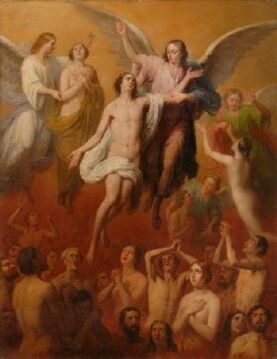
0 Comments

The Intercession of the Saints

10/31/2023

0 Comments

 
Picture
THE INTERCESSION OF THE SAINTS

"In this present time let your abundance supply their want, that their abundance also may supply your want, that there may be an equality."— -2 COR. 8, 14.

One of the most glorious articles of our faith is the Communion of Saints. The Catholic Christians remain truly united among themselves whether they are in heaven, on earth or in purgatory. This communion is not a communion of bodies but of souls, which confines their love, their desires and their compassion for their brethren to no place, and therefore they mutually remember each other throughout all space and time and continue their love and compassion towards each other forever. Every day Catholic Christians depart from this life, but yet in such a way that they are not completely and forever separated from us, in so far as they go into eternity in the grace of God. And as our Divine Saviour is the head of all Christians in heaven, on earth and in purgatory, so the Catholic Church always remains by the Communion of Saints in heaven as triumphant, in purgatory as suffering, and on earth as the militant Church. The more the blessed in heaven are united with Jesus, the greater is their love towards us, their brethren on earth, in order that we may share in the same happiness. The more the poor souls in purgatory suffer, the stronger is their desire for bliss, and the greater their wish that we Christians on earth may lessen their pains through our prayers and zealously make use of the means of grace of holy Church for ourselves and for them. And if the poor souls are unable to help themselves by prayer to God, they the more zealously pray God for us, the more we help them.

Yes, marvelous is this Communion of Saints. The saints in heaven who behold God are holy; we all, my friends, have been sanctified in Baptism and should become still holier by the Sacraments; and the poor souls are holy, for although they still suffer and do penance, they are nevertheless on the way to their bliss. Hence St. Paul says so beautifully and truly speaking of the Communion of Saints, that the abundance of the saints in heaven supply our want that there may be an equality. And they do it, since the abundance of their merits and sufferings on earth and intercession in heaven come to our aid, while we again on earth effectively help the poor souls and can apply the abundance of our means of grace to them. This takes place especially by indulgences. Therefore I shall speak today on the intercession of the saints and show how their abundance of merits are applied to us through indulgences.

O Jesus, assist me with Thy grace.

I. The Apostle St. Paul imposed on a public sinner of the Christian congregation at Corinth which he
the Apostle -- by his indefatigable zeal and preaching the Gospel had established, a severe and public penance. He dismissed him from the communion of the faithful " with the power of our Lord Jesus Christ," and excluded him from participation in divine service, in the holy sacrifice and the holy sacraments, "in order that he might be saved in the day of our Lord Jesus Christ," as the holy Apostle expresses himself in his epistle to the faithful at Corinth. After the example of this great Apostle, and by virtue of the power confided to her by the Saviour, Holy Church has also imposed similar and long penances upon public sinners. And after the example of that sinful Christian of Corinth, and other Christians who had the misfortune to fall into public and grievous sins, have with the same willingness, yes, mostly of their free will, submitted to such penances in order that they also " would be saved in the day of our Lord Jesus Christ." St. Paul later remitted to this sinner the remainder of the penance and that, too, as he himself writes in his second epistle to the Corinthians : " For what I have pardoned I have done it for your sakes in the person of Christ." (2 Cor. 2, 10.) The holy Apostle therefore grants to this sinner an indulgence. But from his own words we learn two important truths in reference to indulgences: the first is that St. Paul, and consequently the other Apostles and in general the Church, has the power to grant indulgences in the person of Christ. Secondly, St. Paul made use of this power on account of the intercession, the prayers and merits of the faithful at Corinth, " for your sakes." Indulgences show forth in the most resplendent manner the Communion of Saints and intercession for fallen Christians. For, where one member of the body of Christ, namely of the Holy Church, rejoices, there rejoice also the other members, the other holy Christians ; but where one member suffers, there suffer also the other members with him. His misery of soul, his unhappiness to have fallen so low goes to their hearts. Therefore they offer for his welfare their prayers, the holy sacrifice, the reception of the sacra ments and their merits. And just as God for the sake of the faithful grants to many sinners the grace of conversion so also the Church for their sake grants to the contrite, but still penitential sinners, pardon of their penance, that is an indulgence. Just as Jesus Christ in the hour of His death besought God to have mercy on us poor sinners, and in order to be heard, applied his merits to us, so those holy Christians at Corinth turned their compassionate eyes towards their fallen brother and besought the Apostle to pardon him.

This constantly takes place in the Church of God. The holy Martyrs who fearlessly professed the Christian faith before the courts of the heathens, amidst the greatest pains on the rack and were thrown into prison, joyfully beheld a bloody death — the Martyrs, who on account of their courageous profession, still living in prison, the objects of the joy of the Church, were the admiration and honor of the faithful, these holy Martyrs thought constantly of the suffering of their fallen brethren and made intercession for them. If in spite of their wounds they were still able to write, they wrote the names of the penitents whom they made intercession for, which are called libella or the books of the martyrs; if they could not write they simply gave the names of their proteges to the deacons, who visited the martyrs in prison, administered to them holy communion, bound up their wounds or brought them food, which privilege they bought from the heathen jailers. The deacons brought these written or verbal recommendations to the Bishop, and the Bishop, for the sake of the martyrs, shortened the penitent's time of penance. He granted therefore after the example of the Apostles an indulgence. The glorious doctrine of the Communion of Saints, and consequently of the faithful on earth consists especially in this that the merits and good works and prayers are of benefit to one another. Therefore we behold how whole congregations interceded for those who had fallen on account of the fear of martyrdom, or who had denied the faith, if they saw that they were really contrite. We see how saints in prison and on the rack, by the glory and the constancy of their faith, in the greatest sufferings encouraged the faithful and caused public sinners to return to the faith and like the dying Saviour in compassionate love besought the Church to forgive them.

How should in that solemn moment, when by the last struggle of the martyrs our Divine Saviour was glorified before the world, the Church seals with a new glory her truths, when the martyrs are crowned with an eternal crown and the faithful celebrate with joy the victory of their brethren — how should in that solemn moment any member of our holy Church re main excluded from the common joy and continue in sadness? The very sight of the courageous confessors and martyrs was pain enough for the penitents that they had fallen so deeply by their sins. Therefore they should participate in this common joy, and for the sake of the martyrs and their intercession they were received again into the communion of the faithful and therefore granted an indulgence of the rest of their penance. Here the words of the Apostle are applicable: "That their abundance supply your wants that there may be an equality." An indulgence is consequently the forgiveness of ecclesiastical penance on account of the intercession and the merits of the saints and especially of Christ, and God pardons just as much of the temporal punishments in purgatory as we would have atoned for if we had really performed this penance. In indulgences we learn, my beloved, at the same time what a glorious consciousness once penetrated the Christians, how intimately they were united to the Christian community and were of one heart and one soul, Here we see that Christian morality and purity was the common spirit, the disapproval of vice and disobedience towards God and the Church was general, sorrow for sin was a common grief, love and intercession for the penitents in public prayer during divine service and the holy sacrifice of the Mass was performed by the common bond of charity. Yes, indulgence which the ignorant and unbelieving, puffed up with a miserable pride, despise and with vulgar stupidity ridicule — indulgence is one of the most beautiful and consoling doctrines of the Catholic Church.

3. Is intercession made no more for the sinner and the fallen? Most certainly, but in a different way. We have in the present day no martyrs and no public penances; ecclesiastical penances are supplemented by indulgences. Therefore, indulgence teaches us again that neither God nor Holy Church has joy in punishment, and that punishment is not inflicted in order to injure, but in order to make satisfaction to the divine Justice, in order — as the Apostle says — that the soul may be saved in the day of the Lord. If therefore this satisfaction to the divine Justice can be made in an other and a milder way, then the temporal punishment is all taken away. This is done by indulgences. The Church, my beloved, wishes to lead us to God by indulgences for our justification as she formerly did by penance. She relies on the free and willing zeal of the faithful and admonishes them to works of charity. She announces to them who wish to sanctify them selves and fulfill the conditions of indulgences, forgiveness of ecclesiastical penance on earth and temporal punishment in purgatory. By sincere zeal to gain indulgences reverence for the justice of God, which punishes the least sin, is always manifested. Who therefore does not strive with his voluntary penance to obtain indulgences exposes himself on the day of the Lord and will more deeply feel the penance of purgatory, the less he strove to make satisfaction to divine justice on earth.

Those Christians who are not satisfied with only contritely confessing their sins, but strive earnestly to do penance for them and as often as possible to obtain indulgences for them, obtain the intercession and the merits of the martyrs and confessors, the intercession and merits of the whole Church and of all holy people, the same as the penitents did in the first ages of the Church. Moreover, they share in the public prayers for sinners and penitents, the holy sacrifice, the good works, the suffering and persecution of the just. The catechism teaches us that the prayers, the merits and the good works of all the faithful are of benefit to all. This continually takes place on earth and will until the end of the world, but especially by indulgences.

The Saints will also make intercession for us. They give to us, when we strive to attain an indulgence, the abundance of their satisfying merits in order that there may be an equality. But the Saints grant to us not only their superfluous merits in indulgences as a charitable rich man would give of his surplus fortune in alms to the poor, but they intercede also for us at the throne of mercy. Once the holy martyrs and the faithful in the early Church called upon the Church for compassion and mercy to the fallen and the penitent, in order that they would, after the forgiveness of their penance, the sooner be received into the communion of the faithful and allowed to attend divine service and share in all the rights of the worthy Christian. At present we see in spirit the same confessors, martyrs and all the saints imploring for us the divine mercy at the throne of God in order that with the help of indulgences and the merits of the saints we may the sooner be permitted to share with them the celebration of the eternal Sunday and to join in the hymn of praise of the heavenly hosts around the throne of the immaculate Lamb. The holy longing of the Blessed is that we may not be for long years excluded from the doors of heaven and obliged to go the hard way of penance and pain in the fires of purgatory.

4. Oh, that you would all learn to understand rightly the glorious doctrine of indulgence and earnestly and zealously strive whenever possible to gain an indulgence! Then the saints in heaven would look down upon you with greater love when they would see that their penance on earth, their suffering and abundant merits are applied by the Church to you by indulgence. Yes, this application is the reason that the saints in heaven love you with a twofold and a threefold love, and always continue to be your protectors in the hard struggle for life on earth against the devil and sin, and your zealous intercessors at the throne of God until you have happily, with their help, escaped the deluge of sin on earth and have arrived at the portals of heavenly bliss. How consoling and mysterious, my beloved, appears indulgence to us in the glory of its truth, and if considered in that love, which, as an out pouring of the divine love of our Saviour, also penetrated the saints. Oh, if you could behold the hearts of those great saints who were inflamed with divine love, who passed their holy angelic pure lives in continuous self-denial, penance and suffering, and freely, just as our Divine Saviour, offered themselves to the divine Justice for the sins of their Christian brethren, so that they gained not only for themselves celestial glory but atoned for the punishments of others. Yes, at this sight you would be seized with the desire to strive to become good children of our holy Mother, the Church, and to make use of her treasure of grace by gaining indulgences. You would even be inflamed with the fire of Christian charity to come to the help of your suffering brethren in Christ as much as possible by prayers and good works, in order to do for them what the saints in heaven have done for you.

5. There remains, my beloved, another glorious truth, a rich source of consolation in suffering in regard to indulgences which I will communicate to you. From what you have already heard, have you not experienced the amiable beauty of this doctrine? Yes, truly, enlightened by this article of faith we learn first to appreciate the innocence and the suffering, the prayers and the penances of the just Christians in their entire supernatural greatness. They are precious in the sight of God, so that they have obtained not only for the saints an eternal bliss but also have atoned for the temporal punishment of their neighbors. What a consolation for all who suffer innocently! What a joy for holy Christians who experience sufferings, trials and tribulations! Who will still accuse God of in justice, who will continue to blaspheme Him?

You sinners, when you contemptuously speak of the divine Justice and say: "I sinned yesterday, and what happened to me? I will sin today, and nothing will happen to me." You sinners, who trample on the commandments of God and of the Church and go still unpunished and even joyfully and blessed with temporal prosperity continue to live — whom have you to thank for this? Indulgences, the good works, the prayers and sufferings of holy Christians. You purse-proud people, you frivolous Christians, who so often laugh and scoff at the piety of your servants ; whom you often torment on account of their faith and devotion — whom have you often to thank if the judgment of God has not overtaken you, whom else but the piety and suffering innocence of Christian souls? They pray for you. You parents, who at the sick-bed of your little innocent children accuse God of cruelty — indulgence places for you the sick-bed of your child as an altar of atonement, the suffering innocence as a sacrifice of atonement for your sakes and for your sins. This sacrifice not infrequently turns aside the punishment from the guilty head of the parents and obtains for them mercy and grace.

May you all therefore be filled with reverence for this article of faith of the Catholic Church, which has a beauty and a truth which the miserable scoffers never dreamed of. May you strive by gaining indulgences to share in the merits of the saints in order that divine Justice may be appeased and that you may be spared in time and eternity. Amen.

Source: The Beauty and Truth of the Catholic Church, Vol. III  Imprimatur 1913


0 Comments

The Communion of Saints

10/29/2023

0 Comments

 
Picture
WE are so near the Feast of All Saints and the commemoration of all the faithful departed All Souls day- that we may well let our affectionate thoughts follow after our brethren who have gone before us and sleep in the peace of Christ.

There is scarcely one of us, dear brethren, who has not been familiar from childhood with the article of the Apostles Creed, "I believe in the communion of saints"; and there are few, if any, who have not derived consolation from this dogma of our faith, teaching, as it does, that we are not entirely cut off from those who have gone before us, but form with them one great family, of which the head is Christ and the members the souls of the just, whether in heaven or in purgatory, or still in the flesh.

But if this truth of holy religion brings consolation, it brings also the duty of praying for our brethren who are passing through the cleansing fires of purgatory; who, because of sin or the debt due for sin, cannot enter their eternal home until they have repaid the last farthing. They can do nothing for themselves their day of meriting is past; they look to us who are their friends to help them.

While they were with us they were very dear to us bound to us by ties of blood or friendship. Let us do our duty to them now; let us, by our good works in their behalf, show how much we love them; let us show that our affection for them was not selfish nor pretended, but so real and strong and lasting that death has but strengthened it and brought it to its fulness.

What one of us but has his daily task his allotted work? Yet as each day brings its own burdens, so each day is full of opportunities of gaining indulgence for the souls in purgatory. The many inconveniences we all of us are called upon to suffer, the many sacrifices of comfort and of pleasure we make, the disappointments we meet with, the fatigues we bear all these may be made sources of refreshment to our friends beyond the grave. If in the morning we would but offer to God all we shall do and suffer during the day for his honor and glory, and for the relief of the departed, oh ! how soon would the angels welcome them to their true country, and how many advocates we should have before the throne of God!

But if so much can be done without any particular effort on our part, what shall we say of the efficacy of the special prayers we recite for them and the Masses we have offered for their repose ! How shall we tell of their gratitude, of their unceasing supplications for us! We lose nothing, dear brethren, by praying for them; be assured we are rather the gainers, for not only do they pray for us, but more our charity towards them deepens in our souls our love for God, and makes us thirst the more after virtue and holiness, and wins for us a higher place in heaven and a brighter crown of everlasting glory.

Let us be generous, then; let us storm heaven with our prayers for the souls in purgatory, and we shall find rest for ourselves as well as for them.

Source: The Beauty and Truth of the Catholic Faith, Imprimatur 1913


0 Comments

Religious Intolerance

10/27/2023

0 Comments

 
"Keep that which is committed to thy trust, avoiding the profane novelties of words and oppositions of knowledge falsely so called. Which some promising, have erred concern-
ing the faith."—I Tim. vi, 20.


Our Divine Saviour frequently compares His Church to a field and Himself to the sower who went out to sow good seed. He has indeed cultivated this field in the bloody sweat of His brow and sown the seed of His divine doctrine and of His grace. His labors were well repaid by the splendid harvest which He reaped in the faith of the first Christians, and in the holiness of the martyrs, confessors and virgins. But "his enemy came and oversowed cockle among the wheat and went his way" (St. Matt. xiii, 25).

The cockle is not only sin, but also error. This cockle will remain in the field of God, the Church, until the end of time. It is, therefore, the height of injustice to doubt the truth and sanctity of the Catholic Church because, forsooth, a few of her children, and even some of her priests and bishops, have been guilty of heresy or of crime. For the very reason that the Catholic Church is God's field, the wheat and the tares must grow side by side, until the time of the harvest, the day of general judgment comes. But in spite of the fact that the cockle and the wheat grow in the same field, the Church retains her truth and holiness. Her doctrines and sacraments sow only
wheat; the enemy sows the cockle.

Our Divine Saviour Himself tells us that the cockle is spared until the time of the harvest only because of the wheat. Because of the good Christian, God spares the sinner; because of the true believer, He spares the infidel and the heretic. God waits patiently until they be converted, or until they die, when He will reward them according to their deeds. The wheat is, therefore, the greatest benefactor of the cockle. It is on account of His faithful followers that God tolerates scoffers, sinners, heretics and infidels. The godless should, therefore, thank God on their knees that there are still so many faithful on earth.

However, still another truth makes itself manifest in this parable of the wheat and the tares in the field of God. Just as the sower cannot tolerate the cockle in his field, so the Church cannot tolerate the cockle, namely sin and falsehood.

Her zeal for the truth and for the salvation of souls compels her to be intolerant of error under what guise soever it may appear, but for the sinner and the erring she is merciful and compassionate, and she prays for them. We must never forget that weeds will always be weeds and wheat always wheat. Weeds can never become wheat, unbelief can never be placed on the same footing with faith, sin and crime can never claim equal rights with Christian virtue, and for all of them the day of the harvest will come, when the cockle will be cast into the fire and the wheat will be gathered into the granary of heaven.

I will endeavor to show you today what is really meant by religious intolerance.
O Jesus, assist us with Thy grace!

1. We frequently hear in our day the mass of unthinking men, especially her enemies, accuse the Catholic Church of intolerance against all those who profess a belief different from her own. What do we mean by intolerance? We can have a true and a false conception of its meaning. Our enemies give it the false interpretation; we will try to explain its true meaning.

In its true conception, my dearly beloved, religious intolerance is the solemn avowal that God alone can give mankind the true religion and reveal those heavenly truths which are absolutely necessary for eternal salvation. Every child can understand this. Hence religious intolerance condemns every religion and doctrine that does not come from God, that has its origin in the vagaries of the human mind, and must by that very fact be false and detrimental to the salvation of souls.

In this meaning God Himself must be intolerant, if we may so express ourselves. He cannot tolerate that man change the eternal truths and precepts to suit his fancy, or that he adore strange gods. God in His infinite love and mercy can never reward eternally those men who willfully transgress His divine law, who mutilate His divine truths, or who completely throw off the allegiance they owe Him. On the contrary His infinite justice demands that He inflict everlasting punishment on them. If God did not do so, He would thereby admit that He is not the only true God, that His commandments are not necessary and that His truths are not required to obtain eternal life. Who will dare utter such blasphemy? Therefore, even on the part of God, there must be a necessary and essential intolerance.

But even man is intolerant, and he cannot be otherwise without surrendering the rights that belong to him by nature or condition. No ruler can allow his subjects to alter or abrogate his laws at pleasure, nor can he permit them to decide for themselves whether they will obey the laws of the land or not. Whither would such a state of affairs lead us? To the ultimate overthrow of every duly constituted authority, and to boundless license. Public order and the security of life and property demand that all those responsible for the enforcement of the law be intolerant, that is, punish all law-breakers and disturbers of the
peace.

No father can allow his children to gainsay his commands, ridicule his admonitions, or repudiate their obligations. He must be intolerant in all these matters. No teacher can permit his pupils to maintain the opposite of what he has taught them, or to uphold their personal opinions as the only correct ones. No good could result from such a method, and so the teacher also is obliged to be intolerant. The same condition prevails between master and ap-which God raises before the world against religious indifference and infidelity. The cross tells us that God abhors every religion which He has not revealed to man, and that the infinite justice of God will punish all those who refuse to accept the grace and the doc-trine of the divine Redeemer, or who falsify them according to the caprices and the desires of their hearts. God is obliged to hate and punish sin and religious error, because He is infinite holiness and eternal truth. If God were indifferent to them He would thereby deny His own essence and being. If it be true that it is a matter of little consequence whether we possess the true faith and the true religion or not, why then did God not spare His only begotten Son, but give Him up to the ignominious death of the cross?

Again, who can doubt the infinite love, and mercy of Jesus toward all men, but especially sinners and the erring? And yet how intolerant Our Divine Saviour was of every deliberate error and contradiction in matters of revealed truth. How often and emphatically He pronounced judgment against all those who will not believe. "He who does not believe is already judged." "If he will not hear the Church let him be to thee as the heathen and the publican."

St. John, the disciple of love, writes :
" Whosoever revolteth and continueth not in the doctrine of Christ, hath not God. . . .If any man come to you and bring not this doctrine, receive him not into the house, nor say to him, God speed you" (II St. John i, 9). But he also gives the reason for this. "He that believeth not the Son, maketh him a liar, because he believeth not in the testimony which God hath testified of His Son" (1 St. John v, 10).

3. And in fact, my dearly beloved, what other purpose did the Saviour have in view when He came into the world, than that of raising the human race out of the pit of infidelity and idolatry into which it had fallen, by means of the truths which He brought from heaven, and leading it back to God and salvation? If it were a matter of such complete indifference to what religion or religious error we give allegiance, is it not true that the Incarnation of Christ and His public ministry would be entirely superfluous? But who will dare to make so blasphemous an assertion? Since without Jesus there can be no truth, no eternal life, it follows that Our Divine Saviour was obliged to condemn openly every teaching that did not proceed from Him and, was for that very reason dangerous to the salvation of souls. Today, as always, He must be intolerant of every false religion that can only lead to perdition. For this alone "is eternal life," says Our Divine Saviour, "that they know Thee the only true God and Him thou hast sent, Jesus Christ." To be indifferent to religious error and to be tolerant of every false doctrine is equivalent to a denial of the veracity of God and of His revelation.

The Church then, cannot permit false teachings to arise; she must be intolerant. Just as God hates and punishes falsehood, so must the Church combat and condemn heresy, because she is the kingdom of truth. If she did not do so, or was lax in the accomplishment of this plain duty, she could no longer be the kingdom of God and of redemption on earth. She would be untrue to her vocation and fail to attain the purpose for which she was instituted, that is, to be the teacher of the human race, and she would thus accomplish her own annihilation. Indeed, if she also were indifferent, if she also asserted the equality of truth and falsehood, of revelation and heresy, if she also maintained that it mattered little whether one were Catholic or Protestant, Turk or Jew, she would be the first to deny the necessity of Redemption and of the true faith and likewise of the true Church. Can anyone imagine for a moment that the Church could ever subscribe to a doctrine so monstrous and at the same time so suicidal to herself ? She is, therefore, obliged by the very nature of things, and in justice to the Redeemer and to herself, to be intolerant of error.

4. There are two further reasons why God Himself, Our Lord and Saviour, and, consequently, the Church must necessarily exercise this true intolerance, namely, the salvation of souls and the removal of temporal disturbance and evils. As a matter of fact, what would become of mankind if proud or unbelieving individuals might with impunity transform the religion of Christ, curtail His doctrines or abolish His commandments? The Church cannot tolerate so reprehensible a course without betraying the sacred trust reposed in her by Jesus Christ, Grace and eternal life depend on the integrity of the faith, and therefore she could not tolerate any tampering with it without committing the most frightful treason against humanity and the salvation of souls. What would become of the unity of Catholic faith, of the sacraments, of divine worship, whither would Christianity have drifted if the Church had not constantly combated and condemned heresy? Hundreds of heresiarchs have sprung up in the course of nineteen centuries. Each one attacked a different dogma of the Church, each one asserted that his position was the correct one, each one arrogated to himself the right to teach the Church, the pillar and the ground of truth. Is, then, the Church to yield and be tolerant of heresy and thus betray Jesus Christ and the souls she was instituted to save? Any child can see that such a thing is radically impossible. The Church is obliged to be intolerant of error.

Teachers of heresy, at the expense of their fellowmen, seek only to satisfy their pride, ambition, and passions, and to sow divisions, discord and hatred. I do not speak here of those who have been led into error, of those who without any fault of theirs have been born and reared in heresy. They are deserving of our compassion, our love and our prayers. But I speak of those who knowingly and deliberately disseminate false doctrines. Such as these know perfectly well where they obtain the seed that they sow in the field of the Church. They know well that the doctrine which they try to spread by craft and violence is naught else than but the fabric of their own brain. They know that they are in conflict with the faith of the Catholic Church. They know that they are assailing Our Divine Saviour in His commandment and in His person—in His command to hear the Church, and in His person that has promised to abide forever in His Church.

Do you think, my dearly beloved, that it is proper for the Church to say nothing about these presumptuous practices of the teachers of error? Should she quietly abandon the Catholic faithful to temptation and thereby expose them to the danger of eternal perdition? Who will expect the Church to be so recreant to her duty? In such a case she would cease to be the true Church of Christ, she would no longer be the mother of the faithful, she would degrade herself to the level of her betrayers. In good sooth, the Church can never do this! Hence, as a warning to her children, she must exclude all heretical and godless men from her pale, she must condemn heresy. A father must exclude from the bosom of his family every person, every book that threatens to corrupt the morals of those who are entrusted to his care; the teacher must eradicate every evil influence from the midst of his pupils; a prince, a ruler must banish from among his people every element of disorder. This must be done lest misfortune and ruin overtake the family, the school, or the nation. So must the Church drive out heretics from among her children. She owes it to the Saviour, she owes it to herself, and, most of all, she owes it to the faithful, so that on the one hand they may recognize the false doctrine and, on the other, they may not lose their souls.

5. There is a still more cogent reason why the Church should excommunicate heretics. The experience of centuries teaches us that heretics have always and everywhere been the cause of terrible discord, of revolt, of persecutions against Catholics and of bloody wars. It has been thus from the time of Arius in the third century down to the days of Luther, who sowed the seeds of the Thirty Years' War in Germany, with all its attendant horror and ruin. No country where heresy has gained a foothold has ever remained at peace; it has either been rent asunder or has gone completely to ruin. Poland, Germany, France, Austria are sad examples of this. Protestant countries in our day furnish an apt illustration of the bitterness with which the Church is hated and of how little justice and fair play a Catholic may expect when his religious convictions come into conflict with the prejudices of his fellow citizens.

Is then, my dearly beloved, the Catholic Church,that has lived through nineteen centuries with all their happenings and knows the heart of man only too well, is she to look quietly on while heresies arise, and extend to them the tolerant hand of welcome? She cannot and must not do so, because of the salvation, the tranquillity, the welfare of the nations. She must be as uncompromising towards error as the father is towards the seducers of his children, or the ruler towards the rebels who incite his people to revolution.

Let the enemies of the Catholic Church accuse her of intolerance as much as they please. This uncompromising attitude of the Church toward the seducers of her children shows a large measure of wisdom, justice and mercy. She thus proves her right to the title of true kingdom of Jesus Christ, for her divine Founder can tolerate no revolt against His teaching and His commandments. The Church cannot give up the most precious heritage of Jesus Christ for the sake of a few proud or vicious men. Love as well as truth, obliges her to proclaim to all that the Catholic faith is the only true faith, and that he who lays a sacrilegious hand upon it attacks eternal truth itself, and that for him there is no hope of salvation unless he do penance and return to the faith. She is the Church of the martyrs, the Church of the holy Fathers, of the confessors and virgins and of all the saints. She has never to the present day hesitated to suffer and to shed her blood for the sake of her faith. She cannot, therefore, hesitate to defend the faith against the teachers of error, and declare them the enemies of her children, yea, even of the human race, and cast them out of her midst.

And we who are anxious to obtain everlasting life must be intolerant of ourselves, of our sins and shortcomings, we must cast them off, weep over them and flee from them. The deposit of faith has been kept intact in the Church until the present day because she has never entered into compromise with error. We too can maintain ourselves in grace, and in the faith by waging a relentless war against sin and falsehood, and thus we shall live to see the happy day when God Himself will forever separate the cockle from the wheat, and in recompense for our sturdy resistance against error and sin, will receive us into the realms of everlasting bliss. Amen.

The Beauty and Truth of the Catholic Church, Vol. I, Imprimatur 1911

0 Comments

The Church Militant on Earth - Her Unbloody Persecutions

10/22/2023

0 Comments

 
 "Blessed are they who suffer persecution for justice' sake, for theirs is the kingdom of heaven."  St. Matt. v, 10.

Nothing better demonstrates the truth of the Catholic Church than the constant persecution to which a godless world subjects her. She has inherited in all its fullness the hatred which Jew and Gentile, Pharisee and Herodian, not only bore in their hearts but openly manifested against her Divine Saviour. The Redeemer foretold that His Apostles, His servants, His faithful, and His Church would fare no better than He Himself : "If they have persecuted me, they will also persecute you." And in the course of the ages this prophecy has been amply fulfilled, even before our very eyes. The Church as a faithful bride patiently shares the fate of her Lord. She too is crowned with thorns; she too is nailed to the cross; she too is bedewed with the blood of her martyrs. But just as the Redeemer is wonderful and adorable in His bitter passion and death, so the true Church shows in her bloody persecutions, in the countless numbers of her martyrs, a greatness, a truth, a beauty, a divinity, which surpasses a thousandfold all the other splendid efforts which she employs for the conversion of the world. Although the marks of the true Church, her unity, her sanctity, her catholicity and apostolicity betoken that God is with her—for indeed, He has, as it were, built the Church on these four mighty and indestructible pillars as His abode on earth and as a secure asylum for mankind—still the likeness which the Church shows to the suffering Saviour in her sorrows and her persecutions demonstrates far more clearly the divinity of her vocation to save the
world and to comfort the faithful.

Just as St. Joseph strove to defend from the machinations of Herod that most precious treasure entrusted to his care, the Divine Child, so the Church has ever striven to defend against the attacks of the Herods and the godless of all times, the Catholic faith, grace and redemption, as the most precious trust confided to her for the welfare of the world. Like St. Joseph she spares no pains, no effort; she recoils not even from persecution, if only she may preserve this priceless treasure. For this very reason she is called the Church Militant, against whom all the powers of iniquity have conspired.

I spoke last time of the bloody persecutions of the Church, in order to show her truth and beauty. Today I will speak of her unbloody persecutions, for they are worse and more dangerous than the former. They proceed from heretics and wicked governments; the former attack the Church in her faith, the latter in her possessions and her life.
         O Jesus, assist me with Thy grace!

1. An old Greek fable tells of the Titans, giants of prehistoric times, who in their audacity wished to scale high Olympus itself. To attain this end they heaped mountain upon mountain until the thunderbolt of an avenging god dashed them to the ground. Such Titans or giants of godlessness have ever arisen against the kingdom of heaven on earth, as Christ calls His true Church. This has given rise to the persecutions against the Catholic Church. The pagan emperors were the first giants of impiety. They attempted to wipe Christianity from the face of the earth by shedding the blood of the Christians in profu-sion. Nay more, they declared themselves divine and exacted for themselves divine honors and worship. The pagan emperors tolerated every form of superstition, ungodliness and vice. For the Church and the Christian faith alone they reserved their most relentless and cruel measures; at the price of her life-blood the Church, and she alone, preserved the faith and with it the benefits and the blessings of Christianity to the world. In the meantime the omnipotence of God dashed to the ground and annihilated the idolized pagan emperors with their empire.

But even during the days when the persecutions, instigated by the Roman emperors, were still raging in all their bloody fury, there arose a second generation of Titans to assail the kingdom of heaven. They appeared in the form of heretics, who did not, indeed, threaten the life of the faithful, but who designed to wage a far more pernicious warfare against what Christians prized even more highly than life itself, namely, the doctrines and the faith of the Church. If faith itself be destroyed, the Church will automatically cease to exist. The numerous herd of false teachers who rapidly succeeded each other did not at once direct their attack against the whole body of the Church's dogma, but slowly, steadily, one by one they took them up, disfigured them and tore them to pieces. In the course of centuries there is not a single Catholic doctrine, not an article of faith, not a mystery that has not been questioned or denied, so that at present there is not a tittle of divine revelation which has not been, or is not being, made the object of ungodly criticism or of impious denial. The very existence of God, the personality of our Divine Saviour, the Blessed Virgin in her dignity as Mother of God, the Divine Sacrifice, the immortality of the soul, eternity, heaven and hell, are made the mockery of vile tongues and are positively de- nied. This second persecution is promiscuously tolerant of every heresy, every folly, every madness of the ancient and the new world, down to the renewed theory of man's evolution from a monkey. It hates but one thing—one thing alone it pursues with its venom, and that is the Catholic faith. It is the destiny of the Church to suffer, through the ages, the same persecutions to which her Divine Lord was subjected by the Pharisees and the Sadducees, for they constantly attacked His teachings and cast suspicion on all He said and did.

The pagan emperors constituted themselves gods, and so, like them, the second Titans end by self-deification. It is the apotheosis of human reason, which places itself above God, above Jesus Christ, His Church and the teachings of the faith, and constitutes itself an infallible court before which everything must pass for judgment. It displays itself im-pudently in the sciences, in books and schools and periodicals, and is the cause of all perplexity, contradiction, doubt, ignorance, impiety, blasphemy and hatred. The omnipotence of God has likewise hurled this second attack against His Church to the ground. The force of this second storm is now well-nigh spent. The Protestants belonging to the numberless sects have at the present day no choice left but that of joining the Catholic Church, as so many have already done in England, Holland, Germany and our own country, or of becoming adherents of modern paganism.

The Catholic Church has splendidly withstood all the violence of this storm of centuries. There, impregnable as the Lord built her, she stands a beacon light to the nations. The tempest lashed the waves to fury and hurled them mountain high against her, but the waters fell back in harmless foam, and the beacon stands calm and undisturbed, sending forth the pure rays of her light of faith in undiminished power to guide the nations of all the world, on their way to God, to life eternal.

2. During the middle of the last century a third persecution against the Church had been gathering its forces out of the second. This is the most dangerous and ruthless of all. Just as the cruelty of Church Militant - Herod only benefited the innocent children, so the Roman emperors by their bloody persecutions only benefited Christianity; for never did she show herself in such radiance of truth and virtue as during the days of her greatest suffering. She took the pagan world by surprise and converted it. Nor have the countless heresies caused the Catholic Church any damage. What she lost in Europe by apostasy, she regained in Asia, Africa and America, and the Catholic faith shines as ever in the undimmed splendor of its unity throughout the world.

But this third persecution proceeded from the interior of the Catholic Church herself, and was directed against her own inner life. Consummate cunning and malice distinguished its procedure, for under the mask of friendship and protection, under the caption of reform and enlightenment, an attack was organized such as the world had never seen. This most baneful of all persecutions was reserved to Catholic princes and governments. They forced their way into the very sanctuary and hesitated not to lay their unhallowed hands upon the altar itself. They pretended to regulate everything and endeavored to gain control of even the most sacred functions. They hemmed in the Church on all sides, assumed tutelage over her and robbed her of her rights, her liberties and her possessions. They destroyed order and discipline, and forbade the conferring of ecclesiastical orders, the giving of blessings, the holding of processions and pilgrimages—all the manifestations of the Church's life. What was the result? Catholic life, once so flourishing, now languished, works of piety were forgotten, the zeal for charitable institutions died out, old habits of industry and honesty vanished and respect for constituted authority became a thing of the past even among Catholic nations. The Lord's day was neglected. Instead grew up religious indifference, ignorance of man's most sacred obligations, impiety, immorality, luxury, dishonesty, discontent, and, finally, revolution. Whole generations were corroded and remain so to this day.

But just as the pagan emperors ended by becoming self-made gods and then went down to their destruction, just as the heresies deified reason and are now in a state of dissolution, so the third persecution naturally culminates in the deification of the State. The mask is fallen, the State is without religion, without God—it is its own god. Therefore it has but one battle to fight and that is against the Catholic Church.—Its ultimate purpose is the dechristianization of the peoples. A State without a God must necessarily hate the Catholic Church as its natural-born enemy.

1. The dechristianization of the nations is effected in a twofold manner : First, the deified State declares that it is the source of all right and justice. But if the State is the only source of right and justice, it strictly follows that no other law or right has force or value; then there is no divine or ecclesiastical or international law, no personal or civil rights, no true freedom, no justice, no liberty of conscience or of opinion, except only in so far as the State may be pleased to allow it. Every justifiable opposition is branded as rebellion against the State, and so every effort is made to destroy the life and the activity of the Catholic Church. On the contrary, under pretext of enlightened toleration,—the toleration of the pagan emperors of old,—every protection and facility is given to lies and slanders and errors, aye they are welcomed with open arms as staunch allies in the one great fight—the fight against the Catholic Church.

2. Secondly—the aim is the dechristianization of our children by means of schools without religion, where the Catholic faith is misrepresented and held up to the scorn of the pupils in a multiplicity of ways; the dechristianization of the family by means of civil marriage and divorce; of the student body by means of infidel or irreligious universities under the pretext of advancing the cause of liberty and of science; of the adult world by means of a subsidized press, of theatres reeking with lewdness and immorality, and of secret societies. When the child, the family and civil society have been thus gradually dechristianized—then, of course, it is assumed that the Catholic Church will be very near her last end, and what is left of her can be destroyed without great difficulty. This saddest of all the persecutions is very much like the action of Herod, who did not indeed condemn Jesus, but clothed Him with a garment of mockery with the purpose of robbing Him of the last remnant of respect and love in which He was held by the people. In like manner godless governments clothe the Church in a robe of derision by abandoning her to every possible insult, with a view to depriving her of the people's love.

God also permits this persecution. It has furnished an excellent opportunity of drawing a sharp line of demarcation between the good and the wicked, between virtue and vice, between hatred and love; indeed it is a glorious time for the Catholic Church and her loyal children. It is particularly in our day, when the iniquities of the world have conspired against her, that the Catholic Church stands forth in all her grandeur and majesty, the true beacon light of unity in faith and salvation, a sure guide and consolation for the oppressed peoples. And it is this commanding attitude that fills her enemies with rage and drives them to despair.

3. The pagan emperors of old have gone down to ruin and their world-empire has been destroyed. The different heresies are now undergoing a slow but sure process of disintegration. Like them, all the States that have discarded God and His law are hastening to inevitable destruction. And it cannot well be otherwise. The adorable wisdom and providence of God have admirably adapted the Catholic faith to the life, the habits, the needs, the liberty, the aspirations of the individual as well as of whole nations. Take it away from them, and the individual as well as the nation will perish. Take a being out of the proper sphere of its existence, and see how it suffers. Look at the fish out of water, the bird deprived of air and freedom, the beasts of the woods and the mountains enclosed within the confines of a cage. Thus and much more does man suffer, do nations languish, when they are rudely torn from the atmosphere of Catholic life and faith. Such a life is no longer natural; it is injurious and a menace to existence itself. Those who tamper with the faith of a nation, who work at its dechristianization, call it by whatever name hypocrisy dictates, enlightenment, liberty or toleration, they are the peril and the enemy of that nation, for they are undermining its very life and existence. It is the first endeavor of every sectary and revolutionary to dupe the people, by means of insidious definitions, into throwing aside their Christian faith, so that in the resultant turmoil he may gain the mastery and acquire wealth.

In fact the man who has lost his Christian faith, who rejects Christian teachings and precepts, no longer believes in honesty, conscience, retribution, or charity. He throws off every restraint, he seeks his personal advantage in everything and earth is his paradise, procured, if necessary, by a life of public or private crime. What is true of the individual is
equally true of the nation. If there be any honesty, morality or loyalty left, it is owing solely and alone to Catholic faith, to Catholic life,—not so-called enlightenment, not to the promised happiness and brotherhood of man nor to the swarm of worthless periodicals.

My dearly beloved! When the Catholic Church opposes this avowed purpose of the deified State, when she vindicates her divine mission and her rights, she defends thereby the Christian family, true liberty, the true welfare and rights of the individual as well as of the nation. And if for this she is made to suffer, if she is persecuted and hated, she suffers and is persecuted because she, and she alone, can warn and save the nations. Infidelity and vice and error and secret conspiracies have never yet retarded the downfall of a people but have rather hastened it. The public press of our country is barely tolerant of, certainly not friendly to, the Catholic Church. For once that it is forced by circumstances to say something in her favor, it is a thousand times the vehicle of the vilest slanders and insults against her, her institutions and her children. And in this it enjoys the protection of the country's fundamental law. Why should this be so? Because the Catholic Church is the hereditary enemy, and the people must be taught to hate and to despise her and all that she stands for.

We Catholics have indeed been obliged in the past to listen to many a malevolent misrepresentation, many a sneer and taunt cast on our glorious faith. And we, good poor fools, have accepted all and kissed the rod that struck us. In this land of liberty, we alone are considered aliens and must apologize for having the temerity to exist. Are these the limitations of freedom of conscience? Are these the equal rights guaranteed to us by the constitution which our forefathers helped to frame and for which so much Catholic blood was shed?

The Catholic Church by strenuously opposing the dechristianization of the nations and suffering for her principles, can alone save the peoples. And if she cannot attain this object, not she, but the nations will suffer. Like her Divine Lord she battles against the impiety and the corruption of the world. And in this particular point she proves herself worthy of the Redeemer as His true Church. In this warfare she is more splendid than in peace and gives evidence of the divine power that is assisting her. She fights and suffers because she seeks for souls and desires to save the faith and redemption for the coming generations, until finally her efforts will be crowned with victory, and there will be but one flock and one shepherd on earth.

We too, my dear friends, must fight, at least for ourselves and for those who belong to us, so that we may preserve that most precious treasure entrusted to our care,—our Catholic faith. Everything depends on it, —not only grace and truth and eternal life, but also our very temporal existence, right and justice, order and well-being. And if in our sphere we have saved the Catholic faith from the machinations of the Herods, the Pharisees and the Jews, it will in turn save us for time and eternity and will lead us to the blissful vision of our Divine Saviour, to whom be praise forever. Amen.

The Beauty and Truth of the Catholic Church, Imprimatur 1911

0 Comments
    Holy Mother Church  dedicates the month of January to the Holy Name of Jesus
    Picture

    A Saint for everyday and good reading at:

    Picture
    Student Planners
    Handwriting Books
    Coloring Books
                      COPYRIGHT
    The purpose of this website is to share the beautiful Catholic resources that God has so richly blessed us with.  All texts unless they are my own words have their sources quoted, and most of them are in the public domain. Any educational items that I have made for or with my children are NOT TO BE USED FOR PROFIT, but are meant to be used for personal use by individuals and families. You may link to our site if you so choose.

    Archives

    January 2026
    December 2025
    November 2025
    October 2025
    September 2025
    July 2025
    June 2025
    May 2025
    April 2025
    March 2025
    February 2025
    January 2025
    December 2024
    September 2024
    August 2024
    July 2024
    May 2024
    April 2024
    March 2024
    January 2024
    October 2023
    September 2023
    December 2022
    October 2022
    July 2022
    March 2022
    January 2022
    December 2021
    November 2021
    October 2021
    September 2021
    August 2021
    July 2021
    June 2021
    May 2021
    April 2021
    March 2021
    February 2021
    January 2021
    December 2020
    November 2020
    September 2020
    August 2020
    July 2020
    June 2020
    May 2020
    April 2020
    March 2020
    February 2020
    January 2020
    December 2019
    November 2019
    October 2019
    September 2019
    August 2019
    July 2019
    June 2019
    May 2019
    April 2019
    March 2019
    February 2019
    January 2019
    December 2018
    November 2018
    September 2018
    August 2018
    July 2018
    June 2018
    May 2018
    April 2018
    March 2018
    January 2018
    December 2017
    November 2017
    October 2017
    July 2017
    June 2017
    May 2017
    April 2017
    March 2017
    February 2017
    January 2017
    December 2016
    November 2016
    October 2016
    September 2016
    June 2016
    May 2016
    April 2016
    March 2016
    February 2016
    January 2016
    November 2015
    October 2015
    September 2015
    August 2015
    July 2015
    June 2015
    May 2015
    April 2015
    March 2015
    February 2015
    January 2015
    December 2014
    November 2014
    October 2014
    September 2014
    August 2014
    July 2014
    June 2014
    May 2014
    April 2014
    March 2014
    February 2014
    January 2014
    December 2013
    November 2013
    October 2013
    September 2013
    August 2013
    July 2013
    June 2013
    May 2013
    April 2013
    March 2013
    February 2013
    January 2013
    December 2012
    November 2012
    October 2012
    September 2012

    Categories

    All
    10th Day Of Christmas
    10th Sun After Pentecost
    10th Sunday After Pentecost
    11th Day Of Christmas
    11th Sunday After Pentecost
    12 Days Of Christmas
    12th Day Of Christmas
    12th Sun After Pentecost
    13th Sun After Pentecost
    14th Sun After Pentecost
    15th Sun After Pentecost
    16th Sun After Pentecost
    17th Sun After Pentecost
    18th Sun After Pentecost
    19th Sun After Pentecost
    1st Commandment
    1st Sun After Easter
    1st Sun After Epiphany
    1st Sun After Pentecost
    1st Sunday After Easter
    1st Sunday After Epiphany
    1st Sunday Of Advent
    2016-2017 School Planners
    20th Sun After Pentecost
    21st Sun After Pentecost
    22nd Sun After Pentecost
    23rd Sun After Pentecost
    24th Sunday After Pentecost
    2nd Day Of Christmas
    2nd Sun After Easter
    2nd Sun After Easter
    2nd Sun. After Pentecost
    2nd Sunday After Epiphany
    2nd Sunday Of Advent
    2nd Sunday Of Lent
    2nd Sun Of Advent
    3rd Day Of Christmas
    3rd Sun After Easter
    3rd Sun After Easter
    3rd Sun. After Epiphany
    3rd Sun After Pentecost
    3rd Sunday Of Advent
    3rd Sunday Of Lent
    3rd Sun Of Advent
    4th Day Of Christmas
    4th Sun After Easter
    4th Sun After Epiphany
    4th Sun After Pentecost
    4th Sunday After Pentecost
    4th Sunday Of Advent
    4th Sunday Of Lent
    5th Day Of Christmas
    5th Sun After Easter
    5th Sun After Pentecost
    5th Sunday After Epiphany
    5th Sunday After Pentecost
    6th Day Of Christmas
    6th Sunday After Epiphany
    7th Day Of Christmas
    7th Sunday After Pentecost
    8th Day Of Christmas
    8th Sunday After Pentecost
    9th Day Of Christmas
    A Candle Is Lighted
    Admonition
    Advent
    Advent Coloring Pictures
    Advent Time
    Advent To Christmas
    Agnes
    Alban's Day
    All Saints Day
    All Souls Day
    Ambrose
    Ascension Day
    Ascension Thursday
    Ash Wednesday
    Assumption
    Assumption Of The B.V.M.
    Bad Books
    Bellas-little-shoppe
    Be Strong
    Bishop-hay
    Blessed Richard Gywn
    Blessed-virgin-mary
    Book Giveaway5ede0bf3e3
    Bridget
    Bvm-coloring-book
    Calling Good Evil And Evil Good
    Candlemas
    Candlemas Ceremonies
    Can-you-explain-catholic-customs
    Cardinal Pie
    Catechism-in-examples
    Catechism In Rhyme
    Catherine Laboure
    Catherine Of Siena
    Catholic Calendar
    Catholic Ceremonies
    Catholic-ebooks
    Catholic-marriage
    Catholic-reading
    Catholics-ready-answer
    Catholics-ready-answer
    Catholic Traditions
    Certificates Of Completion
    Chapter One
    Chapter Two
    Charity
    Childrens-books-pdf
    Childrens-meditation
    Childrens-sermons
    Childrens Sermons6a865c90b1
    Childs-history-of-apostles
    Christian-in-the-world
    Christmas
    Christmas Book List
    Christmas-coloring-book
    Christmas-customs
    Christmas Day
    Christmas Eve
    Christmas-octave-prayers
    Christmastide
    Circumcision-of-our-lord
    Circumcision-of-our-lord
    Coloring Book
    Coloring Pictures
    Come The End
    Communion Of Saints
    Confiteor
    Cradle Hymn
    Creeds-and-deeds
    Crusaders-for-christ
    Damien Of Molokai
    Dangers Of The Day
    Daughters Of Charity
    Devotion-to-mary
    Dogmatic Series
    Dorothy
    Downloads
    Duties-of-a-christian-father
    Duties-of-the-christian-mother
    Dymphna
    Easter Sunday
    Ecclesiastical Year
    Ecclesiastical-year
    Elizabeth Of Hungary
    Ember Friday In Advent
    Ember Saturday In Advent
    Ember Wed. In Advent
    Epiphany
    Epiphany For Children
    Epiphany - House Blessing
    Epiphany The Twelth Night
    Evangelist
    Evils Of Worldliness
    Faith
    Faith Of Our Fathers
    False Christs
    False Prophets
    False Worship
    Family And Catholic Customs
    Fasting
    Father Lasance
    Father Muller
    Feast Of The Holy Family
    February 2016
    First Sunday Of Lent
    First Sun. Of Advent
    For Children
    Francis Xavier
    Genealogy Of St. Joachim And St. Anne
    Genevieve
    Gifts At Christmas
    Give-a-Way
    Glory Be
    God Of Mercy And Compassion
    God The Teacher Of Mankind
    Goffine's Devout Instruction
    Goffine's Devout Instruction
    Good Friday
    Guardian Angel
    Guardian Angels
    Guardian Angels
    Guarding The Eyes
    Hail Mary
    Handwriting Books
    Handwriting Practice
    Heaven
    Heaven Is The Prize
    Heresy
    Hilary - January 14th
    Holy Cross Day
    Holydays And History
    Holy Ghost Novena
    Holy Innocents
    Holy Mass
    Holy Name Of Jesus
    Holy Name Of Mary
    Holy Souls
    Holy Thursday
    Holy Week
    Homeschool
    Honor-thy-father-and-thy-mother
    How Catholics Lose The Faith
    How-to-be-a-saint
    Human Respect
    Human Respect
    Humility
    Immaculate Conception
    In A Little While
    Indifferentism
    Instruction On Advent
    Instruction On Penance
    Instruction On The Feast Of The Holy Rosary
    Issue 42
    Issue 47
    January 2017
    Jesus Christmas
    Jesus With Childen
    Joan Of Arc
    John
    John The Evangelist
    Last Judgment
    Lectures For Boys
    Lent
    Lenten Catechism
    Lenten Lapbook
    Lenten Printables
    Lenten Sermons
    Lent For Children
    Lent To Easter
    Liberal Catholics
    Lisbeth
    Litany Of The BVM
    Little Month Of Saint Joseph
    Little Stories Of Christ's Passion
    Luke
    Maidens For Mary
    March 2016
    Margaret Mary
    Marks Of The Church
    Martinmas
    Mass
    Mass Study Guide
    Matthew - Sept. 21st
    Maundy Thursday
    May 1st
    May - Dedicated To Our Blessed Mother
    Meditations For Lent
    Menu-planner
    Metropolitan-second-reader
    Misericordia-reader
    Modernism
    Mondays-with-father-muller
    Month-of-saint-joseph
    Moral-briefs
    Moral-briefs-chapter-1
    Moral-briefs-chapter-2
    Moral-briefs-chapter-3
    Morning Prayers
    Mother Of Sorrows
    Mothers Day 20132303cd0d22
    Motion-pictures
    My Catholic Faith
    My-catholic-faith-giveaway
    My-prayer-book
    Narcissus
    Nativity
    Nativity Of The Blessed Virgin
    New Years
    New Years Day
    New Years Eve
    Nov Ninth72cdf219cc
    Nov. Tenth
    One And Only Saving Faith
    On Resignation To The Will Of God
    Our Lady Of Good Counsel
    Palm Sunday
    Papacy
    Parental Rights And Obligations
    Passion Of Christ
    Passion Sunday
    Patrick
    Penance
    Pentecost
    Pentecost Sunday
    Persecution Of The Church
    Plain Lessons In Christian Doctrine
    Poor Souls
    Pope St. Pius X
    Popular Instruction To Parents
    Practical Aids For Catholic Teachers
    Prayer
    Prayer Against Temptation
    Prayer For Lent
    Prayer For Perseverance
    Prayer To Obtain The Confidence Of One's Children
    Prayer To St. Joseph
    Precious Blood
    Presentation Of The Bvm
    Printable Books
    Prudence And Liberalism
    Purification
    Purity
    Quinquagesima Sunday
    Quote Of The Day
    Quote Of The Day
    Rearing Of Children
    Reason And Revelation
    Religious Intolerance
    Remember Me
    Remember-me
    Remember Tomorrow
    Rita Of Cascia
    Rogation Days
    Roman Missal
    Rosary
    Sacramentals
    Sacred Passion Of Jesus Christ
    Saint Catherine's Academy Gazette
    Saintly ABC's
    Saints
    Saints Of Christmastide
    Saint Stephen
    Saint Sylvester
    Saint Valentines Day
    Scandal
    School Planners
    Septuagesima Sunday
    Sermon Matter
    Sermon Matters
    Sermons For Chidren's Masses
    Sermons For The Christian Year
    Seven Dolors Of The Bvm
    Sexagesima Sunday
    Short Catechism Of Church History
    Short Catechism Of Church History
    Short Instructions
    Short Sermons For Every Sun
    Shrove Tuesday
    Signs Of The Times
    Sins Against Faith
    Spiritual Communion
    Spiritual Communion
    Spiritual Works Of Mercy
    St. Anne's Day
    Stations Of The Cross Coloring Book
    St. Benedict's Day
    St Catherines Academy Gazette
    St. Catherine's Academy Gazette
    Stephen
    St. George
    St-hilary-of-poitiers
    St. John Evangelist
    St. John's Eve
    St. John The Baptist's Day
    St. Joseph
    St. Joseph For Children
    St Lucy
    St Lucy Giveaway
    St. Mary Magdalen
    St Michael
    St Nicholas
    St. Nicholas
    Story Of The Week
    Story Sermonettes
    St-paul-the-first-hermit
    St. Stephen
    St. Therese
    Student Planners
    Study Guide
    Sufferings And Death Of Jesus
    Sunday After Christmas
    Sunday Observance
    Sunday Within The Octave
    Survey
    Survey Doll Costume
    Sweet Name Of Jesus
    Talks To Boys And Girls
    Te Deum
    The Angelus
    The Beauty And Truth Of The Catholic Church
    The BeeHive
    The Childs Desire
    The Christian Father
    The Christian In The World
    The Christian Mother
    The Church Of The Saints
    The Communion Of Saints
    The Drops Of Precious Blood
    The Ecclesiastical Year
    The Friends Of Jesus
    The Good Shepherd
    The Greatest And First Commandment
    The Holy Innocents
    The Love Of God
    The New Year
    The Particular Judgment
    The Prodigal Son
    The Queen's Festivals
    The Sacred Heart
    The Santa Lie
    The Way To God
    The Wondrous Childhood
    This And That
    Thomas A' Becket
    Thomas Aquinas
    Tomorrows Far Away
    TOM'S CRUCIFIX
    To The Heart Of A Child
    Trinity Sunday
    True Christmas Spirit
    Truth
    Truth And Lies
    Tutorials
    Two Thousand Years Ago
    Valentine's Day
    Veronica Of Milan
    Vigil Of Epiphany
    Whitsunday
    Whom The Lord Loveth
    Whom To Believe
    William- Jan. 10th
    With The Church
    Work And Listen To God!
    Works Of Mercy
    You And Your Neighbor
    Your Cross
    Your Neighbor And You

    RSS Feed

© Crusaders for Christ 2012