CRUSADERS FOR CHRIST
  • Blog
    • Staff only
  • About Us
  • Downloads
    • Catholic Homeschool - Study Guides
    • Handwriting
    • Student Planners
    • Coloring Pictures
    • St. Catherine's Academy Gazette
    • Printable Children's books
  • Catholic Reading
    • Books We Have Enjoyed
    • Saint of the Day
    • Just Stories
    • Chapter Books >
      • Jesus of Nazareth - The Story of His Life Simply Told
      • Little Therese
      • Lisbeth - The Story of a First Communion
    • Sermons for Children
    • This and That
    • The Blessed Mother for the Child in all of us!
  • For Moms
    • Popular Instructions on the Bringing Up of Children

10th Sunday after Pentecost - The Pharisee and the Publican

8/18/2019

0 Comments

 
Picture
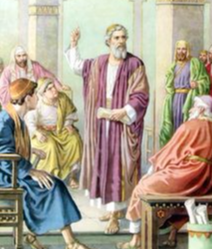
 WE cannot better understand the manner in which we should pray than by establishing a parallel between the defective prayer of the Pharisee and the excellent prayer of the publican. Let us, therefore, examine the dispositions of both.

First Point.—The dispositions of the Pharisee. There were good and bad dispositions in his prayer. There was something good in him, because he went to the temple to pray. In this he imitated the example of Jesus. He did what the faithful observers of the law do, and what should be done after the example of the apostles and the saints. He understood the words of Holy Writ, "My house is a house of prayer." How many men are there today who pretend to be better than this Pharisee and still they do not even do as much as he did? And even you, when you go to the temple, is it true that you go there to pray?

The Pharisee gave thanks to God for His benefits. Jesus also thanked His Father in His prayers. This is a duty which the Church is careful to impress on us every day at Mass—" It is right and just to return thanks to God." The Pharisee understood the duty of gratitude. How many Christians who have been filled with God's choicest blessings do not understand this duty? Are you of this number?

The Pharisee was neither a thief, nor an adulterer, nor an unjust man. Consequently, he observed many of God's commandments—the seventh, which says, "Thou shalt not steal;" the sixth, which forbids adultery; in fact, he avoided what is forbidden by all the commandments, viz., injustice. In many respects he was not of the number of those of whom St. Paul says: "They who do these things shall not enter the kingdom of heaven."

This Pharisee did good works; he fasted two days in each week, thereby following the example of Jesus, the apostles, and all true Christians. He gave alms, paid his tithes on all he possessed, and in this imitated Abraham and fulfilled the law of Jesus. Where are the Christians, even among those who are reputed pious, who do as much as he did? We are obliged to praise and admire all this in the Pharisee, but here is what we must blame in him and the reason his prayer was rejected: He was of the number of those who consider themselves just, rely on themselves, and despise others. Spiritual pride, which is the worst of all, blinds the Pharisee to such an extent that he no longer regards himself as a sinner. This it is which corrupts all good works in their very essence and makes his prayer vicious. He is also guilty in his prayer; he sees nothing in himself which is reprehensible; in fact, there is nothing for which he may reproach or accuse himself, and he regards himself as entirely innocent. It is said, however, that "the just man first accuses himself." David conjured the Lord to pardon him for his hidden faults, and has not St. Paul spoken these words: "Although I do not feel guilty of anything, still I am not justified for that."

The Pharisee, under the very eye of God, enumerated his good works, not to refer them to the Author of every good, but to take pride in them. Instead of saying, "That which I am, I am by the grace of God," he refers all his good qualities to himself; he exaggerates and esteems them far more than they are really worth, and, under the veil of his presumptuous pride, it is not God whom he thanks, but himself.

The Pharisee commits a third fault by comparing himself with the publican, to despise him. By what right does he exalt himself the judge of his neighbor? St. Paul has said: "It is why, O man, you are inexcusable if you judge others; for in judging others you condemn yourself, since you do that which you condemn in them." It was not enough for the Pharisee to exalt himself above the publican, but in his pride he exalted himself above all men. "Lord, I thank Thee that I am not as the rest of men." With such dispositions, is it surprising that his good works were sterile, his piety rejected, and that he returned to his house without being justified! Is it not written: "God resists the proud and gives His grace to the humble"?

Second Point. The Dispositions of the Publican. In the prayer of the publican there is much to
praise and nothing to blame. And first remark his profound humility. He remains as far as he can away from the altar, and there accuses himself before God. At the sorrowful sight of his faults, he does not dare to approach the sanctuary; he considers himself unworthy to appear in the presence of the Lord, he is so convinced of his unworthiness. Accustom yourself to modesty, and do not strive to obtain preference; here on earth, the last place is the best. The divine Master has said: "Whosoever humbles himself shall be exalted."

While the Pharisee was standing erect with his eyes raised to the altar, the poor publican, ashamed and humiliated at his criminal life, trembles in the presence of the Lord and Judge and dares not to lift his eyes to heaven. You are also a sinner; therefore imitate a repentant sinner. As the publican, be penetrated by a salutary shame at the remembrance of your faults, and as he entertain a holy respect in presence of the God whom you have offended and who shall one day be your Judge. Admire, in the second place, the publican's spirit of penance. He strikes his breast, and by this action he loudly confesses that he has merited the chastisements of God. He strikes his own breast because he accuses himself, without striving to cast his faults on another. You also have sinned, and by your sin you have incurred the enmity of God. Do you wish to obtain pardon ? Strike your breast also, and, humbly at the knees of the priest in the tribunal of penance, do not fear to say: "It is through my fault, through my fault, it is through my great fault that I have sinned by thought and word and deed and omission." The humble publican adds to this exterior act a prayer which comes from a heart which is truly contrite: "Lord, be merciful to me a sinner!" Thus it is he speaks to God, and not to himself, as the Pharisee did; he does not enumerate his good works with complacency; he only accuses himself, avows himself a sinner, and asks for mercy and pardon. When you are before God do not rely on your good works and your merits to attract His graces, but recall and tell Him, in the bitterness of your heart, all your sorrows and faults. Let your lips frequently repeat the humble prayer of the publican: "Lord, be merciful to me a sinner!" and then there shall flow from your eyes those tears of penance which shall merit for you grace and pardon.

And now make an examination of your own conduct. Indeed, you detest the culpable conduct and the haughty hypocrisy of the Pharisee, but have you been careful to avoid it in your own life? As he, you are, perhaps, exempt from the gross vices; in your conduct, as in his, we may see evidences of good works ; but are you wholly exempt from pride, envy, ambition, and those other spiritual vices, with which the heart of this presumptuous man was filled? Put away all such sentiments, which are so unworthy of a Christian, and strive to imitate the example of the poor publican! Pray as he did, in the church and out of it, with the same humility, the same fervor, and then rest assured that your prayers shall be heard always.

Source: Short Instructions on the Feasts of the Year, Imprimatur 1897

0 Comments

9th Sunday after Pentecost - Jesus Weeps Over Jerusalem

8/11/2019

0 Comments

 
Picture
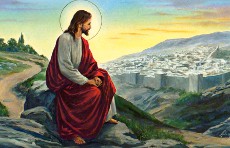
ON seeing the Saviour of the world shed tears over Jerusalem, strive to understand under what circumstances He shed them and what is the object of His tears.

First Point.—The circumstances under which Jesus shed tears. Nothing on the part of Jerusalem seems to justify them, and with regard to Himself nothing seems to provoke them. In Jerusalem everything appears to inspire joy, everything breathes of happiness. From afar you may see the rich palaces, brilliant and lifting their domes to the clouds, her splendid temple, and her impregnable towers ; you can hear the sound of her joyous population, and the eye of man perceives nothing there which can explain the profound sadness of the Saviour. But the look of Jesus is not the look of a man; it is the look of a God before whom everything is unveiled. It pierces the future, it sounds the depths of hearts, it judges men and things, not after they have appeared, but before they had existence. And now behold the mysteries which the eye of Jesus discovered in the unfortunate city which provoked His tears.

On the Mount of Olives, where He had come to pour out His soul in prayer, from this lofty summit Jesus saw the fearful storm which was already gathering over the heads of this guilty people. Jerusalem was condemned to perish, and the sentence was irrevocably pronounced. Titus and Vespasian, who were to be the terrible executioners, appeared before the saddened eyes of Jesus. On the very spot where He had received a kind of triumph, Vespasian shall establish his camp for the extermination of the city; thousands of crosses are erected, on which the Jews must expiate their crime of Deicide; He perceives the burning of the city, the fall of its walls, the flight or the death of its inhabitants, the captivity of those who could neither fly nor die, the frightful famine which would compel mothers to devour their own offspring— the scene of desolation which must ruin the proud and unfaithful city was all before His eyes. Then it was He wept over it and its misfortunes. He had predicted it, and He would have hindered it; but His Father had pronounced the sentence, and He could only weep over the sad future of a city which He had loved so much.

On the part of Jesus, nothing seems to provoke the tears He shed. All Jerusalem carries Him in triumph, arid the multitude in its enthusiasm exclaims: "Glory to the Son of David; blessed is He who comes in the name of the Lord!" Some extend their garments under His feet, while othersstrew flowers on the streets through which He passes. What, then, is the secret of His tears? Why sadness and sorrow at the moment when everything calls for happiness and joy? Jesus would teach us to restrain ourselves in prosperity by the expectation of the evils which may surprise us. It is written in our sacred books that joy and sorrow meet each other here below, and a day of joy may be the precursor of a day of affliction. It is not, therefore, necessary for a Christian to allow himself to indulge in a delirium of triumph, but it is necessary that he should strive to preserve, in the most lively and legitimate joy, a certain sentiment of sorrow which becomes a disciple of the cross and predisposes him to endure better the inconstancy of men and the reverses of fortune.

"I know well," said a famous orator to the tribune, "that the Tarpeian rock is close to the Capitol." One day the celebrated Ugolin, a chief of the Guelphs, having accomplished a complete triumph over a faction of the Gibelines, invited all his friends to a banquet. He recalled his recent successes, and asked of one of his most devoted friends if there was anything wanting to complete his happiness. "Yes," answered his friend, "the anger of God cannot be far from so great prosperity." He was indeed a prophet without being aware of it, for, some time after, Ugolin was conquered and taken prisoner; then he was imprisoned in a tower with his two sons and three nephews, and there they all died of hunger. Who is there that can securely count on the delusive' prosperity which comes to us here on earth?

Second Point.—What is the object of the Saviour's tears? If Jesus weeps, is it not over His approaching passion and death, since, some days later and amid the most bitter sorrows, He consoles the holy women who followed Him? He said: "Daughters of Jerusalem, weep not over Me, but weep for yourselves and your children." These words clearly indicate the object of His tears. It is the blindness of the Jewish people—a blindness which was followed by the ruin of their city and the loss of souls. To sin is the sad portion of humanity, but to persevere in crime and to have no wish to rise from that condition is the characteristic of the demon. Now Jerusalem, indisposed and laden with iniquity, rejects the Physician who had come from heaven to heal her; she refuses to know the peace which is offered her or Him who visits her. How could He restrain His tears when beholding such blindness?

That which increased the sorrow of the Saviour was that the unfortunate inhabitants of Jerusalem were amusing themselves at the very moment He wept over them. Everything in the city was festive and rejoicing, although they were on the eve of their last misfortune. "If thou hadst known, on this day, that which can procure thee peace, the day shall come when thine enemies shall surround thee and they shall overthrow thee, and they shall not leave in thee a stone upon a stone." And so the tears of Jesus are disinterested, tears so much the more bitter because of the sorrows which caused them to flow, because they were shed over a city formerly faithful, loved by God, and filled with His most signal favors.

Several cities of Judea must share the same lot as Jerusalem; Jesus knew this. However, He wept only for Jerusalem. Ah, it was because it was formerly the cherished city of God, and because today it was the most ungrateful. When Jesus wept over the tomb of Lazarus the Jews said: "See how He loved him." Why, then, today, when He weeps over them, do they not say: "See how He loves us"? It is because all that is hidden from their eyes and they understand nothing of their own history.

The second object over which Jesus shed tears is ourselves. Alas, what a painful similarity to make between us and Jerusalem! And in this similarity how many traits of resemblance afflict the heart of Our Saviour and should cover us with confusion! As Jerusalem, we have been chosen by God as the portion of His inheritance. He has enriched us with His graces. At a certain epoch in our life we received Him in triumph, and we have promised Him an inviolable fidelity. What has become of our promises? What have we done with His graces? Jesus weeps over us, over our innocence lost, over our promises violated, and over the evils which threaten us. Today are we grateful, at least for the time in which He visits us? It is like the efforts which God makes to bring back the lost sheep—the loving searches of the Good Shepherd—to the fold; it is like the anxious solicitude of the woman who disturbs everything in her house to find the lost drachma.

God seeks us in two ways: At one time it is His love and His grace which call us to prayer which has been abandoned for a long time, or He knocks gently at our hearts in the assembly of the faithful. Again, it is Divine Justice which chastises us to recall us to the right way, and sends us afflictions to remove from our eyes the bandage which blinds us. Happy is the soul who knows how to correspond to the voice of God, whether it sounds with severity or whether it calls us with love.

Source: Short Instructions on the Feasts of the Year, Imprimatur 1897

0 Comments

August 5th - Our Lady of the Snow

8/5/2019

0 Comments

 
Under the Pontificate of Liberius, John, a Roman patrician, and his wife, who was of an equally noble race, having no children to whom they might leave their estates, vowed their whole fortune to the Blessed Virgin Mother of God, begging her most earnestly and continually to make known to them by some means in what pious work she wished them to employ the money. The Blessed Virgin  Mary graciously heard their heartfelt prayers and vows, and answered them by a miracle. 

On
the Nones of August, usually the hottest time of the year in Borne, a part of the Esquiline hill was covered with snow during the night.  That same night the Mother of God appeared in a dream to John and his wife separately, and told them to build a church on the spot they should find covered with snow, and to dedicate it tot he Virgin Mary; for it was in this manner that she wished to become their heiress.  John related this to Pope Liberius, who said he had dreamt the same thing.

He went therefore, with a solemn procession of priests and people to the snow-clad hill, and chose the site of a church, which was built with the money of John and his wife.  It was afterwards rebuilt by Sixtus III.  At first it was called by different names, the Liberian basilica, St. Mary at the Crib.  But, since there are many churches in Rome dedicated to the Blessed Virgin Mary, and as this one surpasses all other basilicas in dignity and by its miraculous beginning, it is distinguished from them also by its title of St. Mary Major.  On account of the miraculous fall of snow, the anniversary of the dedication is celebrated by a yearly solemnity.

Source: The Liturgical Year, Vol. XIII. 1868
0 Comments

2019 - 2020 Maidens for Mary and Crusaders for Christ  Student Planners

8/4/2019

5 Comments

 
The printed copies of the Maidens for Mary and Crusaders for Christ 2019-2020 Student Planners are now available to purchase.  These planners begin with August of 2019 and end with June of 2020. You may view them by looking at the scribd file below. A print your own PDF file can be found here. They are copyrighted, so please abide by the copyright laws.

You can purchase a printed and bound version by clicking here: Bellas Little Shoppe. THEY ARE PRINTED AND READY TO SHIP.

5 Comments

8th Sunday after Pentecost - The Parable of the Unjust Steward

8/4/2019

0 Comments

 
Picture
THERE are few narratives in the Gospel which are so replete with useful instructions as the parable of the unjust steward. Reflect on these most interesting circumstances, and strive to profit by the lessons which they contain.

A rich man had a steward. This rich man is God, and He alone merits this title truly, because He only disposes of all goods, since He is Sovereign and Master of all. The rich of the world are not rich except by Him; if men have science, wealth, virtue, or beauty, they possess all these goods from His liberality. Besides, these borrowed riches may disappear in one moment or another; their loss may be occasioned by some disgrace, an illness, or a reverse of fortune; while, on the contrary, God is free from all reverses, all accidents, and from every inconstancy.
This man had a steward. We are all the stewards of God, and to all He has confided goods which we should improve. There are goods in the order of nature, and goods in the order of grace. Everything has been confided to us as a trust which we must render fruitful for our Master. Intelligence and genius come from God; we must employ them for His glory. The faculty of loving is a gift of His heart; we should direct it towards Him who is its principal and its most worthy object. If we have riches, let us strive to employ them in doing Him homage and by distributing them among the poor, who are His representatives. The sacraments, sermons, and holy inspirations are the gifts of God. He has lavished them on us as to His children, but it is on the condition that we make them fructify for His glory by making them serve for our sanctification.

The steward in question here was defamed to his master for having badly administered the goods which had been confided to him. From this learn that God knows everything. He knows perfectly those who are faithful and those who are not, those who are negligent and those who are zealous. Therefore, if He remain silent, if He fail to strike the guilty one, understand it well, it is not because He has not seen him or has forgotten him, but His patient mercy gives us time to think of ourselves and to repair the offenses of which we are guilty towards Him. When the time marked by His justice shall come, He shall call us before His tribunal. God calls us all, one after the other, a little sooner or later, but He shall call all without exception. Though we were concealed in an abyss, God need only make a sign, and Death, the implacable messenger, shall hasten to strike us and to cast us at the feet of our Judge. Then our examination shall begin.

What is this I hear of you? A thousand complaints have reached me and directly accuse you. Your conscience groans in its slavery. I have given it to you to be your rule, your guide, and instead of hearing its voice and walking in its light you have stifled its cries, you hold it captive in iniquity, and it complains of the violence you have done it. The poor, whom you should assist
according to your means—the poor, My friends and your brethren, complain of your neglect and the hardness of your heart. The blood of My Son whom I have delivered up for you—this blood, which you trample under your feet and which you despise or which you profane in the sacraments, cries for vengeance against you. My ministers whom you insult—these men of peace who have instructed your infancy, guided your youth, consoled your sorrows—My ministers mourn over your sins, the cry of their hearts has reached me. Why then are all these complaints? Now render an account of your administration.

O terrible words! they shall be addressed to us one day; they shall resound in our ears with the sound of thunder which suddenly comes to awake us from sleep in the middle of the still night. O unfaithful Christian! you have been born of virtuous parents, in the bosom of the true Church, and, consequently in the midst of all graces, and of all the means of salvation; to sustain and to sanctify you, you have had the sacraments, instructions, good examples, wise counsels, remorse of conscience—and what profit have you made of all these graces? "Give an account of thy stewardship, for now thou canst be steward no longer."

There shall come a day when God shall take from us all His goods, and there shall no longer be grace to aid us, nor talents to improve, nor merits to acquire. That day has already come for many whom you have known, and it shall also come for you, and when it shall come and your stewardship shall have been taken from you it shall be forever. Shall you not draw some practical consequences from such a terrible truth? Shall you live always as if this world belonged to you, and as if you were never to depart from it? Oh! do not forget that you are constantly nearing one of these two alternatives-- either an eternity of punishment, if you are a sinner, or an eternity of delights, if you have been faithful.

"But what shall I do?" said the unjust steward to himself. How shall I escape the evils which threaten me ? Then it was that a means was suggested which was more cunning than equitable, and which justified these words of our blessed Lord: "The children of this world are wiser in their generation than the children of light." The children of the world are they who think only of the present life, and who are occupied only with what interests them on earth. The children of light are they who know that there is another life, who aspire to life eternal, desiring and wishing to gain their salvation. You have the happiness to be of this number, but compare your prudence for eternal things with the prudence of the worldly for temporal things, and see how much their prudence is superior to yours.

They are superior in action, they do not fear pain or suffering, and it is even one of their principles that we obtain nothing without difficulty. They spare themselves in nothing—humiliating undertakings, prolonged watchings, voyages, fatigues, in fact nothing disheartens them. They are superior in reflection; they wish to be ignorant of nothing which can be useful to them. They study, they examine, they search deeply, they consult, they ask; their whole mind is concentrated on what they desire, and they profit by everything. They are superior in their resources; ill success never discourages them, and they arrange to withdraw from unsuccessful business; then it is that their activity and shrewdness are especially manifest. There are no means which they do not discover, no attempts which they do not make, no resources they do not employ; and when placed in greatest disgrace, they have the secret of still finding resources-- witness the unfaithful steward of whom our blessed Saviour speaks. Alas! shall these men be so prudent for the earth, and shall we do so little for heaven? In the matter of salvation we would wish that everything were easy, and we would abandon success, if to assure it we must labor and combat. In our contests for virtue the least reverse discourages us, our falls make us despair, and instead of thinking of the means to repair the past and of fortifying ourselves for the future, instead of animating us with new ardor and of taking new precautions, we are tempted to abandon everything, and we are imprudent enough sometimes to do so.

My God, should I not blush for my imprudence, for my carelessness, for my sloth in a matter where there is question of Thy glory and my eternal salvation! and when the children of the world are so attentive, so prudent, so laborious, and so persevering to attain their ends? May their conduct be always a living lesson to teach me what I should do for Thee, and to sustain myself in the difficult way of virtue.

Source: Short Instructions on the Feasts of the Year, Imprimatur 1897


0 Comments

Popular Instructions on the Bringing up of Children

8/3/2019

0 Comments

 
The future welfare of both Church and state depends chiefly on the manner in which the rising generation is brought up, for if all parents were to give their children a good religious training, the future prosperity of both Church and state would be assured, because a good religious training will make children good Christians, and, as experience proves, good Christians are always good citizens. In our "Popular Instructions on Marriage" we have briefly outlined the duties of parents in the bringing up of their children. In this little work we enter more fully into details, and clearly point out, almost step by step, the manner in which Christian parents should bring up their children from birth to the time when they embrace that state of life for which God has destined them. May this little book prove useful in directing and assisting parents in the proper performance of the noble but difficult task of making their children exemplary Christians and virtuous citizens!         

The book that this excerpt was taken from can be read in its entirety here.                                                             

0 Comments
    Holy Mother Church  dedicates the month of January to the Holy Name of Jesus
    Picture

    A Saint for everyday and good reading at:

    Picture
    Student Planners
    Handwriting Books
    Coloring Books
                      COPYRIGHT
    The purpose of this website is to share the beautiful Catholic resources that God has so richly blessed us with.  All texts unless they are my own words have their sources quoted, and most of them are in the public domain. Any educational items that I have made for or with my children are NOT TO BE USED FOR PROFIT, but are meant to be used for personal use by individuals and families. You may link to our site if you so choose.

    Archives

    January 2026
    December 2025
    November 2025
    October 2025
    September 2025
    July 2025
    June 2025
    May 2025
    April 2025
    March 2025
    February 2025
    January 2025
    December 2024
    September 2024
    August 2024
    July 2024
    May 2024
    April 2024
    March 2024
    January 2024
    October 2023
    September 2023
    December 2022
    October 2022
    July 2022
    March 2022
    January 2022
    December 2021
    November 2021
    October 2021
    September 2021
    August 2021
    July 2021
    June 2021
    May 2021
    April 2021
    March 2021
    February 2021
    January 2021
    December 2020
    November 2020
    September 2020
    August 2020
    July 2020
    June 2020
    May 2020
    April 2020
    March 2020
    February 2020
    January 2020
    December 2019
    November 2019
    October 2019
    September 2019
    August 2019
    July 2019
    June 2019
    May 2019
    April 2019
    March 2019
    February 2019
    January 2019
    December 2018
    November 2018
    September 2018
    August 2018
    July 2018
    June 2018
    May 2018
    April 2018
    March 2018
    January 2018
    December 2017
    November 2017
    October 2017
    July 2017
    June 2017
    May 2017
    April 2017
    March 2017
    February 2017
    January 2017
    December 2016
    November 2016
    October 2016
    September 2016
    June 2016
    May 2016
    April 2016
    March 2016
    February 2016
    January 2016
    November 2015
    October 2015
    September 2015
    August 2015
    July 2015
    June 2015
    May 2015
    April 2015
    March 2015
    February 2015
    January 2015
    December 2014
    November 2014
    October 2014
    September 2014
    August 2014
    July 2014
    June 2014
    May 2014
    April 2014
    March 2014
    February 2014
    January 2014
    December 2013
    November 2013
    October 2013
    September 2013
    August 2013
    July 2013
    June 2013
    May 2013
    April 2013
    March 2013
    February 2013
    January 2013
    December 2012
    November 2012
    October 2012
    September 2012

    Categories

    All
    10th Day Of Christmas
    10th Sun After Pentecost
    10th Sunday After Pentecost
    11th Day Of Christmas
    11th Sunday After Pentecost
    12 Days Of Christmas
    12th Day Of Christmas
    12th Sun After Pentecost
    13th Sun After Pentecost
    14th Sun After Pentecost
    15th Sun After Pentecost
    16th Sun After Pentecost
    17th Sun After Pentecost
    18th Sun After Pentecost
    19th Sun After Pentecost
    1st Commandment
    1st Sun After Easter
    1st Sun After Epiphany
    1st Sun After Pentecost
    1st Sunday After Easter
    1st Sunday After Epiphany
    1st Sunday Of Advent
    2016-2017 School Planners
    20th Sun After Pentecost
    21st Sun After Pentecost
    22nd Sun After Pentecost
    23rd Sun After Pentecost
    24th Sunday After Pentecost
    2nd Day Of Christmas
    2nd Sun After Easter
    2nd Sun After Easter
    2nd Sun. After Pentecost
    2nd Sunday After Epiphany
    2nd Sunday Of Advent
    2nd Sunday Of Lent
    2nd Sun Of Advent
    3rd Day Of Christmas
    3rd Sun After Easter
    3rd Sun After Easter
    3rd Sun. After Epiphany
    3rd Sun After Pentecost
    3rd Sunday Of Advent
    3rd Sunday Of Lent
    3rd Sun Of Advent
    4th Day Of Christmas
    4th Sun After Easter
    4th Sun After Epiphany
    4th Sun After Pentecost
    4th Sunday After Pentecost
    4th Sunday Of Advent
    4th Sunday Of Lent
    5th Day Of Christmas
    5th Sun After Easter
    5th Sun After Pentecost
    5th Sunday After Epiphany
    5th Sunday After Pentecost
    6th Day Of Christmas
    6th Sunday After Epiphany
    7th Day Of Christmas
    7th Sunday After Pentecost
    8th Day Of Christmas
    8th Sunday After Pentecost
    9th Day Of Christmas
    A Candle Is Lighted
    Admonition
    Advent
    Advent Coloring Pictures
    Advent Time
    Advent To Christmas
    Agnes
    Alban's Day
    All Saints Day
    All Souls Day
    Ambrose
    Ascension Day
    Ascension Thursday
    Ash Wednesday
    Assumption
    Assumption Of The B.V.M.
    Bad Books
    Bellas-little-shoppe
    Be Strong
    Bishop-hay
    Blessed Richard Gywn
    Blessed-virgin-mary
    Book Giveaway5ede0bf3e3
    Bridget
    Bvm-coloring-book
    Calling Good Evil And Evil Good
    Candlemas
    Candlemas Ceremonies
    Can-you-explain-catholic-customs
    Cardinal Pie
    Catechism-in-examples
    Catechism In Rhyme
    Catherine Laboure
    Catherine Of Siena
    Catholic Calendar
    Catholic Ceremonies
    Catholic-ebooks
    Catholic-marriage
    Catholic-reading
    Catholics-ready-answer
    Catholics-ready-answer
    Catholic Traditions
    Certificates Of Completion
    Chapter One
    Chapter Two
    Charity
    Childrens-books-pdf
    Childrens-meditation
    Childrens-sermons
    Childrens Sermons6a865c90b1
    Childs-history-of-apostles
    Christian-in-the-world
    Christmas
    Christmas Book List
    Christmas-coloring-book
    Christmas-customs
    Christmas Day
    Christmas Eve
    Christmas-octave-prayers
    Christmastide
    Circumcision-of-our-lord
    Circumcision-of-our-lord
    Coloring Book
    Coloring Pictures
    Come The End
    Communion Of Saints
    Confiteor
    Cradle Hymn
    Creeds-and-deeds
    Crusaders-for-christ
    Damien Of Molokai
    Dangers Of The Day
    Daughters Of Charity
    Devotion-to-mary
    Dogmatic Series
    Dorothy
    Downloads
    Duties-of-a-christian-father
    Duties-of-the-christian-mother
    Dymphna
    Easter Sunday
    Ecclesiastical Year
    Ecclesiastical-year
    Elizabeth Of Hungary
    Ember Friday In Advent
    Ember Saturday In Advent
    Ember Wed. In Advent
    Epiphany
    Epiphany For Children
    Epiphany - House Blessing
    Epiphany The Twelth Night
    Evangelist
    Evils Of Worldliness
    Faith
    Faith Of Our Fathers
    False Christs
    False Prophets
    False Worship
    Family And Catholic Customs
    Fasting
    Father Lasance
    Father Muller
    Feast Of The Holy Family
    February 2016
    First Sunday Of Lent
    First Sun. Of Advent
    For Children
    Francis Xavier
    Genealogy Of St. Joachim And St. Anne
    Genevieve
    Gifts At Christmas
    Give-a-Way
    Glory Be
    God Of Mercy And Compassion
    God The Teacher Of Mankind
    Goffine's Devout Instruction
    Goffine's Devout Instruction
    Good Friday
    Guardian Angel
    Guardian Angels
    Guardian Angels
    Guarding The Eyes
    Hail Mary
    Handwriting Books
    Handwriting Practice
    Heaven
    Heaven Is The Prize
    Heresy
    Hilary - January 14th
    Holy Cross Day
    Holydays And History
    Holy Ghost Novena
    Holy Innocents
    Holy Mass
    Holy Name Of Jesus
    Holy Name Of Mary
    Holy Souls
    Holy Thursday
    Holy Week
    Homeschool
    Honor-thy-father-and-thy-mother
    How Catholics Lose The Faith
    How-to-be-a-saint
    Human Respect
    Human Respect
    Humility
    Immaculate Conception
    In A Little While
    Indifferentism
    Instruction On Advent
    Instruction On Penance
    Instruction On The Feast Of The Holy Rosary
    Issue 42
    Issue 47
    January 2017
    Jesus Christmas
    Jesus With Childen
    Joan Of Arc
    John
    John The Evangelist
    Last Judgment
    Lectures For Boys
    Lent
    Lenten Catechism
    Lenten Lapbook
    Lenten Printables
    Lenten Sermons
    Lent For Children
    Lent To Easter
    Liberal Catholics
    Lisbeth
    Litany Of The BVM
    Little Month Of Saint Joseph
    Little Stories Of Christ's Passion
    Luke
    Maidens For Mary
    March 2016
    Margaret Mary
    Marks Of The Church
    Martinmas
    Mass
    Mass Study Guide
    Matthew - Sept. 21st
    Maundy Thursday
    May 1st
    May - Dedicated To Our Blessed Mother
    Meditations For Lent
    Menu-planner
    Metropolitan-second-reader
    Misericordia-reader
    Modernism
    Mondays-with-father-muller
    Month-of-saint-joseph
    Moral-briefs
    Moral-briefs-chapter-1
    Moral-briefs-chapter-2
    Moral-briefs-chapter-3
    Morning Prayers
    Mother Of Sorrows
    Mothers Day 20132303cd0d22
    Motion-pictures
    My Catholic Faith
    My-catholic-faith-giveaway
    My-prayer-book
    Narcissus
    Nativity
    Nativity Of The Blessed Virgin
    New Years
    New Years Day
    New Years Eve
    Nov Ninth72cdf219cc
    Nov. Tenth
    One And Only Saving Faith
    On Resignation To The Will Of God
    Our Lady Of Good Counsel
    Palm Sunday
    Papacy
    Parental Rights And Obligations
    Passion Of Christ
    Passion Sunday
    Patrick
    Penance
    Pentecost
    Pentecost Sunday
    Persecution Of The Church
    Plain Lessons In Christian Doctrine
    Poor Souls
    Pope St. Pius X
    Popular Instruction To Parents
    Practical Aids For Catholic Teachers
    Prayer
    Prayer Against Temptation
    Prayer For Lent
    Prayer For Perseverance
    Prayer To Obtain The Confidence Of One's Children
    Prayer To St. Joseph
    Precious Blood
    Presentation Of The Bvm
    Printable Books
    Prudence And Liberalism
    Purification
    Purity
    Quinquagesima Sunday
    Quote Of The Day
    Quote Of The Day
    Rearing Of Children
    Reason And Revelation
    Religious Intolerance
    Remember Me
    Remember-me
    Remember Tomorrow
    Rita Of Cascia
    Rogation Days
    Roman Missal
    Rosary
    Sacramentals
    Sacred Passion Of Jesus Christ
    Saint Catherine's Academy Gazette
    Saintly ABC's
    Saints
    Saints Of Christmastide
    Saint Stephen
    Saint Sylvester
    Saint Valentines Day
    Scandal
    School Planners
    Septuagesima Sunday
    Sermon Matter
    Sermon Matters
    Sermons For Chidren's Masses
    Sermons For The Christian Year
    Seven Dolors Of The Bvm
    Sexagesima Sunday
    Short Catechism Of Church History
    Short Catechism Of Church History
    Short Instructions
    Short Sermons For Every Sun
    Shrove Tuesday
    Signs Of The Times
    Sins Against Faith
    Spiritual Communion
    Spiritual Communion
    Spiritual Works Of Mercy
    St. Anne's Day
    Stations Of The Cross Coloring Book
    St. Benedict's Day
    St Catherines Academy Gazette
    St. Catherine's Academy Gazette
    Stephen
    St. George
    St-hilary-of-poitiers
    St. John Evangelist
    St. John's Eve
    St. John The Baptist's Day
    St. Joseph
    St. Joseph For Children
    St Lucy
    St Lucy Giveaway
    St. Mary Magdalen
    St Michael
    St Nicholas
    St. Nicholas
    Story Of The Week
    Story Sermonettes
    St-paul-the-first-hermit
    St. Stephen
    St. Therese
    Student Planners
    Study Guide
    Sufferings And Death Of Jesus
    Sunday After Christmas
    Sunday Observance
    Sunday Within The Octave
    Survey
    Survey Doll Costume
    Sweet Name Of Jesus
    Talks To Boys And Girls
    Te Deum
    The Angelus
    The Beauty And Truth Of The Catholic Church
    The BeeHive
    The Childs Desire
    The Christian Father
    The Christian In The World
    The Christian Mother
    The Church Of The Saints
    The Communion Of Saints
    The Drops Of Precious Blood
    The Ecclesiastical Year
    The Friends Of Jesus
    The Good Shepherd
    The Greatest And First Commandment
    The Holy Innocents
    The Love Of God
    The New Year
    The Particular Judgment
    The Prodigal Son
    The Queen's Festivals
    The Sacred Heart
    The Santa Lie
    The Way To God
    The Wondrous Childhood
    This And That
    Thomas A' Becket
    Thomas Aquinas
    Tomorrows Far Away
    TOM'S CRUCIFIX
    To The Heart Of A Child
    Trinity Sunday
    True Christmas Spirit
    Truth
    Truth And Lies
    Tutorials
    Two Thousand Years Ago
    Valentine's Day
    Veronica Of Milan
    Vigil Of Epiphany
    Whitsunday
    Whom The Lord Loveth
    Whom To Believe
    William- Jan. 10th
    With The Church
    Work And Listen To God!
    Works Of Mercy
    You And Your Neighbor
    Your Cross
    Your Neighbor And You

    RSS Feed

© Crusaders for Christ 2012