CRUSADERS FOR CHRIST
  • Blog
    • Staff only
  • About Us
  • Downloads
    • Catholic Homeschool - Study Guides
    • Handwriting
    • Student Planners
    • Coloring Pictures
    • St. Catherine's Academy Gazette
    • Printable Children's books
  • Catholic Reading
    • Books We Have Enjoyed
    • Saint of the Day
    • Just Stories
    • Chapter Books >
      • Jesus of Nazareth - The Story of His Life Simply Told
      • Little Therese
      • Lisbeth - The Story of a First Communion
    • Sermons for Children
    • This and That
    • The Blessed Mother for the Child in all of us!
  • For Moms
    • Popular Instructions on the Bringing Up of Children

The Circumcision of Our Lord - January 1st

12/31/2021

0 Comments

 
Picture

GOSPEL. Luke ii. 21. At that time: After eight days were accomplished that the child should be circumcised: his name was called Jesus, which was called by the angel before he was conceived in the womb.


Here we are, my dear young friends, at the beginning of a new year. When we look back on the days that have been vouchsafed to us, so full of graces and blessings, we feel that we ought to be filled with gratitude. But when we look at the past, we find that we have frequently done our work badly; that we have outraged God by our carelessness, coldness, and sinfulness. When we consider all this wasted and misspent time, we begin to feel some concern for the future.

How ungrateful we have been to God! Many of us have to bewail lost time, time spent in idleness, pastimes, recreations, and useless occupations; yes, even time spent in sin. Let us now correct all this; be sorry for the past and make firm resolutions for the future. As St. Paul tells us, "See how you walk circumspectly, not as unwise but as wise, redeeming the time." In order that you may be convinced of your great ingratitude to God's kindness, and that you may be determined to remedy the past days of the year, let us examine ourselves a little further. How have you spent all the days of your life? How much good might you have done, and yet have omitted it! How many prayers could you have said, but you were careless about them! How often could you have listened to a sermon and you did not make the effort! You could have frequented the sacraments of confession and communion, but your undevotion and coldness kept you away. How many charitable works could you have done! The opportunities for acts of kindness to others are so frequent, and so pleasing to almighty God and yet you did not perform them. Many and many a day we have lost in looking for recreation, and in performing mere human actions which have no merit attached to them. We read in the Book of Proverbs, "The way of the slothful is as a hedge of thorns."

How have you accomplished the little good you have done? You have said prayers, but in a distracted way and carelessly. You have been to church, but you never thought of the presence of God. You went to hear the word of God, but very little good did you derive from it. And then your sins: of how many have you been guilty? I hope you have not sullied your souls with awful, wicked crimes that make the soul of the youth like hell itself. Can you tell how often you have been disobedient to your superiors; the number of impudent answers given them; the curses, blasphemies against God, the bad example to your companions, those many willful thoughts against purity? Can you give an account of those wicked words by which you have taught sin to others? What a multitude of sins have you not committed! We read in St. Luke that a gardener had planted a fig-tree in his garden; one day he went to look at the plants and shrubs and trees with which his garden was stocked. He came to this tree, and saw that it bore no fruit; it was a healthy, green, luxuriant tree, and yet it bore no fruit; like a lazy, well fed, careless man who takes everything given to him, but makes no return. "Well," said the master, "just look at this tree; for the past three years I have come here and expected at least a little fruit; but there has never been any. Why does this tree take up good space uselessly? Cut it down, and throw it into the fire, and let us have done with it." But the servant said, "Ought you not to try this tree one year more? I will dig about it and cultivate it carefully; perhaps it will surprise us next year."

You, my dear young people, are trees planted by almighty God in the garden of His holy Catholic Church, that you may produce good fruit. Here is a three-year-old tree, and the farmer is tired of waiting. How old are you? You are old enough to have done something long ago. Instead of fruit you have produced thorns. St. Augustine says, "Up to the present I have lived my years badly; they are years lost to me; when I cast a glance on what I have done, my heart fails me, for I see nothing but sin, that cries out against me and rebukes me. My former years have been useless.''

All the creatures of the universe, ministers of divine justice, at the sight of your wickedness have been calling on God to be allowed to vindicate His outraged goodness and mercy by inflicting on you death or sickness. But again the goodness of Our Lord put it off. "Allow that tree to stand one year more." Yes, let him have another year; perhaps he will change his mode of life, will sin no more, but will be converted; will become a good tree and produce beautiful fruit. In the meanwhile, however, the good are injured to a certain extent by this delay; that bad tree ruins the good ones. A youth who neglects devotions, no longer goes to the sacraments, and gives scandal to others, gets into a habit of cursing and swearing, is a tree that produces such unwholesome fruit that other souls are brought to death; why should it not be cut down at once? Yes, the divine Justice says, that tree ought indeed to be cut down; but where there is life there is hope. Our Lord says He desires not the death of the sinner, but that he be converted from his ways and live. In the meantime years and months pass by; he continues at enmity with God; but the divine mercy never deserts him; it follows him always, is about him with heavenly inspirations and clear light, which makes him understand that interior voice which is sometimes amiable, sometimes severe: if amiable, it invites him to Our Lord's embrace and promises reward, consolation and peace; if, on the contrary, it is severe, it threatens punishment and death. His pleasures are turned into bitterness; his conscience gives him no rest, but fills him with a thousand fears; his memory constantly recalls the years of his childish happiness, when he went to church joyfully, and when he prayed to the Blessed Virgin. What joys did he not experience in his prayers! what consolation did he not find in going to holy communion! it was like the peace and happiness of paradise. Such were the means which the divine goodness used to gain the sinner to God, and perhaps all that time he was hard and obstinate in his sins. Perhaps this may even be your case. And if it is, will you not give over your obstinacy and practice Christian virtue? Go to your Father, your tender Friend, to the loving Jesus who has been waiting for you with such a love and who has stretched out His arms to you, to press you to His bosom. Should there be some among you who ought to think of doing better, they are foolish if they do not profit by the time which God has set for them; for that time will soon pass away and then will come the time of reckoning. "For time shall be no more." Oh, have a little sense, and use it for the purpose of your highest interest, the salvation of your soul. "Whilst we have time let us do good.'' "Blessed," says St. Philip Neri, " are ye young people that have a long time before you in which to do good." What great good you can do in your youth and strength; the old man has but a short time before him. Do not wait for the night when you cannot work. "The night cometh when no man can work."

St. Anthony says that if the damned had the time we throw away, and had another chance to live, they would become saints. If they could return to the earth, would they sleep and fool their time away? No; with the experience gathered in the other world they would work day and night, for they know the value of these occasions to gain merits. Thank divine providence that has watched over you with so great care; pray to the Holy Ghost that He may send into your soul that ray of light which will make known to you how important this opportunity of conversion is; that you may be inspired by Him with a strong will to persevere in good. With St. Augustine let us exclaim, "Too late, infinite goodness, too late have we begun to love Thee! infinite love of God, what did we love, when we did not love Thee? Too late have we known Thee and loved Thee, infinite loveliness of God! "

And you, my good young friends, for good I can consider the most of you to be, who constantly endeavor to conquer your bad inclinations and the temptations of the devil; rejoice on this day, for you have cause to be glad at the merits you have gained and which have been laid up for you in heaven; continue to pray to the Holy Ghost that He may give you the grace of perseverance.
Source: Sermons for Children's Masses, Imprimatur 1900

0 Comments

The Sixth Day of Christmas - St. Sylvester

12/30/2021

0 Comments

 
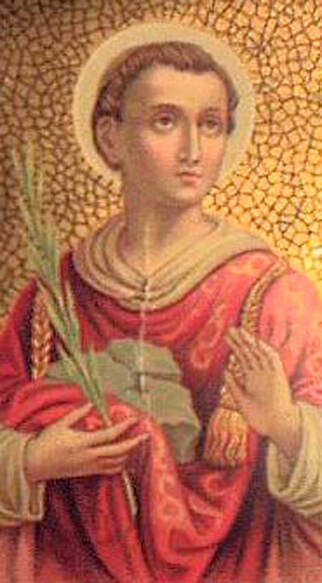
                                                                       December 31st
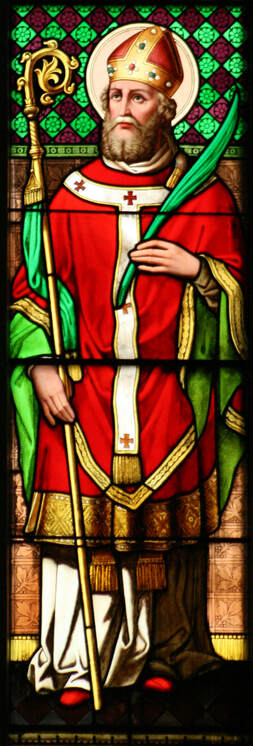
 *Sylvester was born in Rome toward the close of the third century.  He was a young priest when the persecution of the Christians broke out under the tyrant Diocletian.  Idols were erected at the corners of the streets, in the market-places, and over the public fountains, so that it was scarcely possible for a Christian to go abroad without being put to the test of offering sacrifice, with the alternative of apostasy or death. During this fiery trial, Sylvester strengthened the confessors and martyrs, God preserving his life from many dangers.  In 312 a new era set in.  Constantine, having triumphed under the "standard of the Cross," declared himself the protector of the Christians, and built them splendid churches.  At this juncture Sylvester was elected to the chair of Peter, and was thus the first of the Roman Pontiffs to rule the flock of Christ in security and peace.  He profited by these blessings to renew the discipline of the Church, and in two great Councils confirmed her sacred truths.  In the Council of Arles he condemned the schism of the Donatists; and in that of Nicaea, the first general Council of the Church, he dealt Arianism its death-blow by declaring that Jesus Christ is the true and very God.  Sylvester died in A.D. 335.
 
Reflection: - Never forget to thank God daily for having made you a member of His undying Church, and grow daily in your attachment, devotion, and loyalty to the Vicar of Christ.

A coloring picture can be found below.


sylvester_2_~_december_31st.pdf
File Size: 548 kb
File Type: pdf
Download File

sylvester_~_december_31st.pdf
File Size: 4417 kb
File Type: pdf
Download File

0 Comments

Saints of Christmastide - St. Thomas a' Becket - December29th

12/29/2021

0 Comments

 
Picture

IN the year 1117, upon the 21st of December, a child was born in our own city of London whose name was destined to shine in the long list of martyrs who have laid down their lives for the love of God. This child was Thomas—the son of Gilbert-a-Becket and his pious wife Matilda, who sought to train him in the fear of God and reverence to the Blessed Virgin, under whose special patronage he was placed. His mother would often weigh St. Thomas during his infancy, putting meat, clothing, and bread into the opposite scale, which were to be distributed amongst the poor, so that her alms increased with his growth and were all offered to bring down heavenly blessings upon the child's life.

While still very little, St. Thomas was seized with fever, and when he was getting better, the Blessed Virgin appeared to him in the form of a beautiful lady, who bent over his bedside, and, promising him that he would soon be well, gave him two golden keys, which she said were the keys of paradise, of which he was to have charge. Thomas went to a school in the city when first his studies began, but he was soon given into the care of the Prior of Merton, who was afterwards his confessor and friend, and witnessed his martyrdom.

Gilbert-a-Becket was a native of Normandy, and so many of his own countrymen came to visit him in London; one of them called Richier de l'Egle, was very fond of hunting and hawking, and often took St. Thomas as a companion. One of these times they had reached afoot-bridge across a mill-stream, which the knight crossed safely, but Thomas, taking less care, managed to tumble with his horse into the stream, and being unable to swim, he was rapidly borne along in the direction of the mill-wheel, which would certainly have crushed him to pieces. But at the cry for help the miller heard, the mill was stopped in time for the boy to be saved, and dragged out of the water almost insensible.

After finishing his education in England, St. Thomas was sent to Paris for a short time, when he returned to London and became clerk to the sheriffs until he was about one and twenty; then his parents died within a short interval, leaving their family very ill provided for. St. Thomas next entered the service of a relation who was a rich merchant, and thus learnt habits of business which were very useful to him afterwards, when he was raised to a high place in the Church. Many times Thomas had been advised to offer himself to the service of Theobald, the Archbishop of Canterbury, but his humility kept him back until he was five and twenty, when he was persuaded to do so by a friend of his father's, who felt sure that a higher vocation awaited him than the business of the world.

Theobald received the young man with much kindness, and St. Thomas at once set to work to make up for the deficiencies he quickly discovered in himself, and succeeded in gaining the esteem and confidence of the archbishop so entirely, that when Henry Plantagenet came to be king, Theobald obtained for a-Becket the place of Lord High Chancellor of England. This office was a very important one; he who held it was the keeper of the king's seal, and took charge of the royal chapel, and had the disposal of all the abbeys and bishoprics which were vacant and belonging to the king's right of patronage'; many other privileges belonged to the position which St. Thomas had been given, and which he filled with such great discretion. His life now was full of the whirl of state business, and yet his heart was not in it; often he would speak of his weariness and longing for a quiet and retired place where he might serve God only; but he used his power for the good of the Church and country, and for the divine glory, influencing the king to many acts of mercy and justice. But whilst he was surrounded by luxury and grandeur, his own fare was as simple as it could be. Under his splendid clothing he wore a hair-shirt, and after passing a day in royal pleasures, he would lie upon the floor during the night, doing many acts of humiliation and penance, and thus he remained unharmed by the world in which he had to live, keeping his heart fixed upon God.

Archbishop Theobald died during the month of April, 1161, so Henry II. fixed upon Thomas-a-Becket to succeed him, and in June, 1162, he was consecrated in the Cathedral of Canterbury, in the presence of an immense assemblage. A different life began for St. Thomas now—one which he had long desired. Every night he rose to say Divine Office with his monks, and then he washed the feet of thirteen poor men, to whom he gave a good meal before sending them away. At the dawn of day, he slept for a short time, and then rose to study the Scriptures; after which, he gave himself to prayer before saying Mass, or assisting at it During dinner, he had some spiritual book read aloud, but he did not force his soldiers to be present lest they might grow weary. Seats were always kept for a number of poor people, but afterwards a large quantity of food was given away to the crowds who came asking alms.

After a time, the king's great friendship for St. Thomas began to grow cooler, and the first
signs of his displeasure arose in several ways. One was a sermon which St. Thomas preached before Henry, in which he said that spiritual power was nobler and higher than that which is temporal; another was, that the archbishop objected to and succeeded in preventing an unfair tax being laid upon the people. Then, Henry encouraged an abbot in refusing to take the oath of obedience to the archbishop, and it became a struggle whether the Church should be governed as our Lord Jesus Christ had appointed, or whether a king was to be its ruler. Great difficulties seemed hanging over England, for Henry wished to begin reforms and changes which St. Thomas refused to agree too, but when the king pledged himself never to do anything to the injury of the Church, the Saint believed his word, and said that upon that condition he would not oppose the royal power.

A council of bishops and nobles was called to meet, so that St. Thomas should be forced to repeat this promise in public, and a paper was drawn up, upon which these "customs," as they were called, had been written, to which he was required now to affix his signature and seal. The Saint, who saw now what he was being made to consent to, refused to sign until he had communicated with the Pope, and no rage of Henry's could induce him to swerve from this decision; but his heart was sad and heavy, for he feared that by his first general promise to accede to the king's wishes, he had been weak instead of strong in the cause of the Church which it was his duty to guard and protect. So tender was his conscience, that for this fault which he deemed so serious, St. Thomas performed severe penance, and deprived himself of the right to say Mass until he had received the forgiveness of the Pope. The Pope wrote to comfort him, and assure him that for any fault there had been of weakness in yielding to the king, God would grant forgiveness, and supported him in his determination not to sign the royal papers which contained such alterations in the government of the Church.

From that time, St. Thomas began to prepare for his martyr's crown, for Henry Plantagenet sought to annoy and persecute him in every possible way—he was ordered to give up his property, called upon to pay an impossible sum of money, and summoned to appear before the court which had judged him. On the first day, the archbishop was confined at home by sickness, but on the Tuesday he rose, said Mass at his own altar, in which he offered up himself in union with the Divine Sacrifice, to suffer according to God's holy Will; then, as the custom of the time was, in any special trial, he placed the Blessed Sacrament in his breast and set out for the court, carrying his own cross, in token of his sacred office. When the king heard of his arrival, he was awe-struck, and stayed in an inner room, for he feared to face the representative of God, and there his nobles followed him, leaving St. Thomas and his bishops alone in the council chamber. The Earl of Leicester at last returned to pass judgment, but the archbishop refused to hear him, reminding him that he had no power over one who was the spiritual father of the king, the nobles and people, and then rising, he left the court, saying, "I put my cause and the cause of the Church under the protection of God and the Holy Father."

On reaching the gate, St. Thomas mounted his horse, but they found themselves locked in; however, one of his followers saw a bunch of keys hanging on a nail in the wall, and, fortunately, the first which he tried opened the gate. When the king heard how the archbishop had left, he was frightened lest some terrible judgments from Heaven should befall him, so he thought to protect himself from God's punishment by sending a herald through the town to order that no one should do St. Thomas any injury; but his command was unnecessary, for the people loved our Saint so warmly that they were rejoicing over- his safe return from the council. They crowded round him, so that he could scarcely get through their midst, kneeling for his blessing, and the sight of their devotion gave him great joy in the midst of his troubles.

Many of his followers had deserted the holy archbishop, but the poor whom he loved were invited to fill their vacant places at his table. When supper was ended, St. Thomas desired to remain the whole night in the Church, but after Office had been sung, he escaped from the monastery with three faithful friends upon strong horses which had been prepared in case a flight was necessary. It was a wet night, and they rode unobserved along the streets, reaching a village half-way to Lincoln before morning, where they rested a short time, and then started again for Lincoln. Here St. Thomas with one of his followers took a boat and went by water to an island on which stood a convent belonging to the canonesses of St. Gilbert of Sempringham, whilst the others journeyed there by land. They rested three days, and then set forth once more, travelling on foot towards Kent, from whence they crossed to the Flemish coast, landing after a stormy passage near Gravelines. But here the Saint was so weary, that his friends tried to get a horse for him; however, when the boy who had been sent for one returned, it was with a miserable ass, without a saddle, and with a halter of straw; so they threw a cloak over it, and S. Thomas mounted and rode a couple of miles, but he found it was more wearisome than walking, so he dismounted and dragged his weary steps along with great difficulty. A poor woman, struck with his noble appearance and evident fatigue, ran into her house and fetched him a rough stick to help him on his way, which he accepted with many thanks.

Soon after they met a party of young men, one of whom carried a hawk on his wrist; and as the archbishop's eyes rested upon the bird, one of them recognized him, and exclaimed, "I believe that is the Archbishop of Canterbury." But as one of his followers retorted, "You simpleton, did ever you see an archbishop travel in such a guise ?" they were allowed to pass on without further remark, and at length, after many difficulties, arrived safely at St. Berlin's monastery, where a trusty follower was waiting for St. Thomas, with a portion of the plate and money he had secured from Canterbury.'  But they could not remain long where they were, in the territory of the Count of Flanders, so once again they journeyed on, until they were safe in the dominions of Louis, King of France.

For seven years the Saint remained in exile—years in which he lived as a simple monk at Fontigny, in the community which received him with great delight, joining the brethren in their out-door occupations, assisting at their Office in choir, and keeping to a course of mortification and penance. Now the quiet and leisure he had often desired was his. It pleased Almighty God at this time to reveal to our Saint the future before him, for once, while he was praying after Mass at the altar of S. Stephen, he beard a voice calling"Thomas! Thomas f upon which he answered, "Where art thou, Lord?" Then the heavenly voice replied, "I am Jesus, thy brother and thy Lord. My Church shall be glorified in thy blood, and thou shalt be glorified in Me."During the archbishop's absence, the King of England took all his property at Canterbury, banished all his servants, even turning every poor man and woman who had shown him any kindness in his wanderings, out of
their homes in the cold winter-time, to seek shelter in Flanders. But his cruelty made every Catholic in Europe indignant with him, and charitable to the poor sufferers. The King of France tried to put an end to Henry's angry feelings, and bring him round to be once more friendly with the exiled archbishop, but in vain. After giving him time to cool down his passion, St. Thomas himself wrote to the king in a kind and gentle way, but no answer was returned to the first or second letter, and the third brought a sharp answer; and yet Henry was very much frightened, for he dreaded the sentence of excommunication which he knew he had deserved. Obstinate as he was, his faith in the Church was sufficient to make him fear her anger. Indeed the Saint felt now that his next step must be to cut off the rebellious monarch from communion with the Church, but by the advice of the Pope he put off the sentence in the hope of peace being made.

After several years of humiliations and false accusations, which the Saint endured with patience and holy joy, a reconciliation was brought about by the King of France, who had persuaded Henry Plantagenet to be his guest, and see the archbishop once more; and at this meeting Henry asked him to return, promising to restore him his see of Canterbury, and to uphold the power of the Church. It was on December 1,1170, that St. Thomas landed at Sandwich, from which he continued his journey to Canterbury upon the same day—the place where within a month he was to die for the cause of God. His journey was a continual triumph, for people flocked from all parts to meet and welcome him, and in his own city there was every sign of joy—the churches resounding with music, and the streets decked out as for a public holiday. St. Thomas went straight to his own cathedral, his face shining with the happiness of his heart, and in the chapter-house he preached a sermon from the words, which seemed almost like a preparation for his fast-approaching death, "We have here no abiding city, but seek one to come."

In about a week, the archbishop proceeded to London, where he was received with great
expressions of joy, the priests and people meeting him, and the "Te Deum" being sung. The young king (whom Henry had caused to be crowned during his own lifetime) sent the archbishop a message, forbidding him to make any more .processions about the country, and advising him to return to Canterbury. This gave St. Thomas much sorrow, for he knew that Henry's son was really attached to him, and that this message must be caused by the influence of others — it seemed to confirm him in his belief that new persecutions and sufferings were beginning.

The Saint wrote to a friend (the Abbot of St. Albans) to meet him at Harrow, and begged him to go and procure him an interview with the young king; and the Abbot obeyed, but without success. Then St. Thomas returned to Canterbury for the Feast of Christmas, but some of his enemies had already crossed over to Normandy, where King Henry was staying, complaining of his renewed power, and of the journeys he was making amidst the rejoicing people. Henry Plantagenet's eyes flashed with rage, and with an oath he cursed all those who did not rid him of one who annoyed him in this way. Then he left them, little thinking what were to be the consequences of those words spoken in his furious passion.

The four knights went out from King Henry's presence, determining to take him at his word, and, starting by four different routes, they reached England and Saltwood Castle at the same time. Next day they went to St. Augustine's Abbey, outside the walls of Canterbury, and spent the time in making their preparations for the sinful deed they had in view. The last morning of his life, the Saint assisted at Mass in the Cathedral, went to confession, scourged himself three times in his spirit of contrition and penance, and spent some hours in talking with his monks of spiritual things. At four in the afternoon the wicked knights came and asked for the archbishop, who received them with his usual courtesy, but they took no notice, looking at each other so strangely that he felt sure they had come for an evil purpose. They professed to have brought a message from the king, but not having an opportunity of attacking their victim, they at last left the room noisily, with threatening words.

The archbishop, with his monks, went to assist at vespers in the choir, but he withdrew alone to the altar of St. Benedict to think and pray, for he felt convinced that the hour of his death had come. As he was just ascending the steps to the choir, one of the knights appeared with his sword drawn, followed by the other three. Some one rushed to bolt the door leading to the cloister, so as to give the Saint an opportunity of escape, but he came down the steps to meet the knights, asking them what they desired. " Your death," replied one, and they tried to drag him from the church, but the Saint pushed the murderer from him, saying, " Touch me not—you forget that you owe me submission." Then, finding they could not get him from the church, Fitz-Urse waved his sword above the Saint, whilst he bowed his head, and commended his soul to God. Three times they struck him, and then falling on his face before the altar of St. Benedict, he breathed his last, saying, "For the Name of Jesus, and for the defence of His Church, I am ready to die." Then the wretched murderers ran through the palace, taking every valuable they could secure, and afterwards they departed, glorying in their awful deed.

When the news spread, people flocked to the church, weeping and lamenting for the Saint, who was so dear to them. They threw themselves down hy the holy corpse, kissing the hands and feet with reverent love, while others secretly cut shreds from his garments or took away some of the blood which had flowed from him. That night there was an awful thunder-storm, and amidst the flashes of lightning which lit up the church, the monks kept watch by the remains of the holy martyr, who lay there beautiful in death, a calm smile still on his lips as it had been through life, a fresh colour upon his cheeks, and an air of peace surrounding him, as if he had died in an untroubled sleep rather than by violence.

Next day they dressed him in his hair shirt, with the vestments of his office to cover it, and, laying him in a marble coffin in the crypt, they closed and left it for a while. But miracles began to be worked by the relics which had been carried away, and people flocked to the church, begging to kneel at the shrine. Then the enemies of the martyred Saint threatened to carry off his remains by force, so that the monks in terror were compelled to place the body in a wooden coffin, and hide it behind the altar of the Blessed Virgin until they could carry it once more down to the crypt, where it was enclosed in a marble coffin, round which strong walls were built, and in the roof of which two openings were left, through which pilgrims might touch and kiss the coffin. For a long time the cathedral was in mourning, for the terrible bloodshed which had desecrated it; no Mass was said there, the crucifixes were veiled, the altars stripped, and everything wore an aspect of gloom.

When the news reached Henry Plantagenet, his remorse was terrible. Too late, he saw the consequences of his ungoverned passion—too late he mourned for those hasty words which had brought about the death of such a faithful servant of God, and one who had been so good and patient a friend to himself He shut himself up in his misery, he took off his royal robes and dressed in sackcloth, he fasted, he did penances, but God inflicted greater punishments on him than these.   For more than a year Henry was excommunicated, and then had to do public penance for his sin before absolution was given him.

On the 21st February, 1173, St. Thomas of Canterbury was solemnly canonized as a martyr
for the cause of God, and his festival appointed to be kept on the 29th December, which was the day of his death. The body was removed to the place in the chapel of the Blessed Trinity where he had said his first Mass, and a splendid structure was raised to contain those holy relics. There the rich and great, the poor and unknown thronged to the shrine of the martyred St. Thomas, through whose intercessions many prayers were answered.

The death of the Saint of Canterbury brought peace to the Church in England, for in Henry's contrition he restored all the rights which he had deprived her of in that or any other land; and although in later times, when this unhappy country had turned away from the true faith, the martyr's tomb was destroyed and his sacred relics burned, his name still lives, and his memory is cherished as it deserves.

Now in our own times St. Thomas has been given the title of Patron of the Secular Clergy, and churches are rising up in honour of him who shed his blood to keep for the Church of Christ in England that place which, though lost in later years by the faithlessness of its own children, will belong to it again when the errors which prevail are overcome by the power of God's truth, and Jesus in the Blessed Sacrament is dwelling within every sanctuary throughout the land, amidst the reverent love of a faithful Catholic people.

Source:  Saints for Children, Vol III, 1878

A coloring picture can be found below:


thomas_becket_-_december_29.pdf
File Size: 674 kb
File Type: pdf
Download File

0 Comments

Saints of Christmastide - The Holy Innocents - December 28th

12/28/2021

0 Comments

 
Picture
                                    The Holy Innocents

Herod, who was reigning in Judea at the time of the birth of Our Saviour, laving heard that the Wise Men had come from the East to Jerusalem in search of the king of the Jews, was troubled.  He called together the chief priests, and learning that Christ was to be born in Bethlehem, he told the Wise Men: "When you have found Him, bring me word again, that I also may come and adore Him."  But God having warned them in a dream not to return, they went back to their homes another way.  St. Joseph, too was ordered in his sleep to "take the Child and His Mother and fly into Egypt." When Herod found that the Wise Men did not return, he was furious, and ordered that every male child in Bethlehem and its vicinity of the age of two and under should be slain.  These innocent victims were the flowers and the first-fruits of His martyrs, and triumphed over the world, without having ever known it or experienced its dangers.

Reflection:  How few perhaps of these children, if they had lived, would have escaped the dangers of the world! What snares, what sins, what miseries were they preserved from! So we often lament as misfortunes many accidents which in the designs of Heaven are the greatest mercies.

Source: Little Pictorial Lives of the Saints, Imprimatur 1925


holy_innocents_~_december_28th.pdf
File Size: 428 kb
File Type: pdf
Download File

0 Comments

The Third Day of Christmas - St. John the Evangelist

12/27/2021

0 Comments

 
Picture
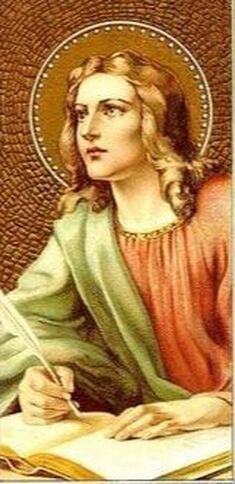
St. John was a fisherman in Galilee and was called to be an apostle with his brother, St. James the Greater.  Jesus gave these sons of     Zebedee the nickname, "sons of thunder."  St. John was the youngest of all the apostles and was dearly loved by the Lord.  At the Last Supper, it was John who was permitted to lean his head on the breast of Jesus, and John was the only apostle who stood at the foot of the Cross.  The dying Jesus  gave the care of His Blessed Mother Mary to this beloved apostle.  Turning to Our Lady, He said, "Behold thy Son."  And then to John, he said, "Behold thy Mother."  So for the rest of her holy life on earth, the Blessed Mother lived with St. John.  He alone had the great privilege of honoring and assisting the all-pure Mother of God.

John wrote one of the four Gospels, in which he shows us that Jesus is truly God.  He also wrote the last book in the Holy Bible, called the Apocalypse, and three Letters to Christians, which we find in the  Bible, also.  All his long life, St. John taught Christians to love one another, and he himself practiced great charity.  Once when he heard that a young Christian whom he knew and loved had became an outlaw and a robber, he set off at once to find him.  Old as he was, the Saint rode into the outlaw territory alone, and was taken prisoner.  As soon as the robber saw  St. John, he turned away in shame.

"Son," cried the apostle, "why are you running away from me, your father, an old man without weapons?  There is time for repentance.  I will answer for you to Jesus Christ.  I am ready to lay down my life for you.  I am sent by Christ!"  The young robber stopped when he heard those words.  Suddenly he began to weep.  He was won over by the love of St. John.  Before he left that city, the beloved Apostle made sure that the young man had become a good member of the Church once more.

When he had grown so old and weak that he had to be carried to church, St. John used to say to his people over and over again, "My little children, love one another."  The Christians once asked him why he said the same thing each time he spoke to them.  St. John answered, "Because   it is the Word of the Lord, and if you keep it, you will be doing enough."
 
Today try to resemble St. John at least in one of his three great virtues - purity of heart, charity toward all, and love for the Blessed Mother.   

A coloring picture of St. John can be found below.


john_the_evangelist_-_december_27th.pdf
File Size: 636 kb
File Type: pdf
Download File

0 Comments

Saints of Christmastide - December 26th - St. Stephen

12/26/2021

0 Comments

 
Picture
                              SAINT STEPHEN

THE name of Stephen signifies a crown, and a glorious crown in heaven was surely won by him who was chosen of God to lay down his life for Christ's love, first of all the many martyrs.

St. Stephen was one of six other Jewish men who had been elected to the office of deacon by reason of their well-known piety and wisdom. This office was constituted in the early Church for the purpose of having proper care taken of the poor, and Stephen with his companions were admitted to it by the laying on of hands, and we bear that he was "full of faith and power, and did great wonders and miracles among the people."

But certain men began to feel great enmity against the holy deacon, and resolving to do him harm, they bribed false witnesses to declare that he had been heard publicly to utter blasphemy against Moses, and also against the Almighty. St. Stephen was therefore summoned to appear before the council or Sanhedrim upon the charge of saying that Jesus the crucified and rejected Nazarene, should destroy Jerusalem and change all the rites which had been celebrated by the command of Moses.

We hear that as the holy deacon stood before the assembly, his face shone as that of an angel, bright with the love of God, and the thought of the dear Master, Who also had been evil spoken of and dragged before an earthly tribunal. He made a long address to the council with such power and courage, that they were "cut to the heart at his words," yet gnashed with their teeth in their passionate anger against the Saint, who, looking upwards, cried: "Behold I see the heavens opened, and the Son of Man standing on the right hand of God."  We read that at these words the infuriated people stopped their ears, and with one accord fell upon their victim, casting him violently outside the gates of the city that he might be stoned to death.

Heavily upon the martyr's head fell the stones, terribly they cut and bruised him; but he called upon his Master for help, saying: "Lord Jesus, receive my spirit" But Jesus had done more than suffer—He had prayed for His murderers; and Stephen, who was treading the hard, rough, bloodstained way of the Cross, must also pray for those who were taking his life. "Lord, lay not this sin to their charge," he cried, and thus speaking, he "fell asleep," the sweet sleep of a holy death, a martyr's death, which should know such a blissful awakening.

Oh, happy Saint, so soon to follow his crucified Lord! May we learn from him to love our enemies and to pray for our persecutors, and thus grasp the lesson of his holy life.

Source: Lives of the Saints, Vol. IV,  1878

                                            Collect from the Mass of St. Stephen

Grant, O Lord, we beseech Thee, that we may imitate him whose memory we celebrate, so as to learn to love even our enemies; because we now solemnize his martyrdom, who knew how to pray even for his persecutors to our Lord Jesus Christ, thy Son, Who liveth and reigneth with Thee and the Holy Ghost, world without end. Amen.

Source: The Liturgical Year, 1867

A coloring picture for the children can be found below:


stephen_-_december_26th.pdf
File Size: 278 kb
File Type: pdf
Download File

0 Comments

Sunday Within the Octave -          The Presentation of Our Lord in the Temple

12/25/2021

0 Comments

 
Picture
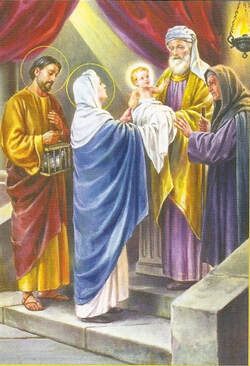
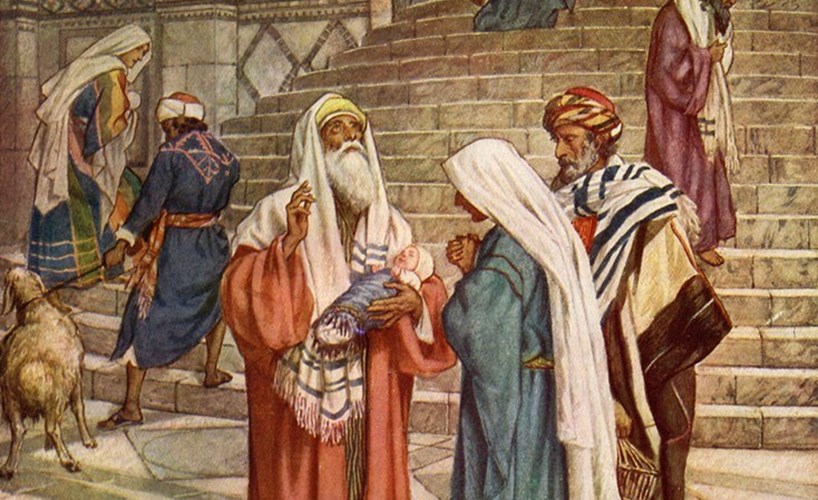
THE PRESENTATION OF OUR LORD IN THE TEMPLE
Christmas is over; with the angels we have sung the beautiful anthem, "Glory to God in the highest, and on earth peace to men of good will." We have witnessed the tears of the Child Jesus, but we know that those tears were tears of lave, and for that reason, they did not distress us, but gave us consolation.

Today, with the joy of Christmas still in our hearts, we come with the Holy Family and other pious people to the Temple to witness the ceremony of the Presentation. The first time Our Lord goes out into the world. He directs His Mother to carry Him to church. The moral I wish to draw from this Gospel, dear young people, is, that you should think much of the house of God on earth. We must also imitate the example of Christ and while in church beg our dear Lord to inflame our souls more and more with His holy love. There are many who do not love the Church, through some depravity of heart, or the bad example of others. Will such be dear to Jesus? Will He love such as these? Jesus weeps for them.

Mary and Joseph heard the great prophecy which Simeon had spoken; they wondered at it, they thanked God for the light bestowed upon Simeon, and also that they had been made instruments of His divine providence.

We, too, my dear young people, must rejoice at the honors which God gives His Son, as we must weep when we see Him suffer. Yes, when you see Our Lord honored, feel joyful and be happy; when you see Him despised, be sad of heart. Is not this Jesus your good God? your beloved Redeemer who shed His precious blood for you? Can you witness the outrages which are heaped upon Him without resenting them, or at least trying to hinder them? What would you say of a son who saw his father badly used, and looked on carelessly and coldly? Should not a boy feel a natural impulse to defend his father by word and deed? Well, he that loves Jesus Christ should at least feel compassion when His holy religion is insulted. St. Teresa once said that a soul which loves Our Lord would sooner die than see Him despised or neglected. Elias the prophet, not to witness the wickedness of the Jewish people, hid himself in a cave, and there prayed that God would take him out of this life rather than he should see Him offended.

After Simeon had congratulated Mary and Joseph on their glorious future, he spoke of the sorrows that awaited Mary. "This child is set for the fall and the resurrection of many in Israel, and for a sign which shall be' contradicted; and thy own soul a sword shall pierce, that out of many hearts thoughts may be revealed." What a terrible prophecy this! Is it possible that this Child, who has come to this world for the salvation of His people, should indeed be the cause of the damnation of many? To whom will He be a ruin? to many in Israel, in the true church. He will be a ruin to infidels and heretics who will not believe in Him; a ruin to the proud who will not bow their heads in humility and faith, and to many Christians. But what Christians will be damned by the coming of Christ? Those who are so only in name; who do the works of the heathen and live in sin; who offend and blaspheme Our Lord, even though they were brought up Catholics. This divine Infant will also be the ruin of many young people, of those who from their earliest childhood cared little for Him, drove Him from their hearts to make room for the devil. He will be the utter ruin of those who, not content to lead bad lives themselves, lead others astray by giving bad example or by bad conversation.

The divine Infant is presented today in the Temple. There is nothing dreadful about Him now; but one day they shall see Him, fierce as a lion; they shall see Him as a God, scattering His thunderbolts among sinners; He will demand of them the strictest account of all their works, of all the souls they have ruined, and of whose eternal damnation they have been the cause. May this prophecy not be realized in you. Then it will be too late to please Him; no more time for mercy, but for justice.

There was once a young man at the point of death, who had led a bad life; the priest came and presented the crucifix to him to kiss, saying, "Here, my son, is your hope." The young man fixed his eyes on the cross and said, "Yes, you say truly. He is my hope, but He is now the cause of my despair," and these were his last words. Be you, my dear young people, faithful to Jesus, try to know Him well, do not offend Him, but love Him with a great love; then He will be your salvation and eternal life. But, Mary, my mother, what is that prophecy which Simeon makes concerning you: "Thy own soul a sword shall pierce"? In her subsequent life we see the prophecy verified. A sword of sorrow pierced her very soul, when she saw her divine Son insulted, made an object of hatred, crowned with thorns, and cruelly nailed to a cross. Our minds cannot realize the pain which Mary had to suffer. We know that our sins have been the cause of the Passion and death of Our Lord. Let us, therefore, weep all our life for the sins we have committed, and not renew the Passion of Our Lord or the sufferings of Mary.

The Blessed Virgin once appeared to St. Lutgard, looking very sad; the saint asked her why it was so. Mary replied, "How can I be joyful when so many, day after day, give me new cause of sorrow by again crucifying my most holy Son?" She also appeared to Blessed Mcoletta Franciscana with her Child covered with terrible wounds, and said, "See how sinners treat my Son, inflicting on Him mortal wounds, and giving me also fresh cause of sorrow." St. Alphonsus says that when we sin we take the hammer, and most unmercifully pierce the hands and feet of Jesus with nails, and then we turn on Mary, the Mother of Jesus, and plunge the sword of sorrow deep into her soul.

But let us follow the story of the Gospel: There was in the Temple at the same time a woman, the daughter of Phanuel of the tribe of Aser; she was eighty years old, and after the death of her husband, had remained about the Temple serving the priests and engaged in prayer; she knew Our Lord at once, adored Him, and proclaimed Him the Saviour; then, filled with the Holy Ghost, she told them of the marvels of God's mercy, who had at last sent the Messias.

You see, my dear young people, how that holy woman who served Our Lord in silence and retirement, deserved so great a grace, so great a light of inspiration, as to be enabled to know Jesus. You, also, should love retirement, love to be near Our Lord in the Temple; speak often to Jesus in prayer, and then the Saviour will bring light to your souls, and speak to your hearts words of eternal life.

But there is something else to be considered in the story of this saintly old woman. We have in our cities and villages many who imitate this St. Anna. Let me say something in praise of these: they would willingly remain in the church, day and night, if they were permitted. We call them devotees. They are peculiar in their ways, considered crazy, derided by the good and bad as useless people; but perhaps they are high in the esteem of God. God gives more light to the simple and unpretending than to the philosophers who are puffed up with the pride of their intellect, and use it only to despise what they do not approve.

You remember that beautiful story of St. Catherine; she had a great dispute with some learned professors in one of the universities of Alexandria, Egypt, and in the presence of the Emperor Maximian, she so convinced them of their errors, that many became Christians and afterwards suffered martyrdom.

It is told of another martyr, who was a poor ignorant man, a laborer in the field, but who had studied Our Lord crucified; this man, when he had been judged guilty of disrespect to the gods and was condemned to death, made such a grand appeal to the emperor, that the tyrant himself acknowledged he was acting only from hatred of the Christian religion and not for the love of truth. These devotees in the sight of the world are useless, but we know that they have consecrated their lives to the service of God. There are also monks and nuns who spend much of their time in prayer. Are these people to be called pious idlers? Do they encumber the face of the earth, and should they be scattered as they have been in some countries? 0, how poor and miserable human beings are! They let vice walk openly in the world, and take little trouble about it; but when poor Religious gather together to pray, it makes them desperate, and they do not stop until they have succeeded in suppressing them. The Gospel ends by telling us that Our Lord lived at Nazareth, and grew in age and grace before God and man.

My dear young people, strive to grow in goodness, in virtue, and in sanctity, for it is the will of God that we all should be saints.

Sermons for Children's Masses, Imprimatur 1900


0 Comments

4th Sunday of Advent - The Baptism of Penance

12/19/2021

0 Comments

 
Picture
                               GOSPEL. Luke iii. 1-6.
Now in the fifteenth year of the reign of Tiberius Caesar, Pontius Pilate being governor of Judea, and Herod being tetrarch of Galilee, and Philip his brother tetrareh of Iturea and the country of Trachonitis, and Lysanias tetrarch of Abilina, under the high-priests Annas and Caiphas: the word of the Lord was made unto John the son of Zachary, in the desert. And he came into all the country about Jordan, preaching the baptism of penance for the remission of sins, as it was written in the book of the sayings of Isaias the prophet: A voice of one crying in the wilderness: Prepare ye the way of the Lord, make straight his paths. Every valley shall be filled: and every mountain and hill shall be brought low: and the crooked shall be made straight, and the rough ways plain. And all flesh shall see the salvation of God.

                                                   THE BAPTISM OF PENANCE
The day is close upon us on which the Messias, the Saviour of the world, the King of the people, the Prince of Peace, the Desired of nations, is to appear on the earth. Christmas is near. You, my children, must make every effort to prepare the way for the coming of Our Saviour.

When a great king is about to visit a city, what a commotion and bustle there is! Every one makes the most magnificent preparations in his power. Our duty is not to a monarch of this world, but to the King of kings, the omnipotent God of heaven and earth. You understand, then, that it is certainly necessary to make some preparation. St. John was sent to indicate what preparation is to be made, and you ought to think of his directions and follow them.

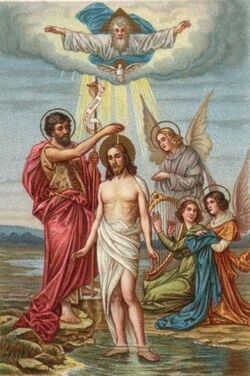
St. John the Baptist, by the inspiration of God, left the desert which he had inhabited for thirty years, and betook himself to the banks of the river Jordan. John, who in all that time had seldom spoken to any one, boldly began to preach penance, inviting the people who flocked to him to be baptized as a sign of the amendment of their lives.

"Do penance," he cried, "for the kingdom of God is at hand." Well fitted was he to preach that penance of which he had become master. His appearance indicated the mortified man; a girdle of leather bound his body; his shoulders were covered with camels hair; he lived in no house, but under the open sky, suffering cold and heat, winds and rain. His food was locusts and wild honey, water was his drink. Such a prodigy of self-denial from his very infancy, as if he came from another world, certainly drew the attention of the religiously inclined. Even soldiers and publicans came to him attracted by his austerity, and asked what they should do. Every condition of life was represented; every sex, every age; all were there, and repeated the same question. They confessed their sins and did penance. This is what you ought to do to prepare the way of the Lord.

I know indeed, my dear children, that while you have preserved your innocence it is not necessary that I should insist very particularly on penance; but what child is there that has not known what sin is, and therefore I am right in preaching penance even to you.

But I would certainly not ask you to do any of the heroic penances such as John the Baptist practiced. For great and older sinners great penances are necessary, and they have
practiced them, as you know from history. Mary Magdalen, St. Peter, St. Paul. The great act of penance which is required even of you is to make a humble confession at the feet of the servant of God in the confessional. But even this light mark of penance does not come easy to some young people who have already fallen into sin. After having committed the sins, they hide them in their breasts; shame closes their mouths to the confessor; when asked about them they deny having committed them. To such I will say: "It is either confession or damnation." The alternative is not hard to choose, but you will find many who would rather be damned than generously declare their sins.

The priest never thinks less of the penitent who makes a clear confession. A youth once went to confession to St. Francis de Sales. He had horrible sins to tell, but he confessed them sincerely and with sorrow. When the confession was over he said to the saint with a blush: "Father, what must you think of me when you hear of such enormous sins?'' "My son,'' answered the saint, embracing him," what do I think of you? I think you are a saint. A moment ago you were a real devil, but now God has pardoned you and you are a saint."

If this was the thought of a saint about his penitent, why should you blush 'to tell all your sins in confession? But should you still feel a repugnance when you go to confession address yourself to Mary, and she will obtain for you the grace of a sincere and open confession.

There was once a girl who had committed a fault and had not the courage to confess it. For eight years she carried that unhappy ulcer of sin about her on her conscience. Though she knew it was a mortal sin, still she went to confession and communion. Outwardly she was calm, but her heart was torn by unbearable remorse. She looked happy, but she was far from being so. At last on Annunciation day she knelt before the image of our mother Mary and cried most bitterly, begging her to gain her grace to tell this fault. She obtained the grace and lived a saintly life afterwards.

There are many who confess their sins indeed, but not with sorrow; it is only by word of mouth they detest them. What did you do when you committed that wicked deed? You offended a good God who has created you, preserved and redeemed you, and for no other reason than to satisfy the demands of a vile passion and degrading habit; and by so doing you deprived yourself of God's grace, you refused Him His honor and glory, you gave yourself over to the power of Satan. Can you find a youth who will take such a view of sin? Very seldom.

This is the kind of penance which St. John wants when he says, "Do penance. Bring forth fruits worthy of penance." And thus it is that the young man who has not a real sorrow for his faults continues to live in sin, and though ostensibly repenting of his sins commits them over and over. What kind of repentance is this ? True repentance demands a real sorrow for sin, and the resolution not to commit it again. What must be foremost in the penitent's mind is the hatred of sin, the abomination of that which is so evil, however pleasing it may be to our senses. What hatred is there for a sin that is committed again?

Let us suppose that a Jew is going to become a Christian. What great consolation such an event is to all. The day approaches when he is to be baptized. He goes to the church and there is a great feast made. But soon he returns to the belief of the Synagogue. What a disappointment, what a feeling of 'disgust, yes, even of hatred, at such 'a miserable wretch! If he believed in the faith of Jesus Christ, the true one, why did he leave it? If false, why did he become a Christian? But after a while he declares he believes again in Christ and yet, for a second time, he perverts and becomes a Jew. Would you say that he was ever a real Christian? No indeed; he pretended to be one, he was always a Jew, he never had the true faith.

Let us apply this to ourselves. Can you really call him penitent who today confesses his sins and says he repents of them, but who never, even for a moment, breaks off his attachment to sin, and to-morrow willfully commits the same sins again? Does he not clearly prove that he loves his sins? This is making a mockery of God. The Lord compares such repentance to the dog that returns to its vomit. St. Paul says that such people despise the kindness of God. Will those who thus continue to sin ever have the peace of God in their souls? Oh, no! The holy peace of a pardoned sinner God gives only to the just, to His friends, not to those who return again and again to their sins. Can they expect the blessing of God at the birth of the divine Infant? No, but they may be sure that maledictions will descend upon them.

My dear children, do all you can to prepare the way of Our Lord; with the Prophet Ezechiel I say to you, "Be converted and do penance for all your iniquities; cast away from you all your transgressions by which you have transgressed, and make to yourselves a new heart and a new spirit."

With St. Augustine I call on you to prepare the way of the Lord by ornamenting your souls with the magnificent virtues of sobriety, chastity, and charity. You must make yourselves worthy to receive the loving caresses of the Child Jesus, not only by being sober in eating and drinking, but by being careful and sober in speaking, careful about the books you read. With sobriety practice purity, too. You know how highly Our Lord values that virtue, for He would have no other than an immaculate Mother and He Himself was called the immaculate Lamb. Your thoughts must be pure, also your looks, your words, your affections, and all your actions. By them show a pure and innocent heart. With all this you must not forget great love and charity, for what are all virtues without the love of God?

St. Augustine shows us in many places how we should love Our Lord. With this great doctor let us say, "I love Thee, Saviour, I desire to love Thee more. Thou art an infinite God and therefore Thou deservest to be loved with an infinite love. Sweet Infant Jesus, come to my heart, and do not delay any longer." Thus the saints loved, and the Child Jesus was so pleased with the tenderness of their love that He sometimes visited them and spoke to them words of love.

St. Gustave at the approach of Christmas felt such a love for the coming of Our Lord, that the Blessed Virgin herself came from heaven and placed the Infant Jesus in his arms on Christmas night.

St. Laurence Justinian, when he said Mass one Christmas, fell into an ecstasy at the consecration and stood there like one turned to stone. When the acolyte saw this, he went up to him and pushed him, so as to rouse him. The saint started as if wakened from a heavy slumber and said: "Why, yes, I will go on with the Mass, but what is to be done with
this beautiful child? ''

What a glorious thing would it not be to 'have such a love for Our Lord! We would then know how to prepare for the birth of the Child Jesus. We would hardly need any instructions, because love would tell us what to do. He would come and make His throne in our hearts. He would fulfill all our wishes, and give us great graces.

Source: Sermons for the Children's Masses, Imprimatur 1900

0 Comments

2021 Catholic Family Calendar

12/13/2021

0 Comments

 
Below you will find our Catholic Family Calendar.  I make one for our family each year with edifying pictures and prayers.  If you wish to use it please feel free to download and print it for your own family. It is not an official calendar of the Catholic Church so please if using double check days of fast.
2022_calendar.pdf
File Size: 16937 kb
File Type: pdf
Download File

0 Comments

The Wonder Story Coloring Book

12/13/2021

0 Comments

 
Picture
A Christmas coloring book
to keep the little ones
occupied during
Christmas break.
You can print the whole book or print individual pages.  The choice is yours.
You can find the file below or here.
       
        WE WISH YOU ALL A VERY          
HAPPY AND HOLY CHRISTMAS!!


the_wonder_story_coloring_book.pdf
File Size: 11785 kb
File Type: pdf
Download File

0 Comments

Advent Time

12/13/2021

1 Comment

 
The Four Weeks of Advent
The time of preparation for the sweet mysteries of the birth of Our Lord is called Advent, that is to say, the coming. Its four weeks recall to Christians the four thousand years of prayers and sighs which preceded the coming of the Messias.

The Anthems of Advent
Seven days before Christmas is sung at Vespers an anthem called " The O Anthems of Advent," because it begins with this exclamation; it is a cry sent out to the Messias. It is sung at Vespers; for was it not in the evening of the world that the Messias came ? It is sung at the Magnificat to show that the Saviour for Whom we wait will come to us through Mary. (Gueranger, The Liturgical Year.) Again, the repetition of the anthem expresses well the ardent sighs, constantly renewed, of the patriarchs; the Introit has already offered us the same figure.
Practices of Advent
There remain among us to-day few traces of Advent as it was observed by our fathers. They sanctified it by prayer, fasting, and abstinence.. The old-time penitence is always practised in monasteries, but among the faithful the Church has pre- served, but its symbols. During Advent she clothes herself in purple, and this sign of mourning shows us how the Church unites herself to the desire of Israel, who waited in sackcloth and ashes the coming of the Messias. As a sign of widowhood it expresses the sorrow of the Church, who awaits that Spouse Whose absence costs her heart so dear.
Marriages are not celebrated in Advent, their worldly joy being little in agreement with the holy tears and chaste pangs of penitence. Moreover it is toward other nuptial feasts that the Church turns the eyes of her children : these are those of the eternal marriage, begun here below in the Eucharistic banquet. The Alleluia, which continues its tender harmony in these days of penitence, should make us sigh for the joys of the festival of the Lamb.

Except on feast-days, the two angelical hymns, the Gloria in excelsis and the Te Deum, are not sung till the great day when they are chanted at the crib of the infant God. The Ite, Missa est, is replaced by the call to prayer: '' Benedicamus Domino"—"Let us bless the Lord;" for we cannot pray too much in these holy days of waiting.

Feast of the Immaculate Conception, December 8th.
The deluge of iniquities which has inundated the world for four thousand years is about to end ; Mary, the heavenly dove, brings the good tidings to the world. The dark night which has weighed upon humanity will soon see its shadows scattered; she whom the Holy Spirit compared to the dawn will appear in this holy season, like a forerunner of the Sun of justice. The star which precedes the morning shines upon the horizon. A thousand times blessed be the day which brings us so much joy! May all Christians hail with gratitude the solemnity of the Immaculate Conception of Mary!

Faith teaches us that at the moment when God united the soul of Mary, which He had just created, to the body which it was to animate, not only had that soul not contracted in the least the stain which till then had disfigured every human soul, but it was filled with grace tremendous in extent and ineffable in beauty. A feast in honor of this glorious mystery existed in the East in the sixth century. The Church of Lyons introduced this solemnity into France. The definition of the Immaculate Conception as a dogma was made under the
pontificate of Pope Pius IX., December 8, 1854.

The Blue Scapular of the Immaculate Conception.--
The venerable Ursula Benincasa, on the day of the purification, saw Mary, who appeared to her clad in a white robe and a blue mantle. She held the infant Jesus pressed against her heart, and a multitude of virgins, clothed like their glorious queen, formed her train. Our Lord showed her the wish that He had of seeing a congregation of virgins arise, who, placing themselves under the invocation of Mary Immaculate, should take the habit in which His Mother was then clad. He promised the greatest graces to those who should be faithful in following the rules of this new Congregation. Ursula begged Our Lord to shower His favors upon those who, living in the world and devoted to the Blessed Virgin, should live chastely according to their state and wear a blue scapular. To prove to her that her prayer was heard, God showed her, while this blissful vision lasted, angels clothing a great number of Christians with this holy habit. The indulgences attached to the blue scapular of the Immaculate Conception are innumerable.  "As for me," says St. Alphonsus Liguori, "I would take all scapulars." But above all you must know that the scapular of the Immaculate Conception, which is blessed by the Theatine Fathers, besides all its partial indulgences, has all the indulgences granted to whatever religious order, whatever devotion, whatever person there can be. And particularly that by reciting six times Pater, Ave, and Gloria, in honor of the Most Holy Trinity and Mary Immaculate, can be gained each time all the indulgences of Rome, of Portiuncula, of Jerusalem, and of Galicia, which amounts to 533 plenary indulgences, without speaking of partial indulgences, which are innumerable." (Glories of Mary, These indulgences have been confirmed by Gregory XVI. in a decree dated July 12, 1845.)

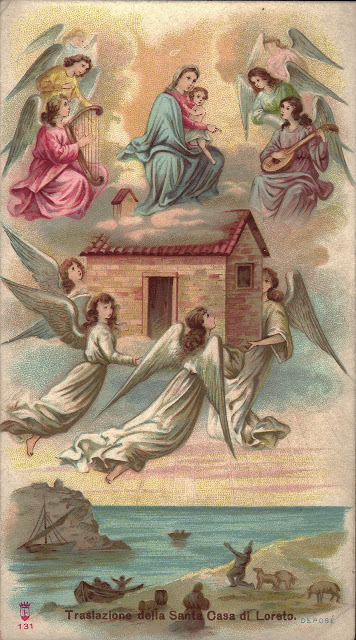
Translation of the Holy House of Loretto, December 10th,
This feast up to this time is not of obligation in the universal Church, but it is celebrated in many countries, and has for its object thanksgiving to God for the blessing with which He has enriched the West, when, in order to compensate it for the loss of the holy sepulchre. He miraculously transported to Catholic ground the house in which the Blessed Virgin received the message of the angel, and where the Word was made flesh.Many of our readers may be ignorant of this marvellous event, which we will repeat here. It was under the pontificate of Celestine V., and when the Christians had entirely lost the holy places in Palestine, that the little house wherein was wrought the mystery of the Incarnation in the womb of Mary was transported by angels from Nazareth into Dalmatia, or Sclavonia, to a little mountain called Tersato.
The miracles which were wrought every day in this holy house, the legal investigation which the deputies of the country went to Nazareth to make, to prove the translation into Dalmatia, as well as the universal conviction of the people who came to venerate it from all parts of the world, seemed to be incontestable proofs of the truth of the miracle. Nevertheless, God wished to give another, which should have, in a sense, Dalmatia and Italy for witnesses. After three years and seven months the holy house was transported across the Adriatic Sea to the territory of Recanati, into a forest belonging to a lady called Loretta; and this event threw the people of Dalmatia into such desolation that it seemed that they would not survive it, and to console themselves they built upon the same spot a church consecrated to the Mother of God, over the door of which they put this inscription: "Hie est locus in quo fait sacra Domus Nazarena quae nunc Recineti partibus colitur,'''' At the same time there were many inhabitants of Dalmatia who came to Italy to fix their residence near to the holy house.
This new translation made such stirring of Christian hearts that a multitude of pilgrims came from nearly every part of Europe to Recanati, in order to honor the house now called ''of Loretto." To prove more and more fully the truth of this event, the inhabitants of the province sent first to Dalmatia, and then to Nazareth, sixteen persons who were the best qualified for the service, who made in these places new investigations; but God deigned to demonstrate the certainty Himself by renewing twice in succession the miracle of the translation even in the territory of Recanati. For at the end of eight months, the forest of Loretto being infested with highwaymen who stopped the pilgrims, the house was transported to a point a mile further, and placed on a little height which belonged to two brothers of the family of Antici ; and when these brothers had taken arms against one another in dispute over the division of the offerings of the pilgrims, the house was transferred to an enclosure a little further removed, and in the midst of the public way, where it has remained and where has since grown up the village called Loretto.
Source: "Catholic Ceremonies" ~ Imprimatur 1896
Picture
1 Comment
    Holy Mother Church  dedicates the month of September to the Seven Sorrows of the Blessed Virgin Mary
    Picture
    Student Planners
    Handwriting Books
    Coloring Books
                      COPYRIGHT
    The purpose of this website is to share the beautiful Catholic resources that God has so richly blessed us with.  All texts unless they are my own words have their sources quoted, and most of them are in the public domain. Any educational items that I have made for or with my children are NOT TO BE USED FOR PROFIT, but are meant to be used for personal use by individuals and families. You may link to our site if you so choose.

    A Saint for everyday and good reading at:

    Picture

    Archives

    September 2025
    July 2025
    June 2025
    May 2025
    April 2025
    March 2025
    February 2025
    January 2025
    December 2024
    September 2024
    August 2024
    July 2024
    May 2024
    April 2024
    March 2024
    January 2024
    December 2023
    November 2023
    October 2023
    September 2023
    October 2022
    July 2022
    March 2022
    January 2022
    December 2021
    November 2021
    October 2021
    September 2021
    August 2021
    July 2021
    June 2021
    May 2021
    April 2021
    March 2021
    February 2021
    January 2021
    December 2020
    November 2020
    September 2020
    August 2020
    July 2020
    June 2020
    May 2020
    April 2020
    March 2020
    February 2020
    January 2020
    December 2019
    November 2019
    October 2019
    September 2019
    August 2019
    July 2019
    June 2019
    May 2019
    April 2019
    March 2019
    February 2019
    January 2019
    December 2018
    November 2018
    September 2018
    August 2018
    July 2018
    June 2018
    May 2018
    April 2018
    March 2018
    January 2018
    December 2017
    November 2017
    October 2017
    July 2017
    June 2017
    May 2017
    April 2017
    March 2017
    February 2017
    January 2017
    December 2016
    November 2016
    October 2016
    September 2016
    June 2016
    May 2016
    April 2016
    March 2016
    February 2016
    January 2016
    November 2015
    October 2015
    September 2015
    August 2015
    July 2015
    June 2015
    May 2015
    April 2015
    March 2015
    February 2015
    January 2015
    December 2014
    November 2014
    October 2014
    September 2014
    August 2014
    July 2014
    June 2014
    May 2014
    April 2014
    March 2014
    February 2014
    January 2014
    December 2013
    November 2013
    October 2013
    September 2013
    August 2013
    July 2013
    June 2013
    May 2013
    April 2013
    March 2013
    February 2013
    January 2013
    December 2012
    November 2012
    October 2012
    September 2012

    Categories

    All
    10th Day Of Christmas
    10th Sun After Pentecost
    10th Sunday After Pentecost
    11th Day Of Christmas
    11th Sunday After Pentecost
    12 Days Of Christmas
    12th Day Of Christmas
    12th Sun After Pentecost
    13th Sun After Pentecost
    14th Sun After Pentecost
    15th Sun After Pentecost
    16th Sun After Pentecost
    17th Sun After Pentecost
    18th Sun After Pentecost
    19th Sun After Pentecost
    1st Commandment
    1st Sun After Easter
    1st Sun After Epiphany
    1st Sun After Pentecost
    1st Sunday After Easter
    1st Sunday After Epiphany
    1st Sunday Of Advent
    2016-2017 School Planners
    20th Sun After Pentecost
    21st Sun After Pentecost
    22nd Sun After Pentecost
    23rd Sun After Pentecost
    24th Sunday After Pentecost
    2nd Day Of Christmas
    2nd Sun After Easter
    2nd Sun After Easter
    2nd Sun. After Pentecost
    2nd Sunday After Epiphany
    2nd Sunday Of Advent
    2nd Sunday Of Lent
    2nd Sun Of Advent
    3rd Day Of Christmas
    3rd Sun After Easter
    3rd Sun After Easter
    3rd Sun. After Epiphany
    3rd Sun After Pentecost
    3rd Sunday Of Advent
    3rd Sunday Of Lent
    3rd Sun Of Advent
    4th Day Of Christmas
    4th Sun After Easter
    4th Sun After Epiphany
    4th Sun After Pentecost
    4th Sunday After Pentecost
    4th Sunday Of Advent
    4th Sunday Of Lent
    5th Day Of Christmas
    5th Sun After Easter
    5th Sun After Pentecost
    5th Sunday After Epiphany
    5th Sunday After Pentecost
    6th Day Of Christmas
    6th Sunday After Epiphany
    7th Day Of Christmas
    7th Sunday After Pentecost
    8th Day Of Christmas
    8th Sunday After Pentecost
    9th Day Of Christmas
    A Candle Is Lighted
    Admonition
    Advent
    Advent Coloring Pictures
    Advent Time
    Advent To Christmas
    Agnes
    Alban's Day
    All Saints Day
    All Souls Day
    Ambrose
    Ascension Day
    Ascension Thursday
    Ash Wednesday
    Assumption
    Assumption Of The B.V.M.
    Bad Books
    Bellas-little-shoppe
    Be Strong
    Bishop-hay
    Blessed Richard Gywn
    Blessed-virgin-mary
    Book Giveaway5ede0bf3e3
    Bridget
    Bvm-coloring-book
    Calling Good Evil And Evil Good
    Candlemas
    Candlemas Ceremonies
    Can-you-explain-catholic-customs
    Cardinal Pie
    Catechism-in-examples
    Catechism In Rhyme
    Catherine Laboure
    Catherine Of Siena
    Catholic Calendar
    Catholic Ceremonies
    Catholic-ebooks
    Catholic-marriage
    Catholic-reading
    Catholics-ready-answer
    Catholics-ready-answer
    Catholic Traditions
    Certificates Of Completion
    Chapter One
    Chapter Two
    Charity
    Childrens-books-pdf
    Childrens-meditation
    Childrens-sermons
    Childrens Sermons6a865c90b1
    Childs-history-of-apostles
    Christian-in-the-world
    Christmas
    Christmas Book List
    Christmas-coloring-book
    Christmas-customs
    Christmas Day
    Christmas Eve
    Christmas-octave-prayers
    Christmastide
    Circumcision-of-our-lord
    Circumcision-of-our-lord
    Coloring Book
    Coloring Pictures
    Come The End
    Communion Of Saints
    Confiteor
    Cradle Hymn
    Creeds-and-deeds
    Crusaders-for-christ
    Damien Of Molokai
    Dangers Of The Day
    Daughters Of Charity
    Devotion-to-mary
    Dorothy
    Downloads
    Duties-of-a-christian-father
    Duties-of-the-christian-mother
    Dymphna
    Easter Sunday
    Ecclesiastical Year
    Ecclesiastical-year
    Elizabeth Of Hungary
    Ember Friday In Advent
    Ember Saturday In Advent
    Ember Wed. In Advent
    Epiphany
    Epiphany For Children
    Epiphany - House Blessing
    Epiphany The Twelth Night
    Evangelist
    Evils Of Worldliness
    Faith
    Faith Of Our Fathers
    False Christs
    False Prophets
    False Worship
    Family And Catholic Customs
    Fasting
    Father Lasance
    Father Muller
    Feast Of The Holy Family
    February 2016
    First Sunday Of Lent
    First Sun. Of Advent
    For Children
    Francis Xavier
    Genealogy Of St. Joachim And St. Anne
    Genevieve
    Gifts At Christmas
    Give-a-Way
    Glory Be
    God Of Mercy And Compassion
    God The Teacher Of Mankind
    Goffine's Devout Instruction
    Goffine's Devout Instruction
    Good Friday
    Guardian Angel
    Guardian Angels
    Guardian Angels
    Guarding The Eyes
    Hail Mary
    Handwriting Books
    Handwriting Practice
    Heaven
    Heaven Is The Prize
    Heresy
    Hilary - January 14th
    Holy Cross Day
    Holydays And History
    Holy Ghost Novena
    Holy Innocents
    Holy Mass
    Holy Name Of Jesus
    Holy Name Of Mary
    Holy Souls
    Holy Thursday
    Holy Week
    Homeschool
    Honor-thy-father-and-thy-mother
    How Catholics Lose The Faith
    How-to-be-a-saint
    Human Respect
    Human Respect
    Humility
    Immaculate Conception
    In A Little While
    Indifferentism
    Instruction On Advent
    Instruction On Penance
    Instruction On The Feast Of The Holy Rosary
    Issue 42
    Issue 47
    January 2017
    Jesus Christmas
    Jesus With Childen
    Joan Of Arc
    John
    John The Evangelist
    Last Judgment
    Lectures For Boys
    Lent
    Lenten Catechism
    Lenten Lapbook
    Lenten Printables
    Lenten Sermons
    Lent For Children
    Lent To Easter
    Liberal Catholics
    Lisbeth
    Litany Of The BVM
    Little Month Of Saint Joseph
    Little Stories Of Christ's Passion
    Luke
    Maidens For Mary
    March 2016
    Margaret Mary
    Marks Of The Church
    Martinmas
    Mass
    Mass Study Guide
    Matthew - Sept. 21st
    Maundy Thursday
    May 1st
    May - Dedicated To Our Blessed Mother
    Meditations For Lent
    Menu-planner
    Metropolitan-second-reader
    Misericordia-reader
    Modernism
    Mondays-with-father-muller
    Month-of-saint-joseph
    Moral-briefs
    Moral-briefs-chapter-1
    Moral-briefs-chapter-2
    Moral-briefs-chapter-3
    Morning Prayers
    Mother Of Sorrows
    Mothers Day 20132303cd0d22
    Motion-pictures
    My Catholic Faith
    My-catholic-faith-giveaway
    My-prayer-book
    Narcissus
    Nativity
    Nativity Of The Blessed Virgin
    New Years
    New Years Day
    New Years Eve
    Nov Ninth72cdf219cc
    Nov. Tenth
    One And Only Saving Faith
    On Resignation To The Will Of God
    Our Lady Of Good Counsel
    Palm Sunday
    Papacy
    Parental Rights And Obligations
    Passion Of Christ
    Passion Sunday
    Patrick
    Penance
    Pentecost
    Pentecost Sunday
    Persecution Of The Church
    Plain Lessons In Christian Doctrine
    Poor Souls
    Pope St. Pius X
    Popular Instruction To Parents
    Practical Aids For Catholic Teachers
    Prayer
    Prayer Against Temptation
    Prayer For Lent
    Prayer For Perseverance
    Prayer To Obtain The Confidence Of One's Children
    Prayer To St. Joseph
    Precious Blood
    Presentation Of The Bvm
    Printable Books
    Prudence And Liberalism
    Purification
    Purity
    Quinquagesima Sunday
    Quote Of The Day
    Quote Of The Day
    Rearing Of Children
    Reason And Revelation
    Religious Intolerance
    Remember Me
    Remember-me
    Remember Tomorrow
    Rita Of Cascia
    Rogation Days
    Roman Missal
    Rosary
    Sacramentals
    Sacred Passion Of Jesus Christ
    Saint Catherine's Academy Gazette
    Saintly ABC's
    Saints
    Saints Of Christmastide
    Saint Stephen
    Saint Sylvester
    Saint Valentines Day
    Scandal
    School Planners
    Septuagesima Sunday
    Sermon Matter
    Sermon Matters
    Sermons For Chidren's Masses
    Seven Dolors Of The Bvm
    Sexagesima Sunday
    Short Catechism Of Church History
    Short Catechism Of Church History
    Short Instructions
    Short Sermons For Every Sun
    Shrove Tuesday
    Signs Of The Times
    Sins Against Faith
    Spiritual Communion
    Spiritual Communion
    Spiritual Works Of Mercy
    St. Anne's Day
    Stations Of The Cross Coloring Book
    St. Benedict's Day
    St Catherines Academy Gazette
    St. Catherine's Academy Gazette
    Stephen
    St. George
    St-hilary-of-poitiers
    St. John Evangelist
    St. John's Eve
    St. John The Baptist's Day
    St. Joseph
    St. Joseph For Children
    St Lucy
    St Lucy Giveaway
    St. Mary Magdalen
    St Michael
    St Nicholas
    St. Nicholas
    Story Of The Week
    Story Sermonettes
    St-paul-the-first-hermit
    St. Stephen
    St. Therese
    Student Planners
    Study Guide
    Sufferings And Death Of Jesus
    Sunday After Christmas
    Sunday Observance
    Sunday Within The Octave
    Survey
    Survey Doll Costume
    Sweet Name Of Jesus
    Talks To Boys And Girls
    Te Deum
    The Angelus
    The Beauty And Truth Of The Catholic Church
    The BeeHive
    The Childs Desire
    The Christian Father
    The Christian In The World
    The Christian Mother
    The Church Of The Saints
    The Communion Of Saints
    The Drops Of Precious Blood
    The Ecclesiastical Year
    The Friends Of Jesus
    The Good Shepherd
    The Greatest And First Commandment
    The Holy Innocents
    The Love Of God
    The New Year
    The Particular Judgment
    The Prodigal Son
    The Queen's Festivals
    The Sacred Heart
    The Santa Lie
    The Way To God
    The Wondrous Childhood
    This And That
    Thomas A' Becket
    Thomas Aquinas
    Tomorrows Far Away
    TOM'S CRUCIFIX
    To The Heart Of A Child
    Trinity Sunday
    True Christmas Spirit
    Truth
    Truth And Lies
    Tutorials
    Two Thousand Years Ago
    Valentine's Day
    Veronica Of Milan
    Vigil Of Epiphany
    Whitsunday
    Whom The Lord Loveth
    Whom To Believe
    William- Jan. 10th
    With The Church
    Work And Listen To God!
    Works Of Mercy
    You And Your Neighbor
    Your Cross
    Your Neighbor And You

    RSS Feed

© Crusaders for Christ 2012