CRUSADERS FOR CHRIST
  • Blog
    • Staff only
  • About Us
  • Downloads
    • Catholic Homeschool - Study Guides
    • Handwriting
    • Student Planners
    • Coloring Pictures
    • St. Catherine's Academy Gazette
    • Printable Children's books
  • Catholic Reading
    • Books We Have Enjoyed
    • Saint of the Day
    • Just Stories
    • Chapter Books >
      • Jesus of Nazareth - The Story of His Life Simply Told
      • Little Therese
      • Lisbeth - The Story of a First Communion
    • Sermons for Children
    • This and That
    • The Blessed Mother for the Child in all of us!
  • For Moms
    • Popular Instructions on the Bringing Up of Children

The Second Sunday after Pentecost - The Great Supper

6/6/2021

0 Comments

 
Picture
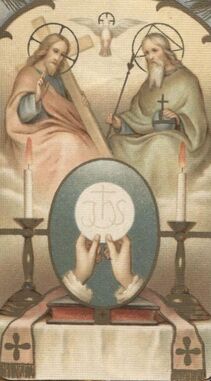
My dear Children:—By the great supper of which the Saviour speaks in today's Gospel is meant, as we all know, the Holy Eucharist, which our Lord instituted on the eve of His passion.

To this feast, wherein the King of angels is Himself the host and the nourishment, God, by the mouth of His servants, the priests, invites all the faithful; and certainly if we consider the great dignity of the Host, and how precious the nourishment is, who should not extol with joy and gratitude the infinite mercy of the Redeemer and approach the holy table as often as possible?

Before the altar of His Holy Church the Lord spreads the holy table for the great supper, and He invites many to the banquet. Such an invitation we should think does not need much urging to bring in the guests as quickly and as frequently as He desires. And yet, as He tells us in the parables, and as we see and hear ourselves, there are many who make little of His invitation, and either do not come at all, or come with such reluctance that it is plain that they are acting more from the fear of punishment than from a motive of love.

When St. Mary Magdalen of Pazzi was a little girl, and saw her older companions going up to the altar to receive Holy Communion, she asked her mother if she also might go up with them. "You are too young yet, my child," she answered; "you must wait till you are a little older." This brought tears to her eyes, for she loved Jesus so much and desired so much to be with Him. The manna was the daily bread of the Israelites, and had in it, as the Psalmist tells us, the sweetness of every taste, that is, the flavor of every kind of food. So also does God wish the Blessed Eucharist to be our constant food by a frequent and worthy Communion, giving to us therein every precious grace that can strengthen or delight the heart of man. It is only when we arrive at the "habitable land," our true home in the heavenly Jerusalem, that this Divine Food will no longer be communicated to us under the humble form of bread; for it will then be permitted us to behold our Lord in all His glory, and to possess and enjoy Him by the sweetest and most intimate union for all eternity.

It is related in Holy Scripture that when Elias was fleeing from the persecution of the impious Jezabel, he was overtaken with fatigue and hunger in the desert. And when he was there and sat down under a juniper, he requested for his soul that he might die. And he cast himself down and slept under the shadow of the juniper tree; and, behold, an angel of the Lord touched him and said: Arise and eat. He looked, and, behold, there was at his head a hearth cake and a vessel of water; and he ate and drank and fell asleep again. And the angel of the Lord came again the second time and touched him, and said to him: Arise, eat, for thou hast yet a great way to go. And he arose, and ate and drank, and walked in the strength of that food forty days and forty nights unto the mount of God, Horeb.

My dear children, this miraculous bread brought by an angel to Elias in the desert is a significant figure of the Bread of Angels, the Holy Eucharist, which is given to us by our Lord, to nourish and support us in our pilgrimage through the desert of this world. Strengthened by this Divine Food, of which we should eat not once only, but again and again, we shall be able to walk manfully in spite of every obstacle until we arrive at Mount Horeb, which means the vision of God; in other words, the sight and enjoyment of God in the heavenly Jerusalem.

It is a great supper on account of the One who has prepared this heavenly banquet, for He is not a mere man or an angel, but God Himself—great on account of the food, which is nothing less than the true Body and the true Blood of our Lord, with His soul and divinity—great on account of the multitude of the guests, for these are all the Catholic Christians upon earth—great on account of the angels, who invisibly assist at Holy Communion, and adore Jesus with the most profound veneration. Everything is great in Holy Communion; but we are little and unworthy, and yet Christ invites us. Oh, how great is His love for us !

Ought we not to appear at this divine banquet with the greatest joy in order to satisfy our hunger and thirst ? Ought we still to have a desire for the food of the world and of the flesh, which is but deceitful bread?

We read in the life of St. Aloysius Gonzaga that, being permitted by his confessor to receive Holy Communion every Sunday, he divided the week between his thanksgiving and preparation, three days to each. The same is related of another devout soul who, in arranging his devotions, observed the following plan: Sunday, the day of his Communion, was spent by him in union and interior converse with our Lord. Monday was a day of thanksgiving for the rich treasure he had received. On Tuesday he continually offered and consecrated himself to God. Wednesday was spent in constant petitions to our Lord for his own wants and those of the Church. On Thursday he began his preparation for his next Communion, spending that day entirely in acts of faith and adoration: "O, my Jesus, I believe in Thee present in the most Holy Sacrament! O, my Jesus, I adore Thee!" Friday was a day of humiliation and contrition, yet of hope and confidence in the divine mercy: "O Lord, I am not worthy! O Jesus, make me worthy ! In Thee have I hoped, and I shall never be confounded !" Finally, Saturday was devoted to acts of love and desire: "Oh, my Jesus, I love Thee. I long for Thee ! Oh, my Jesus, come and take possession of me." It is such souls as these, souls who spare no trouble to make a good preparation and thanksgiving, that enjoy the full fruit of a good Communion. It is of Communions like these that it may be justly said, "One Communion is sufficient to make a saint."

It is related that when Jesus was about to institute the Holy Eucharist, He sent before Him into the city of Jerusalem two of His disciples to prepare a room in which they might partake of this heavenly banquet. This, my dear boys and girls, is a lesson for us; it teaches us what we ought to do when we intend to approach the Holy Communion. The room is the temple of our souls, into which our Lord is about to enter that He may make His dwelling with us. For some days before Communion we should prepare that room, that is, we should cleanse it and adorn our interior, by carefully abstaining from sin, fighting against our passions, and practicing acts of virtue and self-denial.

Prepare yourselves for every Communion with the greatest care; never approach the altar except with a pure heart, and with the greatest veneration and devotion. Pray that God may bless your good resolutions and keep you in His grace. Blessed are you if you always communicate in such a manner; you will advance from virtue to virtue, persevere in grace to the end, and be united to Jesus forever in Heaven.

Source: Story Sermonettes for the Children's Mass, Imprimatur 1921


0 Comments

2nd Sunday after Pentecost ~ The Great Feast to Which We Are Invited  and  Spiritual Communion

6/5/2015

0 Comments

 
We are within the octave of the most beautiful feast of the Church, the feast of Corpus Christi; and the Church wisely chooses the parable of the great feast to which all are invited as the subject of our meditation today. This great feast represents the most august, the most holy Sacrament of the Altar, and with what great solemnity it is celebrated! The altars are magnificently decorated, innumerable lights are lighted, incense ascends in clouds, processions are formed, benediction is given so as to make us understand that the good Jesus is with us, and that hence we should love Him and adore Him. In order that you may be moved to this love, think of the great love, even the excess of love, by which the Lord invites us to so rich, so magnificent a banquet in which He offers His sacred flesh as our food, and His precious blood as our drink.

"A certain rich man made a great feast." Enter the hall of the Last Supper at Jerusalem, where the divine Redeemer sat among His Apostles. Jesus, His face aglow with divine love, turns at the end of the meal to His disciples and tells them that the hour has come when He must return to the Father; but He bids them be not afraid nor dejected, for He will remain with them till the end of time. Then He took bread into His hands, those hands which made heaven and earth, and blessed it and said,

"This is My body which is given for you; do this for a commemoration of Me." In
like manner the chalice also after He had supped, saying.

"This is the chalice of the New Testament in My blood, which shall be shed for you." To understand the great love with which the amiable Saviour did this, consider when this was done.

Not in those days when Our Saviour was going about in His glory, working miracles before the admiring crowd that followed Him. He did not even institute this holy Sacrament when, after having preached and moved the people, a woman cried out,
'
'Blessed is the womb that bore Thee and the paps that gave Thee suck." Not in the days of His triumph, when He had fed five thousand people, and had led them spellbound for days through the country, and they came to take Him by force and make Him king. He did not institute it on that glorious feast. Palm Sunday, when He made His entry into Jerusalem, the houses, the streets, and the gates of the city adorned for His reception, and the people crying out,

"Hosanna to the Son of David; blessed is He who comes in the name of the Lord." But He instituted this holy Sacrament on that sorrowful night when He was to be apprehended through the treachery of Judas, His apostle, when the soldiers were about to lay violent hands on Him and drag Him most contumeliously to the house of Caiphas. The night on which He was betrayed was the night on which Our Lord instituted the Blessed Sacrament. You will appreciate still more the love of Our Lord in instituting this holy Sacrament by remembering that He foresaw all that was about to happen to Him: the insults, scourging, crowning; the carelessness, coldness, and infidelity of humanity was all before His mind; He saw the want of faith, the want of gratitude among the Christians themselves. He foresaw that the Sacrament would be sacrilegiously used and abused.

That many Christians would eat and drink judgment unto their souls for not discerning the body of Christ. Every day Our Lord goes into hearts that are good, and into hearts that are the abominable residence of the devil. But the love of Jesus overcame all difficulties, and in the excess of His
love He cried out,

"My delight is to be with the children of men,"  He did not wish to remain with us only for a time, but forever, unto the end of the world. It would have been a great favor had He left His body in only one place on this earth, so that it would have been necessary to travel many miles to reach His tabernacle. But, no; He preferred to remain within our cities, near our houses, in our villages, out in the lonesome country, in every church where the Holy Eucharist is kept, and there He remains day aad night. What a great favor it, would have been had He promised us that once in a lifetime we might receive Him. But He desires that we go frequently to Him, and He even binds us by a command that we must receive His body, and drink His blood if we wish to have life in us.

"Amen, amen, I say to you, except you eat the flesh of the Son of man and drink His blood, you shall not have life in you." Continually does the good Lord coax us to come to Him, and in familiar intercourse to lay our troubles before Him, that He may carry them for us.

" Come to Me all you that labor and are burdened, and I will refresh you." How sweet and encouraging must not these words sound to the poor sinner. These words,

" Come all," ought to make us run with unbounded confidence, as the invitation implies. But how
do the generality of Christians answer this invitation of Our Lord? Do they often go to the Lord's Supper and eat the Sacred Bread? Many after this kind invitation will stay away, refusing to yield to the loving importunities of Our Lord. They say we cannot come, we love the world more than Thee, we would rather feast on the pleasure of this world than feed on that spiritual food which Thou dost offer us; we are too busy with our worldly affairs, and we cannot come. Will they not deserve the sentence which the master of the feast gave out,

"But I say unto you, that none of these men that were invited shall taste of my supper." If they do not come to this feast they shall not enter heaven. Is there a beggar faint with hunger who, if he was kindly invited by
the king to come into a great banquet hall, there to satisfy himself with delicious food, that would not willingly listen to the invitation, and be glad he had an opportunity of eating at the king's table? He would be a fool if he said,

"I cannot come." The sick man near his death would not refuse a new lease of life and freedom from sickness. Those who remain afar from Jesus are poor, famished beggars, miserable invalids, because they are in want of the food of the soul which Our Lord offers. You see then the blindness and folly of people who refuse to go to Jesus. What a consolation it is to all good Christians to love
God's altar and to go frequently to holy communion. You are therefore the guard of honor of the Blessed Sacrament; defend it now, and show your real faith in it. Keep yourselves steadfast in this holy devotion, this holy adoration. The time will perhaps come when you will no longer have your child-like faith and fervor at the altar. What has become of it? Ah! it is the old story; you fell away and cared no more for this heavenly food.

Let us love this sacred table of Our Lord. Let us ever hunger for the spiritual food, the body of Christ; do not love the banquets of the world, for they will make you forget this heavenly feast. Let it not be said there was a time when you were good; but having begun well, being nourished by the body and blood of Christ, grow in virtue, become good Christian men and women, and faithful to the teaching of your youth; often receive the Sacraments of Confession and Communion. The danger is, that in the course of time you may become careless. Knowing this forgetfulness, join a society which will keep you from bad surroundings and encourage you in the practice of your duty.

                                                                                         Source: Sermons for Children's Masses, Imprimatur 1900

                                                                                       SPIRITUAL COMMUNION

"If any man shall hear My voice, and open lo Me the door, I will come in to him, and will sup with him, and he with Me."—Apoc. iii, 20.

THESE talks on communion would not be complete if nothing were said of spiritual communion.
Now, the catechism of the Council of Trent, called also the Roman Catechism, because it is the official formulary of the Roman doctrine, uses the following words:

" The shepherds of souls should teach their flock that there is not one manner only of receiving the admirable fruits of the sacrament of the Eucharist, but that there are two: sacramental communion and spiritual communion."

Spiritual communion is little known, and still less practised; and yet it is a special and incomparable source of graces.

"It is, by itself," says Father Faber, "one of the greatest powers of the world." "By it," writes St. Leonard of Port-Maurice, "many souls have attained a high perfection."

To derive from this inestimable treasury all the wealth which it contains it must be understood:
(1) in what spiritual communion consists;
(2) what graces it confers; and
(3) in what manner it may be practised.

In what does spiritual communion consist ? It is, in the first place, a communion; the Council of Trent states this expressly. It is therefore an actual participation in the graces of the Eucharist, although distinct from the sacramental participation properly so called. We have already seen what graces flow into souls from the Eucharist; so that it is enough, in order to estimate the value of spiritual communion, to know that it does truly confer upon us a considerable proportion of those graces. We shall presently see in what measure and to what extent. This communion is effected not externally, as in sacramental communion, but spiritually; that is, internally and mentally, without any material and corporal action; spiritually, that is, again, supernaturally or divinely. It is also called "interior communion," communion of the heart, invisible or mystical communion, because it unites us with Jesus in a secret and mysterious manner, without a visible sign as in sacramental communion. It is also called "virtual communion," because it has the power of making us participate in the fruits of the Eucharist.

What must one do in order to communicate spiritually ?
Is it enough to make acts of faith and love toward Jesus present in the Eucharist ?


No. We must expressly formulate the desire to communicate; and in order that this desire may be sincere we must be so disposed that we could communicate sacramentally, if it were possible. On the other hand, a simple desire, if deep and sincere, no matter how brief and rapid, is
sufficient to constitute spiritual communion. Obviously, the longer the desire is prolonged the more fruitful is the communion. But by a simple impulse of the heart toward Jesus present in the Eucharist we communicate spiritually, we participate in the graces of sacramental communion.

How can this be ?

I will explain.
Our Lord is in the Eucharist for us; and His desire to come into us, to be wholly ours, to possess us, to live in us, is a supreme desire that asks only that it may satisfy itself.

"I am consumed with the desire to give Myself to thee," said our Lord to the venerable Jeanne Marie of the Cross; "and the more I give Myself the more I desire to give Myself anew. After each of thy communions I am like the pilgrim devoured with thirst, to whom a drop of water is given, and who is thereby made to thirst yet more. It is thus that I aspire continually to give Myself to thee." Jesus addresses these very words to each of you.

Jesus wishes to enter your heart every day by sacramental communion; yet even that does not suffice Him; He would come again and again, without ceasing. This divine desire is realised by spiritual communion.

"Every time thou desirest Me," He said to St. Mechtilde, "thou dost draw Me to thee. A desire, a sigh, is enough to make thee possess Me."

Our Lord has often revealed to saintly souls, and in different ways. His ardent desire to unite Himself with us. To the blessed Margaret Mary He said:

"Thy desire to receive Me has so sweetly touched My heart, that if I had not already instituted this sacrament I should have done so at this moment, in order to give Myself to thee."

Our Lord charged St. Margaret of Cortona to remind a monk of the word of St. Augustine :

"Beheve, and thou wilt have eaten;" that is to say, make an act of faith and desire towards the Eucharist, and you will be nourished by that divine food.

To the blessed Ida of Louvain, during a mass at which she could not communicate, Jesus said:

"Call Me, and I will come !" "Come, O Jesus I" she cried at once, and felt herself filled with happiness as though she had really communicated.

And after a spiritual communion of which she tasted the full delight, St. Catherine of Siena heard our Lord say to her:

"In such manner and place as may please Me I can, I will, I am able marvellously to satisfy the holy
ardours of a soul that desires Me." This desire of Jesus to unite Himself to us is infinite and all-powerful; it knows no other obstacle than our liberty. Jesus has multiplied miracles in order to enclose Himself in the host that He may give Himself to us. What does it cost Him to work one miracle the more, to give Himself to us directly without the intervention of the sacrament? Is He not master of Himself, of all His graces, of His divinity ? And if, being called by a few words, He descends from heaven into the host between the hands and at the will of the priest, will He not descend directly from heaven into our hearts if He is called by the ardour of our desire ?
O marvellous power of the human soul ! O power of a sincere desire, inspired by love ! Power which allows each one of you to realise for herself, in a certain manner, what the priest accomplishes for all the faithful !

Hagar, flying to the desert and seeing that her child was dying of thirst, sent up a despairing cry to heaven, and a spring of pure water welled forth immediately to save mother and child. Cry, therefore, to God, telling Him your desire, and God will reply to you in causing a spring of eternal life to well forth from His heart to sanctify your soul ! A poor savage has no priest to baptise him, but he sends the voice of his desire up to God: behold him baptised ! A poor sinner turns to God. In the midst of her confusion she lifts her eyes towards the infinite Goodness; she thirsts for love and forgiveness: behold, she is forgiven !

You cannot approach the holy table; either you have already communicated or some obstacle prevents you. Gaze upon the host in the tabernacle with eyes of longing; declare your hunger and thirst to Jesus. Say to Him :

"Jesus, come; I die without Thee!" Jesus will hasten: you will have communicated.

During mass the priest takes the host between his hands; he recollects himself, he bows himself, and he speaks a few words. Immediately the heavens open; Jesus hastens, at the voice of His friend who calls Him: behold Him between the hands of the priest ! And you, pious soul ! Meditate profoundly; shape an ardent wish within your heart. Touched and urged by this desire, Jesus will hasten to His well-beloved : behold Him in your heart !

O ineffable Goodness, O infinite generosity, O unbounded munificence, O bewildering love ! It is no longer God who is sovereign Master; and the creature is no longer servant. The creature becomes the sovereign mistress of God; and God makes Himself the eager and obedient servant of the creature.

"I come not among you," said Jesus, "to be served, but to serve." Spiritual communion is truly an infinite power given to the creature over the Creator, to the pious soul over Jesus !

Father Faber is right: " Spiritual communion is one of the mightiest powers in the world!"

How express the innumerable fruits which spiritual communion brings us ?

All is summed up when we say that it is a communion; that is, a participation in the Eucharist and the graces of sacramental communion. The Council of Trent, speaking of the usage of the admirable sacrament of the Eucharist, distinctly states that " some receive it spiritually: these are those who, partaking in desire of the celestial bread which is set before them, taste the fruits and the benefit of the sacrament." Thus, according to the Council of Trent, and according to all theology, spiritual communion is a spiritual manducation of the body of our Lord Jesus Christ. Therefore all that we have said of the fruits of sacramental
communion is also true of this, although in a different manner and in a less degree.

The first effect of spiritual communion is therefore to increase our union with the humanity and the divinity of the Word made flesh. This is its principal effect, its essential advantage; all other graces received proceed from this.

Briefly they are as follows: Fervour is revived. "Spiritual communion," says the Cure d'Ars, "revives the soul as a bellows does the fire which is covered with ashes and about to die. When we feel the love of God growing cold, let us make hastily a spiritual communion !" Poor heart ! it so easily loses its heat, so soon becomes covered with ashes !

Spiritual communion revives the fire and makes the flames of fervour break forth anew. In the midst of our trials during this pilgrimage here below sadness is forever taking possession of us; and our hearts become filled with heavy mists.

communion dissipates this mist like the morning sun; it brings joy back to the heart and sets the soul at peace. It also keeps us in a state of recollection; it is the best means we have to preserve us from the dissipation of our thoughts, from frivolity and all the wanderings of the spirit and imagination. It accustoms us to keep our regard fixed upon Jesus, to preserve a sweet and constant intimacy with Him, to live always heart to heart with Him.

Our Lord one day showed the pious Paula Maresca a golden ciborium containing her sacramental communions and a silver ciborium containing her spiritual communions; He thus marked their relative value.
 
It detaches us from all that is merely sensible and earthly; it makes us disdain passing vanities, the pleasures of this world, which are only for a time.

"It is the bread of the heart !" said St. Augustine. "It is the healing of the heart !"

It keeps the heart from all that is impure and imperfect, it transforms it and unites it closely to the heart of Jesus. It renders our relations with Jesus more tender and familiar. It makes our devotion to Him warmer and deeper. It enables us to taste more fully the charm and sweetness of His presence.

" When I make the sign of the cross," writes St. Angela of Foligno, " and place my hand on my heart, in saying, "The Son '. . . I experience a rush of love and a great tenderness, because I feel that Jesus is there."

Spiritual communion places Jesus there, in the very centre of our heart; His presence is permanent and brings us infinite happiness.

Spiritual communion has also a wonderful efficacy in effacing venial faults and remitting the penalties of sin. Pious souls who communicate spiritually often and well will be exempt from the flames of purgatory. Jesus will bear them straight from earth to heaven, as He did the soul of Joan of Arc, which was seen at the moment of her death to mount directly to paradise in the form of a pure white dove.

Spiritual communion will give to those souls which have communicated well a surprising glory in heaven. Our Lord told St. Gertrude that every time we regard the sacred host with devotion we augment our eternal happiness, preparing for ourselves blessings above in proportion as we have multiplied our desires full of
love and longing for the Holy Eucharist here on earth. Souls that have often communicated in spirit will shine in heaven with peculiar splendour, and will taste especial joys, sweeter and more holy than those known to others.

Spiritual communions, day by day increasing our desire to receive Jesus, urge us to sacramental communion, prevent us from missing it by our own fault or negligence, send us to communion more frequently, and dispose us to communicate better and to receive more abundant fruits therefrom. Spiritual communion is, according to the testimony of all the saints, the best preparation for sacramental communion.

Remember, too, that spiritual communion may be offered for the sake of our neighbour; either on behalf of the hving or the dead. St. Margaret Mary recommended spiritual communion on behalf of the souls in purgatory.

" You will greatly comfort these poor afflicted souls," said she, "by offering spiritual communions on their behalf, in order to redeem the bad use they have made of sacramental communions."

Finally, you must understand that you receive all these benefits and graces which flow from spiritual communion according to your dispositions; that is, according to the value of your desires. The more intense your desire to communicate, the purer, the more prolonged, the more fully will you participate in the fruits of the Eucharist and all the favours which we have enumerated; and this without other limits than the ardour, extent, and keenness of your desires.

The saints are unanimous in exalting the marvels of spiritual communion. They go so far as to say, with the venerable Jeanne Marie of the Cross,

"that God by this means often fills us with the same graces as in sacramental communion "; and with St. Gertrude and Father Rodriguez, that

"sometimes the graces are still greater, for," says the latter, "although sacramental communion is in itself of a greater efficacy, yet the fervour of desire may compensate for this inequality."
 
What more precious encouragement to spiritual communion could be given ? How can one urge you further to make such communions frequently .'' When will you make them ? You will do so always during mass, when you attend without being able to communicate sacramentally.

" You must," says Rodriguez, "devour the divine food with the eyes of the spirit. You must open the mouth of the soul, with an ardent desire to receive the celestial manna, and to savour its sweetness slowly in the heart."

You will make a spiritual communion, according to the advice of St. Alphonsus Liguori, at the beginning and the end of your visits to the blessed sacrament. What a wonderful manner of employing this precious time ! Jesus is really there, a few paces distant, filled with the desire to come to you. Long for Him with the same ardent desire, and He will come and unite Himself to you in a consoling intimacy. You will leave the church inflamed with love.

You will make a spiritual communion in the morning, as soon as you have awakened from
sleep.

"At your awakening," said our Lord to St. Mechtilde, "long for Me with all your heart. Draw Me to you by a sigh of love, and I will come, I will perform in you all your works, and I will suffer in you all your pains."

You will communicate in spirit after your prayer, or at the end of your meditation, on finishing your spiritual reading, before or after reciting the rosary, and at night as you fall asleep. You may communicate spiritually ten times, twenty times a day, as often as you will; for a few short moments suffice, a few words of prayer directed to Jesus present in the Eucharist imploring Him to come to you. It is not the time that signifies; it is the ardour, the vehemence of the desire, the hunger and thirst of the soul, the eagerness of the heart.

As for the formula, the best will be that which comes most spontaneously, most sincerely from the inmost recesses of your being. That in which you put the most love, and above all the most tender, pure, generous, and disinterested love; that in which you feel most sure of making Jesus feel that you love Him for Himself. You will say to Him :

"O Jesus, come; oh, come ! I have need of Thee; my soul sighs and languishes apart from Thee; I hunger and thirst after Thee; all is dreary when Thou art not here !" O Jesus, I cannot live far from Thee; I die without Thee. O Father, Friend, O Wellbeloved, come, I beg Thee, come ! O Love, Love, instil into my heart all the ardour of the seraphim and all the most radiant feelings of Thy divine Mother !
 
"O infinite Love, come Thou Thyself and love in me; come, and kindle in my heart all the most ardent desires that have consumed Thine own ! " Above all, O Love, may I love Thee for Thyself ! May I forget myself, lose sight of myself, lose myself in Thee ! Enter into me, that I may live no longer, that Thou alone mayst live in me ! As Thy Father is glorified in Thee, so be Thou glorified in me ! Take all that is in me to make it Thine forever !" Enter into me to continue Thy works. Thy prayers, Thy virtues, Thy sufferings. Thine expiations. Thy merits !

" O Jesus, O Well-beloved, nothing for me, but all for Thee, and forever ! Enter into me, live in me, that we may be consummated in one!"

Thus you will make your spiritual communions, or in other terms still warmer, with expressions yet more ardent. Often even you will say nothing, you will remain silent, for the lips become incapable of formulating the desires of the heart when the heart is carried away and ravished by divine love ! Then it is unspeakable suffering not to be able to express what one feels. But Jesus sees this inner suffering, and to Him it is perfect homage; it fills Him with joy, for it reveals more love than all the words and cries of the most impassioned heart.

And all these desires, all these impulses, all these feelings that Jesus Himself awakens within you, and which He feels more than you—I leave you to think whether He will not reward them. By the ardour of their desires for spiritual
communion, the saints have often obtained miracles. Hosts have left the hands of the priest and given themselves spontaneously to them. Angels, sometimes the Blessed Virgin, or St. John, or our Lord Himself, have appeared to them and given them the sacrament. You will not be granted such miracles. No matter, if you do really, though invisibly, obtain the same graces. And these graces you will receive, if you consider, on the one hand, the worth and value, the excellence and the nature of spiritual communion; and if, on the other hand, you will remember with what ease you can effect it, at any hour of the day or night.

How ungrateful then you would be, how culpable and inexcusable, if, understanding spiritual communion and the incalculable riches which it contains, you were not to resort to it, at least once a day, and much oftener still ! For of all the means of sanctification is there one which is more within your reach, more efficacious, and more marvellous ?

Source: Holy Communion, Imprimatur 1923
0 Comments

            The Second Sunday After Pentecost

6/2/2013

0 Comments

 
INTROIT: The Lord became my protector, and He brought me forth into a large place: He saved me, because he was well pleased with me. (Ps. xvii.) I will love Thee, O Lord, my strength: the Lord is my firmament, and my refuge, and my deliverer. Glory &c.
PRAYER OF THE CHURCH. Make us, O Lord, to have a perpetual fear and love of Thy holy name; for Thou never failest to help and govern those whom Thou dost establish in Thy steadfast love. Thro'.

EPISTLE, (I John III. 13-18.) DEARLY BELOVED, Wonder not if the world hate you. We know that we have passed from death to life, because we love the brethren. He that loveth not, abideth in death; whosoever hateth his brother is a murderer. And you know that no murderer hath eternal life abiding in himself. In this we have known the charity of God, because he hath laid down his life for us: and we ought to lay down our lives for the brethren. He that hath the substance of this world, and shall see his brother in need, and shut up his bowels from him, how doth the charity of God abide in him? My little children, let us not love in word nor in tongue, but in deed and in truth.

EXPLANATION. People who are really pious have always something to suffer from the wicked world, as Jesus foretold, but they do not cease to love their persecutors as their best friends, and are ready, if necessary, to give their life for their enemies, as Christ did. Thus should all Christians act; for the love of our neighbor and even of our enemies is a universal command, a law that binds all; it is the life of the soul. Hatred deprives the soul of this life and makes man a murderer, because hatred is the beginning of murder, and often ends in homicide. By love we know the true Christians. (John. xiii. 35.) St. John even considers love the certain sign of being chosen for eternal life, when he says: We know, we have passed from death to life, because we love the brethren. Alas! how few will be chosen from among the Christians of today, because there is so little love among them!

Empty compliments, assurances of friendship, love appears only in words, only on the tongue, and such idle, ephemeral, worthless love is found everywhere in this world; but that which is love in truth and reality, which shows charity to the suffering, how rare it is! and yet only to this love is promised eternal life, because it alone rests on the love of God.

GOSPEL. (Luke xiv. 16 -24.) AT THAT TIME, Jesus spoke to the Pharisees this parable: A certain man made a great supper, and invited many. And he sent his servant, at the hour of supper, to say to them that were invited, that they should come, for now all things are ready. And they began all at once to make excuse. The first said to him: I have bought a farm, and I must needs go out, and see it; I pray thee hold me excused. And another said: I have bought five yoke of oxen, and I go to try them; I pray thee hold me excused. And another said: I have married a wife, and therefore I cannot come. And the servant returning, told these things to his lord.

Then the master of the house being angry, said to his servant: Go out quickly into the streets and lanes of the city, and bring in hither the poor, arid the feeble, and the blind, and the lame. And the servant said: Lord, it is done as thou hast commanded, and yet there is room. And the Lord said to the servant: Go out into the highways and hedges, and compel them to come in, that my house may be filled. But I say unto you, that none of these men that were invited shall taste of my supper.

What ts to be understood by this great supper?
The Church of Christ on> earth, in which His doctrine and His most precious Flesh and Blood are given as food to those who belong" to her; also the Church triumphant in heaven, in which God Himself, in the beatific vision, is the nourishment. This supper is called great, because God Himself has founded the Church ; because the Church embraces
heaven and earth, hence many belong and will belong to her; and because having ended the contest on earth, she will last forever in heaven. There the saints of God will enjoy the Highest Good for all eternity, and will have nothing to wish for, since all their desires will there be realized. O, what happiness it is that we are invited to His supper, and as guests are nourished by the teachings of Christ, and by His most sacred Flesh and Blood.

Who is it that prepares the supper?
It is Christ, the God-Man, who for our benefit has not only instituted His Church to which He has entrusted His doctrine and the Sacrament of His Flesh and Blood , but has gained eternal salvation for us by His passion and death, and who has invited us first by the prophets, who foretold Him and His divine kingdom, and afterwards by His apostles, and their successors to His great supper.

Who are they who excuse themselves? 
They are principally the Jews who bound by pride and avarice to earthly possessions, and blinded by the pleasures of the world, did not recognize Jesus, and remained outside of His church. By him who said he had bought a farm are understood those who by constant anxieties about the possession of earthly goods, and the riches of this world, become indifferent to eternal salvation. By him who had bought five yoke of oxen, is to be understood that sort of busy men who are so burdened with worldly affairs that they find no time to work for heaven, for they even appropriate Sundays and festivals to their worldly affairs.

By him who had taken a wife, and could not come, are represented the carnal, impure men who have rendered themselves by their lusts incapable of spiritual and heavenly joys. Since these different classes of people do not wish to have part in the heavenly banquet, God has excluded them and called others.

Who are meant by the poor, the feeble, the blind and the lame?
The humble and submissive Jews, the publicans, also the Samaritans and the Gentiles, who did not reject Jesus and His doctrine as did the proud, high-minded, carnal Scribes and Pharisees to whom Jesus spoke this parable. The former faithfully received Him, entered His Church, and became participators in eternal happiness. This is daily repeated, because God excludes from the kingdom of heaven those proud, avaricious, and carnal Christians who are ever invited by His servants, the priests, to the enjoyment of holy Communion, but who reject the invitation. On the contrary God welcomes the poor, despised people, the penitent sinners, by separating them from the love of the world by the inspiration of His grace, and by the adversities which He sends them. Thus, in a measure, He forces them to take part in the spiritual joys of a sincerely pious life in His Church on earth, and in the heavenly bliss of His Church in heaven.
 
SUPPLICATION. I thank Thee, O most merciful Jesus that Thou hast called me into Thy Church, permitting me so often to share in the banquet of Thy love, and that by Thy sufferings and death Thou hast obtained the joys of heaven for me. Urge me as seems pleasing to Thee, compel me by temporal trials that by the use of these graces I may obtain the place which Thou hast prepared for me in heaven.

MORAL LESSONS CONCERNING THE VICE OF IMPURITY.
I have married a wife, and therefore I cannot come. (Luke xiv. 29.)
FROM this foolish excuse it would seem as if married life were an obstacle to arriving at the heavenly banquet, whereas lawful, chaste, Christian marriage is, on the contrary, a means of eternal salvation for those to whom the gift of continency is not given. The excuse of this married man was not grounded on his station in life, but on his inordinate inclination for carnal pleasures which render the one who gives way to it, unfit for spiritual or heavenly things, for the sensual man perceiveth not the things that are of the Spirit of God. (I Cor. II. 14.) Unfortunate indeed are they who suffer themselves to be carried away by their sensual lusts, who give away the priceless jewel of chastity and purity of heart which makes man equal to the angels, (Matt. xxii. 30.) who for a momentary enjoyment of sinful pleasure lose that white and precious garment in which chaste souls will shine for ever in heaven before the face of God!

What benefit does the impure man derive from the gratification of vile lust?
He gains the anger and contempt of God; intolerable disgust when the sin is consummated; the torment of a remorseful conscience, and unless he repent, the eternal torments of hell, for the apostle says: Do not err: neither fornicators, nor adulterers, nor the effeminate shall possess the kingdom of God. (I Cor. VI. 9, 10.) It is seen from the examples of the Old Law, how much God hates and abominates the sins of impurity.

Why did God regret having created man? (Gen. vi. 6.)

Why did He destroy all except a very few, by a universal deluge? (Gen. vi. 17.)

Why did He lay the cities of Sodom and Gomorrha in ashes by pouring upon them fire and brimstone? (Gen. xix.)

Why did He punish the two brothers Her and Onan, by a sudden death? (Gen. xxxviii. 7. 10.)

Why did He permit the whole tribe of Benjamin to be extirpated? (Judges xx.) Because
of their detestable sins of impurity.

And is not this vice an object of the just wrath of God? By these sins an impure man disgraces his body which should be a member of Christ, a temple of the Holy Ghost; he disgraces his soul the image of God, purified and purchased by the precious blood of Christ; and lowers himself beneath the animal, which , void of intellect, follows its instinct; he weakens the power of his body and soul, and ruins his health; he loses the respect of the good, scandalizes his fellowmen, voluntarily separates himself from the communion of saints, deprives himself of the sanctifying grace of God and participation in the merits of Jesus and His saints, and, if he continues like an animal to wallow in this vice, he finally falls into such blindness and hardness of heart that eternal truths, death, judgment, hell, and eternity no longer make any impression upon him; the most abominable crimes of impurity he considers as trifles, as human weaknesses, no sin at all. He is therefore but seldom, if ever, converted, because the evil habit has become his second nature, which he can no longer overcome without an extraordinary grace from God. This God seldom gives, because the impure man generally despises ordinary means and graces, and therefore despairs and casts himself into the pool of eternal fire, where the worm dies not, and where with Satan and his angels the impure shall be for ever tormented.

Do not suffer yourself to be deceived, Christian soul, by the words "love and friendship", which is sought to cover this vice and make it appear a weakness clinging to man. This impure love is a fire which has its origin in hell, and there it will eternally torment the bodies in which it has prevailed. That which God so much detests and so severely punishes, certainly cannot be a trifle, a human weakness! Impress deeply on your heart that all impure thoughts, desires and looks, to which you consent, all impure words, songs, exposures, touches, jokes, and such things, are great sins which exclude you from the kingdom of heaven, into which nothing defiled can enter. Remember that he who looks at a woman with a lustful desire, has already, as Christ says, committed adultery in his heart. (Matt. v. 28.) We must, then, carefully guard against "such trifles", as the wicked world calls them, if we do not wish to expose ourselves to the greatest danger of losing our souls. Although it is difficult for an impure person to be converted, yet he should not despair. God does not cast away even the greatest sinner; Jesus forgave the adulteress in the temple, and forgave and received Mary Magdalen. But he who wishes to repent must make use of the proper means to regain the grace of God, and prevent a relapse. Those who have not defiled themselves by the sin of impurity can make use of the following means:

1. Constant prayer. Hence the admonition of the wise King; As I knew that I could not otherwise be continent, except God gave it, I went to the Lord and besought him. (Wisd. viii. 21.)

2. Mortification of the flesh by fasting and abstinence. Jesus says these impure spirits can in no other way be cast out but by prayer and fasting. (Matt. xvii. 20.)

3. The frequent meditation on the four last things, and on the bitter sufferings of our Lord; for there is, says St. Augustine, no means more powerful and effective against the heat of lust than reflection on the ignominious death of the Redeemer.

4. The quiet consideration of the temporal and eternal evils which follow from this vice, as already described.

5. The love and veneration of the Blessed Virgin who is the mother of beautiful love, the refuge of all sinners, of whom St. Bernard says: "No one has ever invoked her in his necessity without being heard."

6. The careful mortification of the eyes. The pious Job made a covenant with his eyes, that he would not so much as look upon a virgin. (Job xxxi. i.)

7. The avoidance of evil occasions, especially intercourse with persons of the other sex. "Remember," says St. Jerome, "that a woman drove out the inhabitants of paradise, and that you are not holier than David, stronger than Samson, wiser than Solomon, who all fell by evil intercourse."

8. The avoidance of idleness: for idleness, says the proverb, is the beginning of all evil.

9. The immediate banishing of all bad thoughts by often pronouncing the names of Jesus and Mary, which, as St. Alphonsus Ligouri says, have the special power of driving away impure thoughts.

10. The frequent use of the holy Sacraments of Penance and of the Altar. This last remedy in particular is a certain cure if we make known to our confessor our weaknesses, and use the remedies he prescribes. The Scripture says that frequent Communion is the seed from which virgins spring, and the table which God has prepared against all temptations that annoy us.

PRAYER OF THE CHURCH. Inflame, O Lord, our loins and hearts with the fire of Thy Holy Spirit,that we may serve Thee with pure bodies, and please Thee with clean hearts. Amen.
0 Comments
    Holy Mother Church  dedicates the month of March to Saint Joseph, Patron of the Universal Church
    Picture

    A Saint for everyday and good reading at:

    Picture
    Student Planners
    Handwriting Books
    Coloring Books
                      COPYRIGHT
    The purpose of this website is to share the beautiful Catholic resources that God has so richly blessed us with.  All texts unless they are my own words have their sources quoted, and most of them are in the public domain. Any educational items that I have made for or with my children are NOT TO BE USED FOR PROFIT, but are meant to be used for personal use by individuals and families. You may link to our site if you so choose.

    Archives

    March 2026
    February 2026
    January 2026
    December 2025
    November 2025
    October 2025
    September 2025
    July 2025
    June 2025
    May 2025
    April 2025
    March 2025
    February 2025
    January 2025
    December 2024
    September 2024
    August 2024
    July 2024
    May 2024
    April 2024
    March 2024
    January 2024
    October 2023
    September 2023
    December 2022
    October 2022
    July 2022
    March 2022
    January 2022
    December 2021
    November 2021
    October 2021
    September 2021
    August 2021
    July 2021
    June 2021
    May 2021
    April 2021
    March 2021
    February 2021
    January 2021
    December 2020
    November 2020
    September 2020
    August 2020
    July 2020
    June 2020
    May 2020
    April 2020
    March 2020
    February 2020
    January 2020
    December 2019
    November 2019
    October 2019
    September 2019
    August 2019
    July 2019
    June 2019
    May 2019
    April 2019
    March 2019
    February 2019
    January 2019
    December 2018
    November 2018
    September 2018
    August 2018
    July 2018
    June 2018
    May 2018
    April 2018
    March 2018
    January 2018
    December 2017
    November 2017
    October 2017
    July 2017
    June 2017
    May 2017
    April 2017
    March 2017
    February 2017
    January 2017
    December 2016
    November 2016
    October 2016
    September 2016
    June 2016
    May 2016
    April 2016
    March 2016
    February 2016
    January 2016
    November 2015
    October 2015
    September 2015
    August 2015
    July 2015
    June 2015
    May 2015
    April 2015
    March 2015
    February 2015
    January 2015
    December 2014
    November 2014
    October 2014
    September 2014
    August 2014
    July 2014
    June 2014
    May 2014
    April 2014
    March 2014
    February 2014
    January 2014
    December 2013
    November 2013
    October 2013
    September 2013
    August 2013
    July 2013
    June 2013
    May 2013
    April 2013
    March 2013
    February 2013
    January 2013
    December 2012
    November 2012
    October 2012
    September 2012

    Categories

    All
    10th Day Of Christmas
    10th Sun After Pentecost
    10th Sunday After Pentecost
    11th Day Of Christmas
    11th Sunday After Pentecost
    12 Days Of Christmas
    12th Day Of Christmas
    12th Sun After Pentecost
    13th Sun After Pentecost
    14th Sun After Pentecost
    15th Sun After Pentecost
    16th Sun After Pentecost
    17th Sun After Pentecost
    18th Sun After Pentecost
    19th Sun After Pentecost
    1st Commandment
    1st Sun After Easter
    1st Sun After Epiphany
    1st Sun After Pentecost
    1st Sunday After Easter
    1st Sunday After Epiphany
    1st Sunday Of Advent
    2016-2017 School Planners
    20th Sun After Pentecost
    21st Sun After Pentecost
    22nd Sun After Pentecost
    23rd Sun After Pentecost
    24th Sunday After Pentecost
    2nd Day Of Christmas
    2nd Sun After Easter
    2nd Sun After Easter
    2nd Sun. After Pentecost
    2nd Sunday After Epiphany
    2nd Sunday Of Advent
    2nd Sunday Of Lent
    2nd Sun Of Advent
    3rd Day Of Christmas
    3rd Sun After Easter
    3rd Sun After Easter
    3rd Sun. After Epiphany
    3rd Sun After Pentecost
    3rd Sunday Of Advent
    3rd Sunday Of Lent
    3rd Sun Of Advent
    4th Day Of Christmas
    4th Sun After Easter
    4th Sun After Epiphany
    4th Sun After Pentecost
    4th Sunday After Pentecost
    4th Sunday Of Advent
    4th Sunday Of Lent
    5th Day Of Christmas
    5th Sun After Easter
    5th Sun After Pentecost
    5th Sunday After Epiphany
    5th Sunday After Pentecost
    6th Day Of Christmas
    6th Sunday After Epiphany
    7th Day Of Christmas
    7th Sunday After Pentecost
    8th Day Of Christmas
    8th Sunday After Pentecost
    9th Day Of Christmas
    A Candle Is Lighted
    Admonition
    Advent
    Advent Coloring Pictures
    Advent Time
    Advent To Christmas
    Agnes
    Alban's Day
    All Saints Day
    All Souls Day
    Ambrose
    Ascension Day
    Ascension Thursday
    Ash Wednesday
    Assumption
    Assumption Of The B.V.M.
    Bad Books
    Bellas-little-shoppe
    Be Strong
    Bishop-hay
    Blessed Richard Gywn
    Blessed-virgin-mary
    Book Giveaway5ede0bf3e3
    Bridget
    Bvm-coloring-book
    Calling Good Evil And Evil Good
    Candlemas
    Candlemas Ceremonies
    Can-you-explain-catholic-customs
    Cardinal Pie
    Catechism-in-examples
    Catechism In Rhyme
    Catherine Laboure
    Catherine Of Siena
    Catholic Calendar
    Catholic Ceremonies
    Catholic-ebooks
    Catholic-marriage
    Catholic-reading
    Catholics-ready-answer
    Catholics-ready-answer
    Catholic Traditions
    Certificates Of Completion
    Chapter One
    Chapter Two
    Charity
    Childrens-books-pdf
    Childrens-meditation
    Childrens-sermons
    Childrens Sermons6a865c90b1
    Childs-history-of-apostles
    Christian-in-the-world
    Christmas
    Christmas Book List
    Christmas-coloring-book
    Christmas-customs
    Christmas Day
    Christmas Eve
    Christmas-octave-prayers
    Christmastide
    Circumcision-of-our-lord
    Circumcision-of-our-lord
    Coloring Book
    Coloring Pictures
    Come The End
    Communion Of Saints
    Confiteor
    Cradle Hymn
    Creeds-and-deeds
    Crusaders-for-christ
    Damien Of Molokai
    Dangers Of The Day
    Daughters Of Charity
    Devotion-to-mary
    Dogmatic Series
    Dorothy
    Downloads
    Duties-of-a-christian-father
    Duties-of-the-christian-mother
    Dymphna
    Easter Sunday
    Ecclesiastical Year
    Ecclesiastical-year
    Elizabeth Of Hungary
    Ember Friday In Advent
    Ember Saturday In Advent
    Ember Wed. In Advent
    Epiphany
    Epiphany For Children
    Epiphany - House Blessing
    Epiphany The Twelth Night
    Evangelist
    Evils Of Worldliness
    Faith
    Faith Of Our Fathers
    False Christs
    False Prophets
    False Worship
    Family And Catholic Customs
    Fasting
    Father Lasance
    Father Muller
    Feast Of The Holy Family
    February 2016
    First Sunday Of Lent
    First Sun. Of Advent
    For Children
    Francis Xavier
    Genealogy Of St. Joachim And St. Anne
    Genevieve
    Gifts At Christmas
    Give-a-Way
    Glory Be
    God Of Mercy And Compassion
    God The Teacher Of Mankind
    Goffine's Devout Instruction
    Goffine's Devout Instruction
    Good Friday
    Guardian Angel
    Guardian Angels
    Guardian Angels
    Guarding The Eyes
    Hail Mary
    Handwriting Books
    Handwriting Practice
    Heaven
    Heaven Is The Prize
    Heresy
    Hilary - January 14th
    Holy Cross Day
    Holydays And History
    Holy Ghost Novena
    Holy Innocents
    Holy Mass
    Holy Name Of Jesus
    Holy Name Of Mary
    Holy Souls
    Holy Thursday
    Holy Week
    Homeschool
    Honor-thy-father-and-thy-mother
    How Catholics Lose The Faith
    How-to-be-a-saint
    Human Respect
    Human Respect
    Humility
    Immaculate Conception
    In A Little While
    Indifferentism
    Instruction On Advent
    Instruction On Penance
    Instruction On The Feast Of The Holy Rosary
    Issue 42
    Issue 47
    January 2017
    Jesus Christmas
    Jesus With Childen
    Joan Of Arc
    John
    John The Evangelist
    Last Judgment
    Lectures For Boys
    Lent
    Lenten Catechism
    Lenten Lapbook
    Lenten Printables
    Lenten Sermons
    Lent For Children
    Lent To Easter
    Liberal Catholics
    Lisbeth
    Litany Of The BVM
    Little Month Of Saint Joseph
    Little Stories Of Christ's Passion
    Luke
    Maidens For Mary
    March 2016
    Margaret Mary
    Marks Of The Church
    Martinmas
    Mass
    Mass Study Guide
    Matthew - Sept. 21st
    Maundy Thursday
    May 1st
    May - Dedicated To Our Blessed Mother
    Meditations For Lent
    Menu-planner
    Metropolitan-second-reader
    Misericordia-reader
    Modernism
    Mondays-with-father-muller
    Month-of-saint-joseph
    Moral-briefs-chapter-1
    Morning Prayers
    Mother Of Sorrows
    Mothers Day 20132303cd0d22
    Motion-pictures
    My Catholic Faith
    My-catholic-faith-giveaway
    My-prayer-book
    Narcissus
    Nativity
    Nativity Of The Blessed Virgin
    New Years
    New Years Day
    New Years Eve
    Nov Ninth72cdf219cc
    Nov. Tenth
    One And Only Saving Faith
    On Resignation To The Will Of God
    Our Lady Of Good Counsel
    Palm Sunday
    Papacy
    Parental Rights And Obligations
    Passion Of Christ
    Passion Sunday
    Patrick
    Penance
    Pentecost
    Pentecost Sunday
    Persecution Of The Church
    Plain Lessons In Christian Doctrine
    Poor Souls
    Pope St. Pius X
    Popular Instruction To Parents
    Practical Aids For Catholic Teachers
    Prayer
    Prayer Against Temptation
    Prayer For Lent
    Prayer For Perseverance
    Prayer To Obtain The Confidence Of One's Children
    Prayer To St. Joseph
    Precious Blood
    Presentation Of The Bvm
    Printable Books
    Prudence And Liberalism
    Purification
    Purity
    Quinquagesima Sunday
    Quote Of The Day
    Quote Of The Day
    Rearing Of Children
    Reason And Revelation
    Religious Intolerance
    Remember Me
    Remember-me
    Remember Tomorrow
    Rita Of Cascia
    Rogation Days
    Roman Missal
    Rosary
    Sacramentals
    Sacred Passion Of Jesus Christ
    Saint Catherine's Academy Gazette
    Saintly ABC's
    Saints
    Saints Of Christmastide
    Saint Stephen
    Saint Sylvester
    Saint Valentines Day
    Scandal
    School Planners
    Septuagesima Sunday
    Sermon Matter
    Sermon Matters
    Sermons For Chidren's Masses
    Sermons For The Christian Year
    Seven Dolors Of The Bvm
    Sexagesima Sunday
    Short Catechism Of Church History
    Short Catechism Of Church History
    Short Instructions
    Short Sermons For Every Sun
    Shrove Tuesday
    Signs Of The Times
    Sins Against Faith
    Spiritual Communion
    Spiritual Communion
    Spiritual Works Of Mercy
    St. Anne's Day
    Stations Of The Cross Coloring Book
    St. Benedict's Day
    St Catherines Academy Gazette
    St. Catherine's Academy Gazette
    Stephen
    St. George
    St-hilary-of-poitiers
    St. John Evangelist
    St. John's Eve
    St. John The Baptist's Day
    St. Joseph
    St. Joseph For Children
    St Lucy
    St Lucy Giveaway
    St. Mary Magdalen
    St Michael
    St Nicholas
    St. Nicholas
    Story Of The Week
    Story Sermonettes
    St-paul-the-first-hermit
    St. Stephen
    St. Therese
    Student Planners
    Study Guide
    Sufferings And Death Of Jesus
    Sunday After Christmas
    Sunday Observance
    Sunday Within The Octave
    Survey
    Survey Doll Costume
    Sweet Name Of Jesus
    Talks To Boys And Girls
    Te Deum
    The Angelus
    The Beauty And Truth Of The Catholic Church
    The BeeHive
    The Childs Desire
    The Christian Father
    The Christian In The World
    The Christian Mother
    The Church Of The Saints
    The Communion Of Saints
    The Drops Of Precious Blood
    The Ecclesiastical Year
    The Friends Of Jesus
    The Good Shepherd
    The Greatest And First Commandment
    The Holy Innocents
    The Love Of God
    The New Year
    The Particular Judgment
    The Prodigal Son
    The Queen's Festivals
    The Sacred Heart
    The Santa Lie
    The Way To God
    The Wondrous Childhood
    This And That
    Thomas A' Becket
    Thomas Aquinas
    Tomorrows Far Away
    TOM'S CRUCIFIX
    To The Heart Of A Child
    Trinity Sunday
    True Christmas Spirit
    Truth
    Truth And Lies
    Tutorials
    Two Thousand Years Ago
    Valentine's Day
    Veronica Of Milan
    Vigil Of Epiphany
    Whitsunday
    Whom The Lord Loveth
    Whom To Believe
    William- Jan. 10th
    With The Church
    Work And Listen To God!
    Works Of Mercy
    You And Your Neighbor
    Your Cross
    Your Neighbor And You

    RSS Feed

© Crusaders for Christ 2012