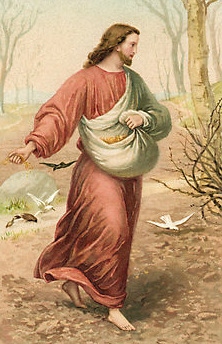
THE SEED OF THE WORD OF GOD THAT FALLS BY THE WAYSIDE, ON THE ROCKS, AMONG THORNS, OR UPON GOOD GROUND
It is hardly necessary to explain this Gospel, for Our Lord Himself gave the explanation of it by His own mouth. Let me ask you what kind of hearts you possess, what good do you derive from the frequent hearing of the word of God?
Let me ask you if the ground is hard and trodden down where the seed falls; is it at once carried away by the devil, or is it rocky soil where it cannot take root? You hear the word of God, but does it grow up within you? Do you become more pious, more attentive, and reverent in God's house? Yon hear the word of God, but do you observe the feasts of the Church with more devotion; do you go more frequently to the sacraments? You hear the word of God, but do you avoid bad companions, who lead you into sin?
You hear the word of God, but do you give good example to your companions; or are you not, by your bad deeds and your wicked words, a rock of scandal to those who come near you? Too often it happens that those who have all the advantages of good advice and example are still wicked themselves and make others so. This is a great source of sorrow to the priest who sows the seed of God with such assiduity, with much labor and solicitude.
"Give an occasion to a wise man, and wisdom shall be added to him. Teach a just man, and he shall make haste to receive it." But it is not so with the bad, who wish to continue in their evil ways; you may preach to them in vain, you may pray for them with many groans and tears; all is useless. You may represent to them the enormity of their sins, tbe scandal they are giving, and the imminent danger of eternal perdition in which they live, but all is in vain. You will not be able to make them say their prayers morning and night, they will not go to confession, they will not even say a Hail Mary in the day. If you tell them they should pray in temptation, that they should call on Jesus and Mary, they only laugh at you.
Heavenly wisdom will not enter a wicked soul, the hearts of such become harder and more obstinate, they are disgusted with the word of God. Is the number of these few, do you think? No, indeed. Go to church on Sundays and holydays; you will see that what I say is true. The streets, the public places, the saloons, are full of people, but few are found in the churches. This is the greatest punishment that God can send us, to let us go on in this disgust of His holy word. You should not belong to this class. You have religious training enough to know better. Do not imitate so many who never give themselves time to hear the word of God, though they have time enough to go to bad places and to immoral plays where the soul is ruined. Never do the like; remember that those who do not like to hear the word of God, have already the mark of damnation on their foreheads. Listen then gladly, for it will be your salvation. St. Bernard says that there is no surer sign of eternal damnation than to despise the word of God. Yes, my good young people, put aside all fear of hell provided you keep in your hearts the love of the word of God.
Here is a beautiful example of the holy virgin Scholastica which is found in the breviary. This holy virgin consecrated herself to God from her earliest childhood. Nothing delighted her more than to hear of God, or to speak of Him to others. At one time, as was her custom every year, she went to visit her saintly brother Benedict, who came out of his monastery to meet her, for women were not allowed within the men's cloister. They had their supper together in the evening, after having passed the day in conversation about God. When Scholastica saw that the hour was getting late, she said to her brother:
"You might do me the favor of staying with me overnight, that we may talk of the goodness of God, for it is now a late hour." He answered, "I cannot do this, my sister; it is not allowed for a monk to remain outside of his cell during the night." When Scholastica
had heard this she was grieved, but she buried her face in her hands and began to pray.
All at once a terrible storm broke out, with thunder and lightning, and the rain fell in torrents. St. Benedict knew that his sister had prayed for this.
"What have you done, sister dear? You have prayed to keep me out of the monastery. May God forgive you." The holy virgin with a bright smile answered: "I asked you to stay,
but you would not listen; I asked my God, and no sooner had I made the petition than He listened to me. The sky, as you saw, was clear, but no sooner did I pray than the storm
broke out." St. Benedict was obliged to remain in the company of his sister, and spent the remainder of the night in prayer and pious reading. In the morning St. Benedict went back to his monastery and Scholastica returned to her home.
Three days after, the holy monk raising his eyes, saw the spirit of his sister carried to heaven by the angels with great joy and festive song.
You, good youth, who like to talk of God, console yourselves for the pretended loss of much pleasure in the conversations of the world, for you are of the number of the elect.
They who are of God hear the word of God. Let me beg of you, since it is in your power, to be always the good soil which receives gladly the seed of the word of God and so yields a hundred-fold. Let us not grow tired in doing good. Many young people indeed begin well; they are good, obedient, and respectful to grown people; they have faith; they love the Church and the sacraments, but when they grow older somehow they lose their piety. "We find them in bad company, idle, beginning to drink, hangers-on at pool-rooms and gambling-places, and they avoid going to church. They go from bad to worse until they are ready for any deed of wickedness.
0, indeed, young men, if you did well you would have joy in this life, you would have the peace of God about you, that peace which the world cannot give, that peace which surpasseth all understanding. What great consolation will you feel at the hour of death when you shall see reserved for your glory and collected for your benefit all the good you have done in this life! The wicked will go to their graves with great show and pomp, but they are indeed poor before the throne of God, who rejects them, and sends them into exterior darkness. But to the good youth He will say,
"Well done, thou good and faithful servant, enter into the joy of the Lord," and then He will show him his beautiful home where he is to reign with God for all eternity. Amen.
Source: Sermons for Children's Masses, Imprimatur 1900
It is hardly necessary to explain this Gospel, for Our Lord Himself gave the explanation of it by His own mouth. Let me ask you what kind of hearts you possess, what good do you derive from the frequent hearing of the word of God?
Let me ask you if the ground is hard and trodden down where the seed falls; is it at once carried away by the devil, or is it rocky soil where it cannot take root? You hear the word of God, but does it grow up within you? Do you become more pious, more attentive, and reverent in God's house? Yon hear the word of God, but do you observe the feasts of the Church with more devotion; do you go more frequently to the sacraments? You hear the word of God, but do you avoid bad companions, who lead you into sin?
You hear the word of God, but do you give good example to your companions; or are you not, by your bad deeds and your wicked words, a rock of scandal to those who come near you? Too often it happens that those who have all the advantages of good advice and example are still wicked themselves and make others so. This is a great source of sorrow to the priest who sows the seed of God with such assiduity, with much labor and solicitude.
"Give an occasion to a wise man, and wisdom shall be added to him. Teach a just man, and he shall make haste to receive it." But it is not so with the bad, who wish to continue in their evil ways; you may preach to them in vain, you may pray for them with many groans and tears; all is useless. You may represent to them the enormity of their sins, tbe scandal they are giving, and the imminent danger of eternal perdition in which they live, but all is in vain. You will not be able to make them say their prayers morning and night, they will not go to confession, they will not even say a Hail Mary in the day. If you tell them they should pray in temptation, that they should call on Jesus and Mary, they only laugh at you.
Heavenly wisdom will not enter a wicked soul, the hearts of such become harder and more obstinate, they are disgusted with the word of God. Is the number of these few, do you think? No, indeed. Go to church on Sundays and holydays; you will see that what I say is true. The streets, the public places, the saloons, are full of people, but few are found in the churches. This is the greatest punishment that God can send us, to let us go on in this disgust of His holy word. You should not belong to this class. You have religious training enough to know better. Do not imitate so many who never give themselves time to hear the word of God, though they have time enough to go to bad places and to immoral plays where the soul is ruined. Never do the like; remember that those who do not like to hear the word of God, have already the mark of damnation on their foreheads. Listen then gladly, for it will be your salvation. St. Bernard says that there is no surer sign of eternal damnation than to despise the word of God. Yes, my good young people, put aside all fear of hell provided you keep in your hearts the love of the word of God.
Here is a beautiful example of the holy virgin Scholastica which is found in the breviary. This holy virgin consecrated herself to God from her earliest childhood. Nothing delighted her more than to hear of God, or to speak of Him to others. At one time, as was her custom every year, she went to visit her saintly brother Benedict, who came out of his monastery to meet her, for women were not allowed within the men's cloister. They had their supper together in the evening, after having passed the day in conversation about God. When Scholastica saw that the hour was getting late, she said to her brother:
"You might do me the favor of staying with me overnight, that we may talk of the goodness of God, for it is now a late hour." He answered, "I cannot do this, my sister; it is not allowed for a monk to remain outside of his cell during the night." When Scholastica
had heard this she was grieved, but she buried her face in her hands and began to pray.
All at once a terrible storm broke out, with thunder and lightning, and the rain fell in torrents. St. Benedict knew that his sister had prayed for this.
"What have you done, sister dear? You have prayed to keep me out of the monastery. May God forgive you." The holy virgin with a bright smile answered: "I asked you to stay,
but you would not listen; I asked my God, and no sooner had I made the petition than He listened to me. The sky, as you saw, was clear, but no sooner did I pray than the storm
broke out." St. Benedict was obliged to remain in the company of his sister, and spent the remainder of the night in prayer and pious reading. In the morning St. Benedict went back to his monastery and Scholastica returned to her home.
Three days after, the holy monk raising his eyes, saw the spirit of his sister carried to heaven by the angels with great joy and festive song.
You, good youth, who like to talk of God, console yourselves for the pretended loss of much pleasure in the conversations of the world, for you are of the number of the elect.
They who are of God hear the word of God. Let me beg of you, since it is in your power, to be always the good soil which receives gladly the seed of the word of God and so yields a hundred-fold. Let us not grow tired in doing good. Many young people indeed begin well; they are good, obedient, and respectful to grown people; they have faith; they love the Church and the sacraments, but when they grow older somehow they lose their piety. "We find them in bad company, idle, beginning to drink, hangers-on at pool-rooms and gambling-places, and they avoid going to church. They go from bad to worse until they are ready for any deed of wickedness.
0, indeed, young men, if you did well you would have joy in this life, you would have the peace of God about you, that peace which the world cannot give, that peace which surpasseth all understanding. What great consolation will you feel at the hour of death when you shall see reserved for your glory and collected for your benefit all the good you have done in this life! The wicked will go to their graves with great show and pomp, but they are indeed poor before the throne of God, who rejects them, and sends them into exterior darkness. But to the good youth He will say,
"Well done, thou good and faithful servant, enter into the joy of the Lord," and then He will show him his beautiful home where he is to reign with God for all eternity. Amen.
Source: Sermons for Children's Masses, Imprimatur 1900
 RSS Feed