CRUSADERS FOR CHRIST
  • Blog
    • Staff only
  • About Us
  • Downloads
    • Catholic Homeschool - Study Guides
    • Handwriting
    • Student Planners
    • Coloring Pictures
    • St. Catherine's Academy Gazette
    • Printable Children's books
  • Catholic Reading
    • Books We Have Enjoyed
    • Saint of the Day
    • Just Stories
    • Chapter Books >
      • Jesus of Nazareth - The Story of His Life Simply Told
      • Little Therese
      • Lisbeth - The Story of a First Communion
    • Sermons for Children
    • This and That
    • The Blessed Mother for the Child in all of us!
  • For Moms
    • Popular Instructions on the Bringing Up of Children

Sexagesima Sunday - The Seed of the Word of God

2/23/2014

0 Comments

 
Picture
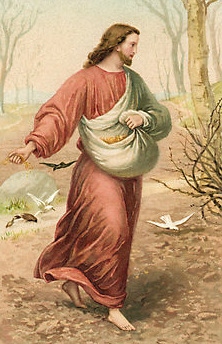
THE SEED OF THE WORD OF GOD THAT FALLS BY THE WAYSIDE, ON THE ROCKS, AMONG THORNS, OR UPON GOOD GROUND

It is hardly necessary to explain this Gospel, for Our Lord Himself gave the explanation of it by His own mouth. Let me ask you what kind of hearts you possess, what good do you derive from the frequent hearing of the word of God?

Let me ask you if the ground is hard and trodden down where the seed falls; is it at once carried away by the devil, or is it rocky soil where it cannot take root? You hear the word of God, but does it grow up within you? Do you become more pious, more attentive, and reverent in God's house? Yon hear the word of God, but do you observe the feasts of the Church with more devotion; do you go more frequently to the sacraments? You hear the word of God, but do you avoid bad companions, who lead you into sin?

You hear the word of God, but do you give good example to your companions; or are you not, by your bad deeds and your wicked words, a rock of scandal to those who come near you? Too often it happens that those who have all the advantages of good advice and example are still wicked themselves and make others so. This is a great source of sorrow to the priest who sows the seed of God with such assiduity, with much labor and solicitude.

"Give an occasion to a wise man, and wisdom shall be added to him. Teach a just man, and he shall make haste to receive it." But it is not so with the bad, who wish to continue in their evil ways; you may preach to them in vain, you may pray for them with many groans and tears; all is useless. You may represent to them the enormity of their sins, tbe scandal they are giving, and the imminent danger of eternal perdition in which they live, but all is in vain. You will not be able to make them say their prayers morning and night, they will not go to confession, they will not even say a Hail Mary in the day. If you tell them they should pray in temptation, that they should call on Jesus and Mary, they only laugh at you.

Heavenly wisdom will not enter a wicked soul, the hearts of such become harder and more obstinate, they are disgusted with the word of God. Is the number of these few, do you think? No, indeed. Go to church on Sundays and holydays; you will see that what I say is true. The streets, the public places, the saloons, are full of people, but few are found in the churches. This is the greatest punishment that God can send us, to let us go on in this disgust of His holy word. You should not belong to this class. You have religious training enough to know better. Do not imitate so many who never give themselves time to hear the word of God, though they have time enough to go to bad places and to immoral plays where the soul is ruined. Never do the like; remember that those who do not like to hear the word of God, have already the mark of damnation on their foreheads. Listen then gladly, for it will be your salvation. St. Bernard says that there is no surer sign of eternal damnation than to despise the word of God. Yes, my good young people, put aside all fear of hell provided you keep in your hearts the love of the word of God.

Here is a beautiful example of the holy virgin Scholastica which is found in the breviary. This holy virgin consecrated herself to God from her earliest childhood. Nothing delighted her more than to hear of God, or to speak of Him to others. At one time, as was her custom every year, she went to visit her saintly brother Benedict, who came out of his monastery to meet her, for women were not allowed within the men's cloister. They had their supper together in the evening, after having passed the day in conversation about God. When Scholastica saw that the hour was getting late, she said to her brother:

"You might do me the favor of staying with me overnight, that we may talk of the goodness of God, for it is now a late hour." He answered, "I cannot do this, my sister; it is not allowed for a monk to remain outside of his cell during the night." When Scholastica
had heard this she was grieved, but she buried her face in her hands and began to pray.

All at once a terrible storm broke out, with thunder and lightning, and the rain fell in torrents. St. Benedict knew that his sister had prayed for this.

"What have you done, sister dear? You have prayed to keep me out of the monastery. May God forgive you." The holy virgin with a bright smile answered: "I asked you to stay,
but you would not listen; I asked my God, and no sooner had I made the petition than He listened to me. The sky, as you saw, was clear, but no sooner did I pray than the storm
broke out." St. Benedict was obliged to remain in the company of his sister, and spent the remainder of the night in prayer and pious reading. In the morning St. Benedict went back to his monastery and Scholastica returned to her home.

Three days after, the holy monk raising his eyes, saw the spirit of his sister carried to heaven by the angels with great joy and festive song.

You, good youth, who like to talk of God, console yourselves for the pretended loss of much pleasure in the conversations of the world, for you are of the number of the elect.
They who are of God hear the word of God. Let me beg of you, since it is in your power, to be always the good soil which receives gladly the seed of the word of God and so yields a hundred-fold. Let us not grow tired in doing good. Many young people indeed begin well; they are good, obedient, and respectful to grown people; they have faith; they love the Church and the sacraments, but when they grow older somehow they lose their piety. "We find them in bad company, idle, beginning to drink, hangers-on at pool-rooms and gambling-places, and they avoid going to church. They go from bad to worse until they are ready for any deed of wickedness.

0, indeed, young men, if you did well you would have joy in this life, you would have the peace of God about you, that peace which the world cannot give, that peace which surpasseth all understanding. What great consolation will you feel at the hour of death when you shall see reserved for your glory and collected for your benefit all the good you have done in this life! The wicked will go to their graves with great show and pomp, but they are indeed poor before the throne of God, who rejects them, and sends them into exterior darkness. But to the good youth He will say,

"Well done, thou good and faithful servant, enter into the joy of the Lord," and then He will show him his beautiful home where he is to reign with God for all eternity.  Amen.
                           
                                        Source: Sermons for Children's Masses, Imprimatur 1900
0 Comments

Septuagesima Sunday - The Laborer's in God's Vineyard

2/16/2014

0 Comments

 
Picture
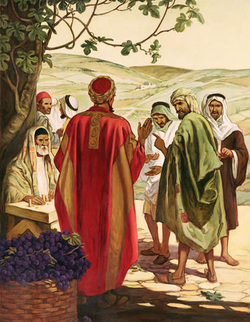
The kingdom of heaven is like to the father of a family, who goes out very early in the morning to hire laborers for his vineyard. He comes to the square in the city where workmen gather, waiting for some one to engage them. He finds them there and hires them to work in his vineyard, agreeing to give them a penny a day. Three hours afterward he goes there again, and finds some more who wish to work; these also he sends to work and promises them what is just. Again, three hours afterward, he does the same, and also at the ninth hour, which is in the afternoon when the heat of the day is over and the day is far spent, when they could not expect to be hired except for small jobs; still this father of a family whose work was very pressing hires them also. Not yet satisfied, just before the last hour, he goes to the market-place, and still there are some standing waiting, thinking perhaps that they may obtain work for the day following. But so great was the hurry of the father of the family, that these also he sends to his vineyard to work for that one short hour.

"Who is that father of a family, my dear young people? He is our good God. It is the Lord of heaven and earth who wants us all, without exception, to go to work in His vineyard, which is the Church. As is stated. He is continually calling and sending laborers to His vineyard. But your own little soul is also meant in speaking of the vineyard. From your earliest childhood God has called you to work there. Have you worked hard and faithfully that a good harvest might be obtained? Perhaps you have not given it a thought, and have been idle all the day. All your thoughts and endeavors were directed to enjoying yourself in this world; you passed your time in play and idleness. The word of God was loathsome to you; not only did you not think of doing right, but you even looked forward to do evil; you labored to ruin your soul, you grew fatigued in the ways of wickedness, you would not listen to the loving invitation of God: "Go you also into My vineyard." Great will be the punishment of such young people.

But you, my willing young people, will listen to the invitation, and at once proceed to the cultivation of your hearts. Listen to the instruction of your parents, look for the society of good companions, attend to the prayers and exhortations of your teachers and your confessors. Continually, hour after hour. Our Lord knocks at the door of your hearts; He wants to enter and remain there. He is anxious to obtain full possession of your soul. He is not looking for a share in your heart, but for the whole of it; the heart is after all, small; the more you give it to the world the less will remain for God.

St. Teresa had affection for a certain relative; she noticed her attachment was becoming stronger, and she gave it up. Then Our Lord said to her,

"Now you are altogether Mine and I am all yours.'' But some of you may say that according to the Gospel it does not seem necessary to go to work at the first call there is time enough, the invitation will certainly be repeated several times in the future and all will heed it. God is so good. He will gladly receive us into His vineyard at any time of our life. Had the workmen who stood there awaiting a call said,

"Well, we will not go now, but will wait till later in the day," what would the father of the family have said? Would he have waited for them? It is not likely; even though God is merciful and of infinite goodness, will He continue to waste His invitation on nnwilling creatures? Is not this good God worthy to be served by you from your dhildhood? Are you going to give Him only the last days oi your life. He who is worthy of all love? We would certainly fall into despair if we came to the end of our lives and found we had done nothing for the glory of God.

There lived a certain man who spent the most of his life in enjoyments. He used to say,

"How beautiful the world is! I have all I want, money in plenty, servants at my command,
good food, magnificent estates, and agreeable companions. Let me have a carnival the whole year round." In this way he continued to live the most of his life, but in old age he began to think that there was another world, where he knew he would be unhappy for all eternity. He became a Religious, and consecrated himself entirely to God. In the beginning the poor man was so ashamed of himself before God, that he had enjoyed the wicked world and now was willing to cheat the devil, that it seemed almost dishonest of him to participate in so much glory in heaven, when he had deserved nothing but condemnation in hell. He seemed to hear a voice within him saying,

"You are, a nice fellow; you got all the pleasure that was possible out of the world, and when it has lost its charms you give the leavings to God. What do you think God can do with such refuse?" It was enough to drive him to despair, for what answer could he make? The case was plainly against him. You, my dear young people, began long ago to serve God, all your days have been spent in His service; if sometimes you have fallen you have begun again. St. Thomas says that,

"They who have served God from childhood will certainly be saved." When evening came the father of the family gave orders that each one should receive what he had earned, the last as well as the first. And what reward, did the last get? They received as much as those who had worked since early morning. But why were all paid equally? Because the last were full of fervor and zeal, and had the good intention of laboring faithfully. God, you see, not only pays for our work but also for our intention. Have the intention to do great things for God, and even though you do not perform them they will be placed to your credit. In the morning say your prayers and at the same time wish that you could pray always; hear Mass with the feeling that you would like to hear all the Masses that are celebrated all over the world; go to communion occasionally, wishing that you could receive Jesus every day. Study to bring back wayward youths by your words and good example, praying that almighty God may extend the favor of His graces to all that have gone astray.

Suffer patiently for God's sake the little injuries that one meets with in everyday life, with the resolution of enduring any injuries, fatigues, or labors that God may be pleased to send you. Would you not become very rich in merit if you lived in this manner? God, on the Last Day, will call His faithful servants to sit on His own throne and will fill them with great joy. If you think of this, how careful you will be to remain faithful to God and endeavor to merit more. The trouble with all of us in this world is, that we forget that heaven is to be the reward of our good actions. My young people, raise your eyes to heaven. Do much good, lead holy lives and make all efforts to gain the pleasure of paradise.

In the time of St. Augustine there lived in Rome a lady named Melania. One day she began to think seriously of her salvation; moved by this thought, she gave up all the gayeties of the world, and began to mortify herself so much that in a short time she became greatly emaciated; her uncle, a man without much conscience, had not been at home when she was converted, and when he saw her face colorless and reduced in flesh, he cried out,

''Is this the handsome lady Melania?" She gave him this beautiful answer:

"The love of heaven has done this.'' The words were spoken with such fervor and conviction that he was converted, though the eloquent sermons of St. Augustine had never made any impression on him. My dear young people, no longer hesitate to make the good resolution to gain heaven at any cost; omit nothing that will conduce to that end; do not believe yourself secure until you are in heaven, for Our Lord concludes His Gospel by saying:

"Many are called but few are chosen." Be not terrified or disheartened by these words, for those only will lose heaven who neglect the things that would bring them there. Pray then a great deal, go to confession often, receive communion frequently, avoid mortal sin, hate even venial sins, and you will surely go to heaven.

                                    Sermons for Children's Masses, Imprimatur 1900
0 Comments

Fifth Sunday after Epiphany - The Good Seed

2/9/2014

0 Comments

 
Picture
                         THE GOOD SEED AND                                        THE BAD SOWN INTO IT
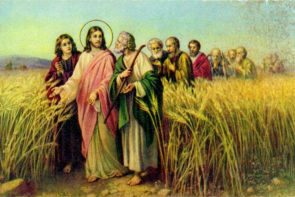
The kingdom of God is like to a man that sowed good seed in his field. But in the night when all slept, the enemy came and over it sowed cockle and spoiled all the work. We can easily see what will happen, when, over the good seed, bad is sown. The whole future crop will be ruined to a certainty.

This good husbandman, who cultivated his land so carefully, is God, our most loving Saviour, who came to redeem us and give His life for us. The field in which the good seed falls is the world; but you can take it to be your heart also, and the enemy who sows cockle is the devil. What happened to the field also happens to us. God is the good husbandman of our souls. What good seed does He not sow in us? Holy inspirations, holy thoughts, thoughts to do what is right, to make progress in fervor and devotion, and in His holy love.

He also sows good seed in our hearts when He comes to dwell there in holy communion. He produces there every virtue and takes away every vice. But rare indeed are the youths who joyfully receive the good seed which Our Lord plants. On the contrary, many desire the bad. They even invite the devil to come, and give him perfect liberty to do as he pleases. The result is bad thoughts, most perverse desires, a disgust for all that is good, bad actions, a life of wickedness, so that if you could take a look into their hearts you would see an otherwise pleasant field filled with brambles and thorns and covered with poisonous plants. When does this sower of bad seed come to do this mischief ? He does it at night, when people are not watchful; when they are idle and inclined to sleep; not caring to strengthen themselves with prayer and the use of the sacraments; when with all their might they do not fly the occasions of sin; in short when they fall asleep in the practice of virtue. It is then that the enemy secretly enters. Ah, my
dear young people, watch most carefully that the devil may find no entrance to do this evil to your innocent hearts. He has a trick of making his bad work look insignificant, but soon the seed will take such deep root that it will be almost impossible to eradicate the evil. The devil needs very little to gain possession of your souls. A little concession on your part is all he wants. In fact the devil needed nothing more from David than a look from afar. Could he ask less from so saintly a man, the favorite of almighty God? St. Francis of Assisi once said to his companions,

"Do not let the devil have a hold of a single hair of your head, for no sooner has he that in hand than he will drag you to anything." Great is the care we must exercise, then, in avoiding the snares laid for us. But, St. Bernard says, the devil can harm only those who wish to be harmed. After the field had received this double sowing, every day it showed more plainly that there had been bad work done. The servants saw this and full of affiction they hastened to the master and said,

"Didst thou not sow good seed in thy field? whence then hath it cockle?" The lord answered,

"It is certainly not my sowing; an enemy has done this."

"What are we to do now? Would it not be well if we pulled the bad weeds out so as to clear the field of it?"

"Do not do that," said the master, "far the good seed would suffer by it. Let both grow together, and let both ripen. Then I will give my orders to the reapers: Gather up first the cockle and bind it into bundles to barn, but the wheat gather ye into my barn."

This cockle is a figure of the wicked Christians, sons of the devil, who live with the good. How much of this bad seed and bad crops are to be found in the field of the Church? Bad Christians have chosen the devil as their master, and they seek to do his will. They even go further, and are worse than the devil himself. They become adepts in vice: by their bad words, their wicked deeds, and bad example (which the devil has not power to show), they sow evil on all sides. How many innocent youths do they precipitate into sin! Some of you, my dear young people, even at this early period of your life, have cause to shed bitter tears for having trampled under foot your purity. The devil could not cause so much evil unless he were well seconded by so many of 'his sons; by so many scandalous companions; these are they who fill the whole world with their crimes.
But we see 'here the great mercy of Grod. All creatures, the ministers of God's Justice, clamor for extermination of these sinners. The water cries out, "I will drown these wicked sinners!" The fire leaps up to reduce them to ashes. The earth would open a great chasm to suck in these wretches. The whole world groans under this load of sin, and would be happy to shake off this burden of iniquity. But God in His infinite patience restrains the elements so that they do no harm, for He allows the sun to shine on the good and on the bad, and the beneficent rain to fall on all. St. Augustine laments most beautifully his own condition.

"I sinned and you appeared not to notice it. I did not refrain from crime but you refrained from punishment. I continued a long time to commit sin but you continued your love toward me."

But will God always act in this manner toward those who will not be converted? The day of vengeance will come. God, sitting on a throne from which proceeds thunder and lightning, will come in His great majesty and will command His angels to separate the cockle from the wheat. He will make bundles of the wicked youths who are present in the Church only to make fun of religion, of the Blessed Virgin, and the saints; bundles of so many insolent youths, disobedient men, who seem to live only to give trouble to their
superiors; bundles of the evil-tongued ones that destroy the innocence of others; bundles of so many scandalous youths, who are a disgrace to Christianity; bundles of those irreligious, unbelieving miscreants, who destroy the precious deposit of faith in others. All these will be put into bundles to burn for all eternity. The only good that comes from their lives is that they show forth the terrible judgment of God and of His justice. The great evil of the world is that while its young people hear the menaces of God they care very little for the threats and still continue in their wicked ways.

Father Segneri gives us an example which will illustrate all that I 'have said. The Emperor Yalens is conceded by all to have been a most wicked man. He persecuted the Catholic Church and showed great favor to the Arians, who had done so much injury to religion. God almighty was at length moved by the groans of the suffering Church and raised the Whole West against the East and Vailens took the field. A holy hermit, who had his home in a cave in the mountain, came down and went to visit the emperor.

"Emperor," said he, "open the churches you have closed and you will return victorious if not you shall die on the field of battle." Valens heard him, but said he was crazy, and continued his march. The hermit had a mission from God and was not discouraged. Again he met the emperor and repeated the same words. The impious Valens was struck with them, but thought it weakness on the one side to yield, and still on the other it seemed to him temerity not to heed the warning. He convoked a council that day, but as they were Arians they emboldened him and even had the hermit punished. But a third time the monk made 'his appearance and taking hold of the reins of the emperor's horse, he said:

"I have come back to warn you for the last time. Open the churches and you will 'conquer your enemies ^otherwise you will die on the field.'' Angry at this interruption the emperor had the man thrown down a precipice where they expected him to find his death. No sooner had the army passed than three angels dressed in white drew him from the precipice not only uninjured but without a scratch on his body. Then taking a short path 'he once more presented himself to the emperor. The emperor had him seized and thrown into prison until the return of the army from battle, when the hermit was to be chastised well.

"You will never return," said the hermit. "You will go into battle and will be beaten. You will have to flee and at last you will fall into the hands of your enemies who will burn you at the stake."

All that the holy monk had predicted came to pass. The emperor went to battle and suffered a severe repulse and his army was put to flight. The emperor himself sought refuge in a haystack, and when the enemy came they set fire to it and he was burned alive. This emperor was indeed a blind and hardened wretch, who had many warnings from the man of God. But many sinners are much worse, for they hear repeated warnings, and all to no purpose. How many warnings the confessor gives to his youthful penitent.

"If you continue such a life," he will say, "so dissipated, devotionless, without prayer, you will fall into mortal sin. If you do not cease that immodest talk that you delight in, you will fall into the most horrible forms of that sin. If you do not guard your eyes you will fill your heart with many different distractions which will draw you from God, and you will gradually sink into the death of sin."

These warning's are heard but not heeded; prayer is neglected, bad talk is continued and bad companionship is looked for. Be not hardened, but heed these threats. God makes them to warn you. If up to the present you have been with the very bad crop, you can change your whole life; you can become wheat; your nature can be changed to such a degree that the cockle will produce good wheat. What and where is that heavenly barn into which the Master is about to gather all His wheat? It is paradise, where the good shall have joy for all eternity. They will be in that barn secure from all injury. It is the good wheat and the precious fruit that are well kept for future use. The fruit is now harvested and protected from the cold rains. No longer the hot, oppressive sun burns it; no more do the storms worry it; it is safely hidden away in paradise.

This will also be a great joy to the elect, who no longer need stand in the midst of the wicked band so hateful to God and so oppressive to the good. There are no more tares since there is no more bad seed; all is pure wheat. All in heaven adore God, together all love Him, all bless Him; there are none that will not do' glory to God. Would it not be dreadful if one of you were excluded from that beautiful eternal home for one sin?

A rich man lost in one evening at play his beautiful home and was put out of it, a beggar. He never could pass it afterward but tears gushed from his eyes as he thought to himself:

"What a fool I have been! In one night, for the pleasure of a game, I risked and lost my beautiful home. All my life I must be a houseless vagrant, for I am too old to amass enough to purchase another home."

What will the thoughts of the damned be when they see the places in paradise which would have been theirs had they only made a little effort? But, for a momentary pleasure, they sacrificed all.

Source: Sermons for Children's Masses, Imprimatur 1900
0 Comments

Fourth Sunday after Epiphany - A Storm on the Lake

2/2/2014

0 Comments

 
Picture
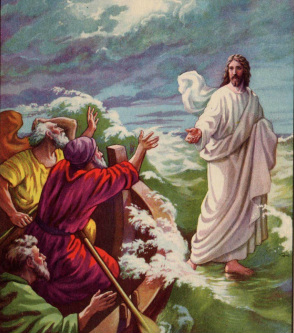
                  JESUS IN A STORM ON THE LAKE
It was in the evening after a day of very hard work, during which Our Lord had performed miracles, and preached the new Gospel to the multitudes which continually followed Him, that He took His disciples with Him in a small ship over to the other side of the lake. Had any one, impressed with faith in Our Lord's divinity, seen this company getting into that boat, they would certainly say that it would have a prosperous journey, the wind would blow most favorably, the waves would be quiet, the waters would feel the happiness of the nearness of their Creator. We would think ourselves happy to be with Jesus on that ship. But Our Lord intended a different voyage: scarcely had the boat left the shore, than the wind began to increase and a great squall arose. The boat was very small, and every moment the angry waters threatened to engulf it. We read of many saints who have been able to govern the waters, and make them help them in their designs for the glory of God. St. Francis spread his mantle over the waves, and he and his companions got on it, and in this way travelled from Africa to Rome, wafted by gentle breezes and carried by quiet waters and tides. But when Jesus was on the water, could He do nothing? Was it true that His disciples were to do greater things than He ever did? Perhaps it was Judas that brought this severe storm on the frail vessel.

Some Fathers of the Church say that this tempest was a figure of the battles which the Church has to undergo in this world. From its very establishment, the Church had to suffer many persecutions; powerful kings and tyrants rose against it, they sought to destroy it by every means that human ingenuity or cruelty could invent. They would have succeeded had not God kept the promise which He made, that the gates of hell shall not prevail against His Church. In fact, the contrary happened; while the enemies of the Church thought they had destroyed it, they spread it all over the world. The greater the persecution the greater became the number of the faithful. Even at this very day there are men who make war on the bark of Peter, in order to sink it and to remove from the world our holy religion. But it will be found that their efforts are useless. We can confidently repeat, "The gates of hell shall not prevail against the Church." Many others, too, there are, who though they do not persecute the Church, still lead such wicked lives that they render her no honor. But you, my dear young people, will be good and obedient children of the Church, that in all her persecutions she may be consoled by witnessing the sanctity of your lives. We are sailing over a tempestuous sea, where there are many storms to be encountered. Happy those who do not suffer shipwreck. To avoid this terrible shipwreck and to arrive safely in the port of heaven we must labor diligently, we must be vigilant and on our guard. When a ship goes out from port, laden with rich merchandise, with precious treasures, how careful the captain is, how obedient and prompt are the sailors in guiding the vessel, so that it may not run on a sand-bar or be dashed to pieces on a rock. Should a storm come up, how vigilant are all the officers; what labors do they not undergo, they do not spare themselves in any manner until the danger is over. With the same vigilance you must guide the little ship, your soul; watch day and night, watch when you think there is a calm, and you are in security, when the devil does not tempt you; for when you least expect it, he will raise a most furious storm of temptations in your soul. Watch when you think yourself strong; watch with unceasing care as Our Lord said to the Apostles:

"Watch ye and pray that ye enter not into temptation." St. Anthony said to his disciples,

"I counsel you, my sons, to have vigilance over your hearts, for we have many enemies who can destroy them." When the devil sees Christians attentive to their spiritual life, he attacks them with temptations and spreads over them his net of bad thoughts to make them fall into sin. Prayer, vigils, fasts, the sign of the cross, faith, trust in God, humility, and a great love of Jesus Christ will put 'him to flight.

But to return to the ship. If a vessel strikes a rock, all is generally lost, while if the soul falls into sin, she can quickly rise again. By the grace of God, a plank, which is the Sacrament of Penance, is thrown out to her, by which she can still reach the haven of heaven. But how few there are who look for this plank; how many have indeed found it, but use it badly, by making bad confessions! It is most absurd to be careless of shipwreck because we may find the means of being saved. Would any one say to the captain of a ship,

"Do not be so careful; the wreck will produce many pieces of wood by which we can save ourselves." What would become of the valuable freight which the ship bears? Your soul is a rich treasure when alive in the grace of God; if a single mortal sin should creep into that soul, it would die to God, and those great, magnificent Christian virtues you practised with so much attention would be lost; they would no longer give us the right to a reward in paradise. Oh, how often this happens! Let us look at that good youth, who by means of a pious education received from his parents, by his good will and vigilance over himself, keeps his baptismal innocence; goes to his first communion, and loves Our Lord his Saviour. What treasures of grace he accumulates!

Afterwards, unhappily, grown tired of watchfulness, he falls into a great sin. What a dreadful wreck, which should be deplored with the bitterest tears. In one instant he has robbed himself of all the treasures he had gathered; he is dead before God. Behold how sin robs us of our most precious treasures! Oh, that he 'had made some more determined effort of resistance! Oh, had he but invoked the names of Jesus and Mary sincerely, he would not have fallen into sin. What a dreadful monster from hell is sin; it is worse than the lightning stroke that melts all the gold in the money chest, for sin so destroys and devours all our good works that they cannot be accounted to our credit for eternal life. It is true that as soon as we repent, our good works revive again by God's infinite kindness; still, many who fall into sin obstinately remain in it, and vain is their former goodness.

Let me impress upon your minds, my young people, the disastrous results of overconfidence in being saved. A youth who had lived a bad life had a strong inspiration to give up his evil ways. He wrote down his sins, so as to make a general confession more easily and fully, ajid was on his way to church, when the thought came into his mind: I will commit that sin once more; it will not matter much, a few times more or less, and it is just as easy to confess; this will certainly be the last time. He gave way to the temptation, ncommitted the sin again, and, in coming from the house, was killed by an enemy.

Be ye, my dear young people, always on your guard; you are still innocent; make every effort to remain so, that the little vessel of your soul may 'arrive safely in port. A ship well furnished, and provided with all necessaries, guided by an expert pilot, will be able to cope with the fiercest tempest and will surely enter the harbor in triumph.

My dear young people, you are young and inexperienced as yet; put yourselves under the management of a skilful pilot, who knows the dangers of life and how to avoid them. The confessor is your pilot; let him give you full instructions in your conduct, and then have recourse to God in prayer; imitate the example of the Apostles, who, when the danger was greatest, went with confidence to Our Lord and said,
"
Lord, have you no care for us; why do you abandon us? " Our Lord will rouse Himself from sleep at your cries, and will say half encouragingly, half complainingly, "Why are you fearful, ye of little faith? Is this your confidence in Me? Has My grace done so very little for you?" Then He will command the sea of disturbance to be calm, and you will be astonished at the power and the love of Our Lord; you will say with the Apostles,

"Who is this, thinkest thou, that both wind and sea obey Him? '' Yes, my young friends, have a most lively faith in Jesus, and when any temptation allures you, or when in danger, cry out with the Apostles,

"Master, doth it not concern Thee that we perish?" When you had the misfortune to fall into sin, was it not because you neglected to call on Our Lord for help? on the contrary, did you not come out of temptation unscathed when you flew to the Almighty for protection? Then always have recourse to God; remember that He loves you more than you can ever realize, and. be sure He will not allow you to be tempted beyond your strength. If He should give the devil permission to try you by temptation, you may be certain He 'has set a limit, beyond which he cannot go; the chained dog may make a great noise but he can do no harm.

Do you really believe that anything would have happened to the bark tossed on the lake? Not at all. It is the same with ourselves. Do not imagine that any misfortune will happen to you if you trustingly confide in God. St. Anthony, after having put to flight a great number of
devils, sending forth a profound sigh to Our Lord said,

"Where, dear Jesus, were you? Wliy did you not come sooner to help me?'^ Our Lord answered, "Anthony, I was with you all the time, and saw your struggles; you were tempted that you might be strengthened in virtue; you have fought well, and hereafter, you need not fear your enemies." In this way will God act toward you, if in your temptations you have recourse to Him.

0 Comments

    Archives

    March 2015
    September 2014
    August 2014
    July 2014
    June 2014
    May 2014
    March 2014
    February 2014
    January 2014
    December 2013
    November 2013
    October 2013
    September 2013
    August 2013
    July 2013
    June 2013
    May 2013
    April 2013
    March 2013
    February 2013
    January 2013
    December 2012
    November 2012

    Categories

    All
    13th Sun After Pentecost
    14th Sun After Pentecost
    15th Sunday After Pentecost
    16th Sun After Pentecost
    16th Sun. After Pentecost
    17th Sunday After Pentecost
    18th Sun After Pentecost
    19th Sunday After Pentecost
    1st Sun.after Epiphany
    1st Sun.after Epiphany
    1st Sun After Pentecost
    1st Sunday Of Advent
    1st Sunday Of Lent
    1st Sunday Of Lent
    24 Sunday After Pentecost
    24th Sun After Pentecost
    2nd Sun. After Easter
    2nd Sun. After Epiphany
    2nd Sun. After Pentecost
    2nd Sunday After Epiphany
    2nd Sunday Of Lent
    2nd Sunday Of Lent
    2nd Sun Of Advent
    3rd Sun After Easter
    3rd Sunday After Epiphany
    3rd Sunday Of Advent
    3rd Sunday Of Lent
    4th Sun After Easter
    4th Sun After Epiphany
    4th Sun. After Pentecost
    4th Sunday Of Advent
    4th Sunday Of Lent
    5th Sun. After Easter
    5th Sun After Epiphany
    5th Sun.after Pentecost
    6th Sun. After Easter
    7th Sun After Pentecost
    8th Sun After Pentecost
    9th Sun. After Pentecost
    Covetousness
    Epiphany
    Heavenwords
    Heirs Of The Kingdom
    Judas And St. Peter
    Old Man Reilly
    Passion Sunday
    Pentecost Sunday
    Quinquagesima Sunday
    Septuagesima Sunday
    Sermon For Epiphany
    Sermons For Children's Masses
    Sexagesima Sunday
    Trinity Sunday

    RSS Feed

© Crusaders for Christ 2012